Bentley Continental R Final Series
The Continental R Final Series closes the original Continental R coupé’s production story. Bentley records eleven Final Series cars and identifies Heritage Collection car C1 BML as the last example. Its combination of the turbocharged V8, broad coupé proportions and carefully chosen finishing details gives this final edition a clear identity within the earlier Continental family.
The Continental R Final Series closes the original Continental R coupé’s production story. Bentley records eleven Final Series cars and identifies Heritage Collection car C1 BML as the last example. Its combination of the turbocharged V8, broad coupé proportions and carefully chosen finishing details gives this final edition a clear identity within the earlier Continental family.
Bentley Continental R Final Series at a glance
| Manufacturer | Bentley |
|---|---|
| Model / family | Continental R |
| Profile scope | Limited final edition |
| Historical reference year | 2003 |
| Inventory reference | BEN-087 |
| Engine reference | 6.75-litre turbocharged V8 |
| Documented production scope | 11 — Continental R Final Series per Bentley Heritage Collection |
| Manufacturer power reference | 420 bhp; dated model reference |
| Inventory date note | 2002 in supplied inventory; historical build or launch reference corrected above |
A final edition of the Continental R
Final Series is a specific designation at the end of the Continental R’s model life. It should be attached to that documented edition, rather than to every late-registered Continental. The name gains meaning from the car that preceded it: a substantial two-door grand tourer with a distinct body and a turbocharged V8. The closing edition therefore offers both a vehicle profile and a point of comparison with the earlier coupé. Studying it helps reveal which qualities Bentley chose to preserve when the model reached its final phase. Its rarity belongs to a defined factory-recorded group, with an actual final car retained for reference.
Eleven cars and the 2003 reference year
Bentley’s Heritage account records eleven Continental R Final Series cars. The same record dates its final example to 2003, which is the historical reference used here instead of the inventory’s 2002 entry. A model-year label, a build date and a later registration can each refer to a different event, so the article follows the manufacturer’s documented final car rather than treating those labels as interchangeable. The eleven-car population describes this edition. It is not the count of all Continental Rs, all Mulliner coupés or every late-production Bentley carrying a similar interior treatment.
The Continental R’s place in Bentley design
The factory history places the Continental R’s debut at Geneva in 1991 and describes a two-door body distinct from the Turbo R saloon beneath its development. That is the useful context for the Final Series. From the side, the long cabin and substantial rear body explain its grand-touring purpose without requiring a compact sports-car silhouette. The closing edition retains that large coupé language. Compare the window outline, wheel-arch treatment and relationship between bonnet and cabin with later Continental models. The exercise shows how Bentley’s interpretation of a sporting luxury car changed while remaining recognisable.
The 6.75-litre turbocharged specification
The Final Series Heritage specification records the 6.75-litre turbocharged V8 and a 420 bhp reference. That mechanical identity places the car within the developed Continental-family performance tradition. The engine’s significance is easier to appreciate when considered alongside the coupé’s size, transmission and intended use. A grand tourer is expected to combine responsive progress with substantial accommodation, and the powertrain is part of that combined brief. For an archive, retain the dated factory specification beside the edition record. That makes it possible to distinguish this final configuration from earlier Continental R output figures without flattening the model’s long development into one number.
Final Series cabin and exterior details
Bentley identifies black lacquered woodwork, diamond-quilted seats, gloss-black brake callipers and the jewel-style fuel filler cap among C1 BML’s features. These give the last car a particularly clear visual reference. Details should be studied together with its documented edition identity. A seat pattern or filler cap by itself does not establish that another Continental is a Final Series. Interior and exterior photographs are most persuasive when linked to the car’s build record. They also reveal how a final edition can create a distinct character through coordinated materials and finishes while preserving the basic shape of the model.
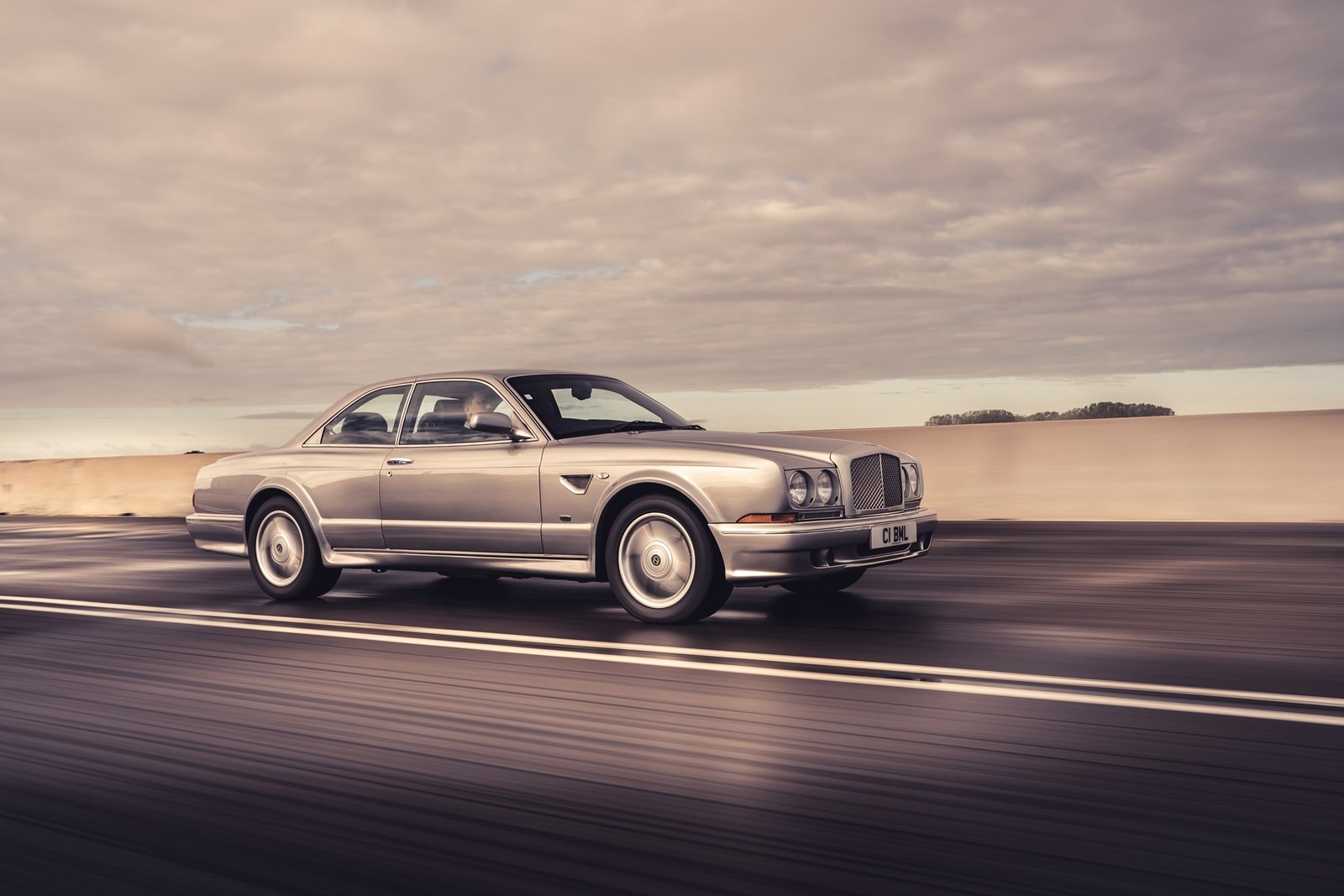
C1 BML: the final car in the photograph
The photographed subject is C1 BML, the actual final Continental R Final Series preserved by Bentley. The manufacturer records Silver Pearl paint with Black hide. This gives the article a strong connection between its small production group and an authenticated individual vehicle. The factory photograph illustrates a known car, rather than borrowing a general Continental R image and relying on a new caption to establish the edition. Its value to a reader is therefore both visual and documentary. Examine the body shape first, then use the identifiable finishing details to connect the image with the Heritage account.
How to keep the edition’s identity clear
A useful Final Series file begins with the chassis record and the factory designation, then adds the original specification and dated photographs. Keep changes in trim or equipment as a separate chronology. That allows a later reader to see the car’s documented identity even when a visible detail has been renewed. It also helps distinguish edition features from equipment available elsewhere in the Continental family. For this small group, the strongest archive entries explain why the car belongs to the edition instead of repeating a rarity claim. The eleven-car figure provides context; the individual build record establishes membership.
A bridge to later Bentley coupés
The Final Series is useful beside a Brooklands profile because both concern substantial Bentley coupés built around the Crewe V8 tradition. It is also useful beside the Continental SC, which gives the same broad family a different roof arrangement. These comparisons make the final car part of a connected history rather than an isolated closing badge. Focus on accommodation, body structure, powertrain and finishing choices. That brings out the Final Series’ importance: it represents a carefully documented conclusion to one Continental design period, with the surviving final car providing a concrete reference for future study.
Frequently asked questions
How many Continental R Final Series cars were built?
Bentley’s Heritage account records eleven.
Why does this profile use 2003?
The manufacturer dates the retained final car C1 BML to 2003. The inventory’s 2002 reference is preserved in the editorial reconciliation.
Is the photograph an ordinary Continental R?
It shows C1 BML, identified by Bentley as the last Continental R Final Series.
Do black lacquer and quilted seats prove edition membership?
They are useful details, but the factory model designation and individual build record provide the stronger identification.
Explore related vehicle profiles
Sources
- Bentley Heritage Collection — final Continental R, C1 BML
- Bentley — 40 years of turbocharged Bentleys
Facts are sourced to the linked manufacturer, institutional and specialist records. Design comparisons and documentation suggestions are editorial analysis. Announced limits and completed production populations are labelled separately.
Photography and credit
The actual 2003 Continental R Final Series C1 BML in Bentley’s Heritage Collection. Photo: Bentley Motors / Bentley Newsroom · Editorial reproduction only. Resized and JPEG encoded without cropping or content changes. Bentley permits editorial reproduction only, excluding advertising, marketing and sales-related use. Copyright Bentley Motors; individual photographer not identified.
Why this machine matters
The Continental R Final Series closes the original Continental R coupé’s production story. Bentley records eleven Final Series cars and identifies Heritage Collection car C1 BML as the last example. Its combination of the turbocharged V8, broad coupé proportions and carefully chosen finishing details gives this final edition a clear identity within the earlier Continental family.
Built in limited numbers
Inventory reference 2002 corrected to manufacturer’s documented 2003 final-car reference. Eleven Final Series per Bentley. C1 BML is the authenticated photographed subject.
Gallery
Specifications
Factory specifications may vary by model year, market and configuration.
Identity & production
- Official model
- Bentley Continental R Final Series
- Base model
- Continental R
- Worldwide production
- 11
Powertrain & performance
- Engine
- 6.75-litre turbocharged V8