Aston Martin Valour
Valour celebrates Aston Martin’s 110th anniversary with a modern twin-turbo V12, a six-speed manual and a deliberately muscular design. The factory limited the worldwide programme to 110 cars. Its collecting significance lies in the complete specification and the connection between heritage references, contemporary engineering and each owner’s original Q choices.
Valour celebrates Aston Martin’s 110th anniversary with a modern twin-turbo V12, a six-speed manual and a deliberately muscular design. The factory limited the worldwide programme to 110 cars. Its collecting significance lies in the complete specification and the connection between heritage references, contemporary engineering and each owner’s original Q choices.
Aston Martin Valour at a glance
| Manufacturer | Aston Martin |
|---|---|
| Model / family | Valour |
| Profile scope | Limited anniversary manual V12 programme |
| Historical reference year | 2023 |
| Inventory reference | AST-168 |
| Factory allocation limit | 110; completed census not independently certified |
| Historical engine reference | 5.2-litre twin-turbo V12 |
A 110th-anniversary car with a defined purpose
Aston Martin unveiled Valour on July 11, 2023, as a celebration of its anniversary. The car’s purpose is clearer when the manual transmission and individual design are considered together rather than as isolated headline features. It occupies a distinct place in the modern archive: a finite factory programme with its own name and visual identity. A collector describing an example should establish that programme connection first, then explain the particular specification and the evidence that accompanies the physical vehicle.
Rarity: the 110-car worldwide programme
The manufacturer set a global allocation limit of 110. That number is retained as the programme ceiling rather than promoted to an independently reconciled completed chassis census. It is also separate from the anniversary age that inspired it, despite the numerical connection. No further count is assigned for a colour, market or individual Q combination without supporting records. An authentic original order gives a particular Valour its place within the programme, while a complete vehicle history explains what happened after that initial specification.
The twin-turbo V12 and manual partnership
The factory specifies a 5.2-litre twin-turbo V12 producing 715 PS and 753 Nm, paired with a six-speed manual. That pairing supplies the mechanical centre of the profile. Preserve the stated power unit rather than treating the same number as bhp. A technical report for an individual car should record modifications and maintenance separately from the model’s factory rating. The published specification explains the original programme, but it does not measure the present output or condition of every example.
Mechanical connection with electronic support
The launch describes a mechanical limited-slip differential alongside traction and stability systems. The editorial significance is a chosen form of driver involvement, rather than an absence of all contemporary assistance. A manual gearbox does not by itself establish an entirely mechanical car. When comparing Valour with another rare Aston Martin, identify the actual systems and source dates. That makes the comparison more useful than an undefined claim of analogue purity and allows readers to understand how the factory combined traditional controls with modern engineering.
Heritage interpreted through a new body
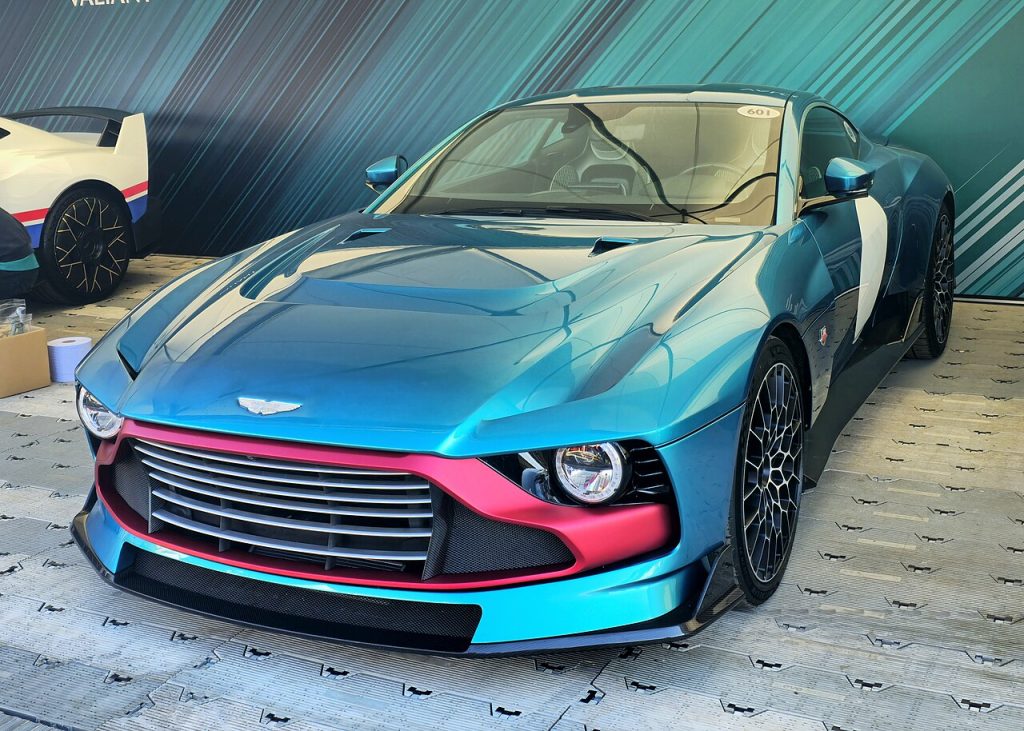
The factory connects the design with earlier V8 Vantage and Muncher references. Those are design influences, not evidence that Valour is a historic racing chassis or a continuation of a particular competition car. The modern body deserves its own photographic record. An overall view can show proportions, while close images explain individual details without assigning more history than the sources establish. The archive can make the heritage connection engaging while keeping construction, identity and any actual competition record attached to the correct vehicle.
Carbon bodywork and distinctive visual details
The manufacturer’s model page identifies a carbon-fibre body, round LED headlights and the centre-mounted triple exhaust layout. These details help distinguish the car visually, but outward appearance alone cannot confirm hidden condition or original parts. An inspection should connect body and finish observations with repair records where available. A replacement component may preserve the design effectively, yet its history belongs in the description. Photographing the whole exterior as well as individual surfaces gives a future owner a coherent account of the car being considered.
The cabin and the original Q order
The model page describes a range of Q personalisation choices. A collector should therefore assess an individual cabin against its own original order rather than a single reveal-car photograph. Colour, material and trim combinations can be distinctive without forming a separately counted factory edition. Retain the actual specification and explain known changes, including any later retrimming. The manual controls are part of Valour’s character, while the individual materials add another layer of provenance that should remain traceable to the example.
Valour, Victor and Valiant in the same archive
Valour sits usefully alongside the unique Victor and the later Valiant programme, but their identities and counts remain separate. A related-profile link can explain the range of Q projects without transferring a specification from one car to another. In particular, Valiant’s more extreme engineering should not be assumed on Valour. The most helpful comparison follows the actual factory briefs and original records, allowing each vehicle to be appreciated for its documented role rather than treating all manual V12 commissions as a single series.
Launch schedules and individual delivery dates
The July release scheduled production from the third quarter and first deliveries during the fourth quarter of 2023. These are historical plans, not a certificate that all 110 were finished or delivered then. A particular car’s invoice, build and handover records can supply a more precise chronology. The profile uses the announcement year as its historical reference and keeps an exact production completion date unset. A photograph taken later illustrates the model without rewriting either the original timetable or an individual vehicle’s delivery history.
What the licensed Valour photograph establishes
The included image is source-identified as Valour and visibly shows the programme’s distinctive body. It illustrates the model rather than a claimed build number, current owner or present mechanical condition. The source record supplies the image’s own capture context, which is separate from the 2023 announcement. Photographer, licence and resizing disclosure are kept visible. That makes the illustration traceable and allows an editor to review the identity independently, while leaving example-specific authentication with the car’s documentary and physical inspection evidence.
Building a useful example-specific archive
A collector file for the Aston Martin Valour should connect the original specification with subsequent care and the present description. Keep the order, delivery and service records in sequence, distinguishing original documents from later summaries. Add dated photographs and an inventory of accompanying items. Explain known changes with their reason and date, rather than relying on a general assertion of originality. This gives a future reader a way to follow the physical vehicle through its history and understand which findings are supported at the example level.
Condition and identity require different evidence
An edition identity and a condition assessment answer different questions. Original order records can support programme membership, while an inspection explains the state of the actual vehicle at a stated date. A matching finish photograph cannot establish hidden mechanical or structural health. Likewise, a replacement component can be in excellent condition while having a different provenance from the delivered part. A useful description records both categories clearly, retaining technical reports and repair invoices so future editors and collectors can assess the evidence without conflating rarity with preservation.
Photographs should form a dated sequence
Retain overall views, cabin photographs and identifying details together, with the capture date and context available. A close-up becomes more useful when readers can see where the component belongs on the same physical car. Avoid assuming that a later image establishes an earlier configuration, or that an event appearance identifies the current owner. Keep photographer permission and credit records with each file. An archive can then add new images over time while preserving the differences between model illustration, dated visual observation and stronger documentary authentication.
Updating the profile when new records resolve a finding
Attach new information to its source and date. If a later primary record clarifies completion, delivery or an image’s identity, update that particular finding and preserve the reason for the revision. Do not silently rewrite unrelated parts of the vehicle’s history or treat a newly published summary as a complete chassis register. The profile should make confirmed programme information, individual-car evidence and editorial interpretation easy to distinguish. That method keeps the guide useful as research develops while giving readers a concrete route back to the underlying records.
Frequently asked questions
How many Valours were allocated?
The factory announced a worldwide limit of 110; an independently reconciled completed chassis census is not claimed.
Does Valour have a manual gearbox?
Yes. Its factory specification pairs the twin-turbo V12 with a six-speed manual.
Is Valour the same programme as Valiant?
No. They are distinct factory programmes with different specifications and allocation limits.
What year identifies Valour?
The programme was unveiled in July 2023. The launch delivery timetable remains a schedule rather than a certified completion date.
Explore related Aston Martin profiles
Sources
- Aston Martin: Valour reveal, 11 July 2023; 110-car allocation and manual V12 specification
- Aston Martin: Valour model page, body, cabin and engineering
Historical claims follow the linked manufacturer, archive, specialist and catalogue records, with disputed findings retained. Inspection and collecting guidance is editorial analysis. Catalogue condition and custody statements remain dated to their sources.
Photography and credit
Source-identified Aston Martin Valour. Model illustration only; no build number, ownership or current condition assigned. Photo: Calreyn88 / Wikimedia Commons · CC BY-SA 4.0. Wikimedia thumbnail resized from original; no cropping or colour changes.
Why this machine matters
Valour celebrates Aston Martin’s 110th anniversary with a modern twin-turbo V12, a six-speed manual and a deliberately muscular design. The factory limited the worldwide programme to 110 cars. Its collecting significance lies in the complete specification and the connection between heritage references, contemporary engineering and each owner’s original Q choices.
Built in limited numbers
The manufacturer set a global allocation limit of 110. That number is retained as the programme ceiling rather than promoted to an independently reconciled completed chassis census. It is also separate from the anniversary age that inspired it, despite the numerical connection. No further count is assigned for a colour, market or individual Q combination without supporting records. An authentic original order gives a particular Valour its place within the programme, while a complete vehicle history explains what happened after that initial specification.
Gallery
Specifications
Factory specifications may vary by model year, market and configuration.
Identity & production
- Official model
- Aston Martin Valour
- Base model
- Valour
Powertrain & performance
- Engine
- 5.2-litre twin-turbo V12