Aston Martin Valiant
Valiant develops the manual V12 special-series idea into a more extreme, track-focused road car. Originating in Fernando Alonso’s personal commission, the Q programme was announced in June 2024 with a global limit of 38. Its specification, driver link and road-versus-track distinctions should remain attached to the actual factory records.
Valiant develops the manual V12 special-series idea into a more extreme, track-focused road car. Originating in Fernando Alonso’s personal commission, the Q programme was announced in June 2024 with a global limit of 38. Its specification, driver link and road-versus-track distinctions should remain attached to the actual factory records.
Aston Martin Valiant at a glance
| Manufacturer | Aston Martin |
|---|---|
| Model / family | Valiant |
| Profile scope | Limited track-focused road programme |
| Historical reference year | 2024 |
| Inventory reference | AST-173 |
| Factory allocation limit | 38; completed census not independently certified |
| Historical engine reference | 5.2-litre twin-turbo V12 |
From a driver’s commission to a limited programme
The factory explains that Valiant originated in Fernando Alonso’s request for a more extreme interpretation of Valour. That origin supplies the design brief, while the resulting limited programme establishes the model’s broader identity. A collector should distinguish a commission initiated by a driver from a claim that the driver owned or drove every subsequent example. The connection is significant without inventing personal provenance. An individual car needs its own original order and delivery record to explain its place in the programme.
Rarity: thirty-eight worldwide allocations
Aston Martin announced a global limit of 38 and said the programme was fully allocated. Those statements establish the factory ceiling and order status at launch; this guide does not promote them to an independently reconciled completed chassis census. The number remains separate from Valour’s allocation and from the unique Victor. A specific Valiant should be connected with its own documentation before further subset claims are made. An unusual colour or specification is not automatically a separately counted production series.
The manual V12 technical centre
The model page identifies a 5.2-litre twin-turbo V12 rated at 745 PS and 753 Nm, with a six-speed manual. Preserve those units and the programme identity when comparing it with Valour. A published factory rating explains the original model, while a later technical inspection describes the individual car. Neither should be silently substituted for the other. Changes to hardware or calibration need their own records, and any example-specific measured result should retain its method and date rather than inherit an unrelated headline figure.
Suspension with a specific supplier and technology
The factory documents Multimatic Adaptive Spool Valve dampers as part of Valiant’s engineering. This is a concrete system reference, not a reason to describe every Q car as sharing the same suspension. In a collector review, retain maintenance and calibration records relevant to the actual vehicle. A distinctive technical component can be part of the car’s significance while still needing suitable inspection evidence. The guide explains the original programme without claiming a particular driving sensation or current condition for the photographed example.
Body and aerodynamic identity
The manufacturer describes carbon bodywork and dedicated aerodynamic features. These elements should be read as part of the track-focused brief, while their condition requires an inspection of the actual car. Overall images can show the form; close photographs and repair documentation explain particular surfaces and fittings. A dramatic wing or splitter alone cannot establish programme membership. The coherent relationship between body, original order and technical record is more useful to collectors than a set of visually striking details separated from their context.
Magnesium and the limits of published savings
The factory sources describe magnesium components, but the reveal release and later model page do not use identical figures for every weight saving. This guide avoids combining their itemised savings into an invented total reduction. Where a precise comparison matters, preserve the source date, component and stated baseline. The general material choice can be explained without resolving every numerical difference prematurely. A future primary clarification should update the specific disputed measure rather than silently harmonise figures that the retrieved records present differently.
Road identity does not confer universal event eligibility
Aston Martin presents Valiant as a road-legal, track-focused special. That model description does not establish approval for every country, competition or individual event. The model page specifically qualifies its half cage as lacking FIA-GT or DMSB approval and being unsuitable for extension to a full cage. A collector intending to use the car should check actual vehicle documents and relevant event requirements. Keep those administrative questions separate from the excitement of a race-inspired design, allowing the archive to describe the supported engineering accurately.
Cabin controls and individual configuration
The exposed gear linkage is a factory-described part of the cabin’s character. It gives an image a useful technical focus, but an interior photograph alone does not establish the condition of the transmission beneath it. Retain the original cabin specification, maintenance history and any later changes together. A performance-oriented interior should be assessed as the actual delivered configuration rather than assumed from one reveal-car image. That approach makes room for individual choices while leaving equipment and provenance tied to the correct example.
The public debut and delivery timetable
The June 26, 2024 announcement planned a Goodwood public debut and first deliveries during the fourth quarter. The F1 Team’s account supplies additional context for Alonso’s demonstration. These records should be kept separate from a chassis-specific delivery certificate. The guide uses the announcement year and leaves a complete production chronology unset. A source photograph labelled as a 2025 example can illustrate the model without changing its launch year or proving that every allocated car was finished by the same date.
The licensed Valiant photograph
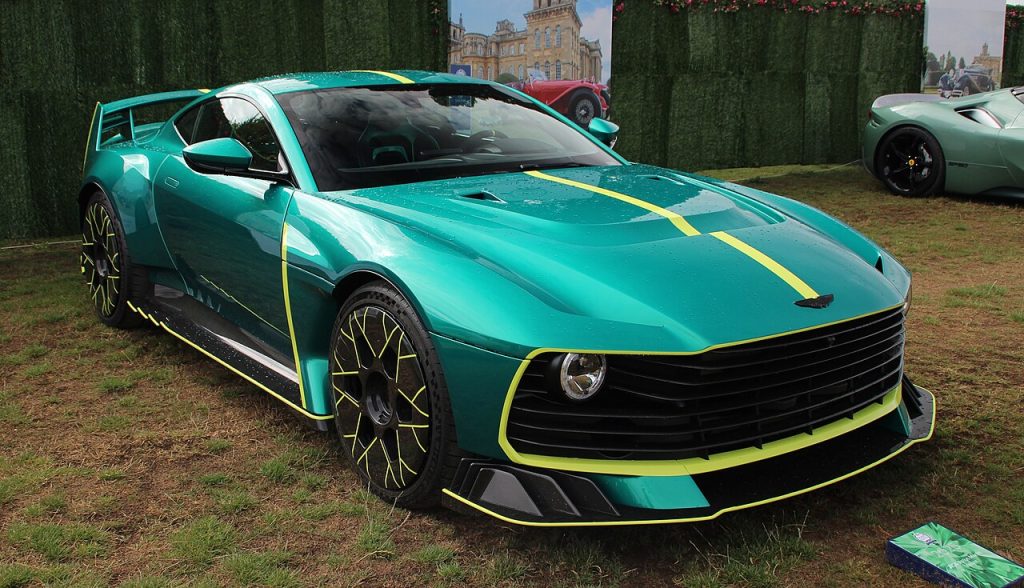
The bundled photograph is source-identified as Valiant and shows the appropriate limited-programme body. Its source example label and capture context are kept distinct from the June 2024 announcement. No build number, current owner or Fernando Alonso ownership is assigned. The visible credit includes the original file record, photographer, licence and resizing disclosure. This gives readers a traceable model illustration while preserving the need for vehicle-specific evidence if a later description makes a stronger claim about the particular car pictured.
Building a useful example-specific archive
A collector file for the Aston Martin Valiant should connect the original specification with subsequent care and the present description. Keep the order, delivery and service records in sequence, distinguishing original documents from later summaries. Add dated photographs and an inventory of accompanying items. Explain known changes with their reason and date, rather than relying on a general assertion of originality. This gives a future reader a way to follow the physical vehicle through its history and understand which findings are supported at the example level.
Condition and identity require different evidence
An edition identity and a condition assessment answer different questions. Original order records can support programme membership, while an inspection explains the state of the actual vehicle at a stated date. A matching finish photograph cannot establish hidden mechanical or structural health. Likewise, a replacement component can be in excellent condition while having a different provenance from the delivered part. A useful description records both categories clearly, retaining technical reports and repair invoices so future editors and collectors can assess the evidence without conflating rarity with preservation.
Photographs should form a dated sequence
Retain overall views, cabin photographs and identifying details together, with the capture date and context available. A close-up becomes more useful when readers can see where the component belongs on the same physical car. Avoid assuming that a later image establishes an earlier configuration, or that an event appearance identifies the current owner. Keep photographer permission and credit records with each file. An archive can then add new images over time while preserving the differences between model illustration, dated visual observation and stronger documentary authentication.
Updating the profile when new records resolve a finding
Attach new information to its source and date. If a later primary record clarifies completion, delivery or an image’s identity, update that particular finding and preserve the reason for the revision. Do not silently rewrite unrelated parts of the vehicle’s history or treat a newly published summary as a complete chassis register. The profile should make confirmed programme information, individual-car evidence and editorial interpretation easy to distinguish. That method keeps the guide useful as research develops while giving readers a concrete route back to the underlying records.
Frequently asked questions
How many Valiants were allocated?
The factory limited the worldwide programme to 38; a separately reconciled completed chassis census is not claimed.
Did Fernando Alonso initiate Valiant?
Yes. The manufacturer and F1 Team identify his commission as the programme’s origin.
Does every Valiant have personal Alonso provenance?
No. The programme’s origin does not establish individual ownership or use for every customer car.
Is the half cage automatically competition-approved?
No. The factory model page explicitly qualifies its approval and full-cage limitations.
Explore related Aston Martin profiles
Sources
- Aston Martin: Valiant reveal, 26 June 2024; Alonso commission and 38-car allocation
- Aston Martin: Valiant technical page; manual V12, ASV dampers and half-cage qualification
- Aston Martin F1 Team: Valiant collaboration with Fernando Alonso
Historical claims follow the linked manufacturer, archive, specialist and catalogue records, with disputed findings retained. Inspection and collecting guidance is editorial analysis. Catalogue condition and custody statements remain dated to their sources.
Photography and credit
Source-identified Aston Martin Valiant. Source example label 2025 is distinct from the June 2024 programme announcement. No individual chassis or Fernando Alonso ownership assigned. Photo: Calreyn88 / Wikimedia Commons · CC BY-SA 4.0. Wikimedia thumbnail resized from original; no cropping or colour changes.
Why this machine matters
Valiant develops the manual V12 special-series idea into a more extreme, track-focused road car. Originating in Fernando Alonso’s personal commission, the Q programme was announced in June 2024 with a global limit of 38. Its specification, driver link and road-versus-track distinctions should remain attached to the actual factory records.
Built in limited numbers
Aston Martin announced a global limit of 38 and said the programme was fully allocated. Those statements establish the factory ceiling and order status at launch; this guide does not promote them to an independently reconciled completed chassis census. The number remains separate from Valour’s allocation and from the unique Victor. A specific Valiant should be connected with its own documentation before further subset claims are made. An unusual colour or specification is not automatically a separately counted production series.
Gallery
Specifications
Factory specifications may vary by model year, market and configuration.
Identity & production
- Official model
- Aston Martin Valiant
- Base model
- Valiant
Powertrain & performance
- Engine
- 5.2-litre twin-turbo V12