2022 Hyundai N Vision 74
Hyundai N Vision 74: 2022 hydrogen-electric development history, heritage design, consolidated prototype headings and credited Goodwood photography.
The 2022 Hyundai N Vision 74 combines a heritage-shaped body with a hydrogen-electric research brief. The physical performance development car is recorded once here, with the additional engineering-prototype heading consolidated into the same programme.
Origins and the correct historical identity
Hyundai introduced N Vision 74 at N Day in July 2022. Its original release describes a hybrid system combining a battery and hydrogen fuel cell, with twin rear motors and a body inspired by the 1974 Pony Coupe design. These are programme-level development statements. They do not establish an exact fabrication count or a customer-production edition.
Design: what makes N Vision 74 distinctive
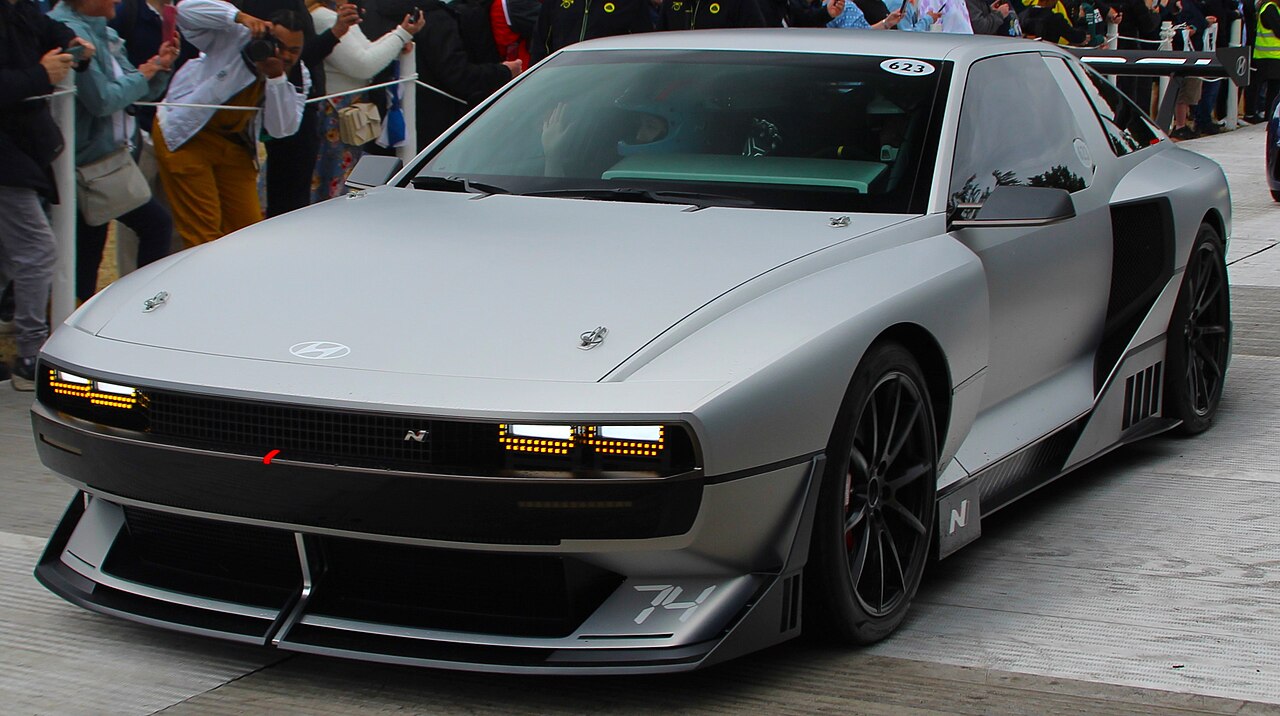
The supplied Goodwood photograph shows a sharply edged silver coupe with pixel-like lamps and large functional-looking openings. The low wedge form gives the heritage reference a contemporary performance character. Its visual interest lies in the collision of familiar geometric simplicity with dense modern detailing. That interpretation comes from the physical image; it does not require assigning a promised future retail price or production schedule.
Engineering and the concept brief
A battery-and-fuel-cell system has several ratings that describe different things. Stored electrical energy, fuel-cell output and traction-motor power cannot be treated as interchangeable. The engineering significance is in how those systems are arranged and managed together. The archive preserves the architecture explicitly supported by the original release while leaving individual hardware provenance and unconfirmed fabrication totals open to later factory evidence.
Why this Hyundai belongs in the design archive
N Vision 74 gives a collection an unusually clear connection between heritage design and a new propulsion investigation. It can stand beside the Pony Coupe reconstruction as a separate modern project, with its own original date and physical purpose. That distinction is essential: inspiration from a historic body does not make the working development programme a reconstruction of that body. Each subject deserves its own catalogue identity.
Recognising and documenting the physical subject
MrWalkr photographed the physical N Vision 74 at Goodwood in July 2023. The source identity, exterior and display setting match the named car. HYU-181 is preserved as an inventory alias so the engineering-prototype heading cannot create a second entry for the programme. Future photographs could add test or cabin details with their own dates. Repeated appearances of this shape do not establish how many development articles were built.
Understanding the hydrogen proposal
A fuel-cell electric vehicle uses hydrogen as an energy carrier and electricity to drive its traction system. The fuel-cell stack, traction motor and energy buffer perform different jobs, so a quoted stack rating should not automatically become a wheel-output figure. Tank volume and pressure likewise differ from usable battery capacity. The specifications here describe only the figures and architecture supported for this named programme. A display photograph records the design object; it cannot establish the output, range or durability of its hidden systems.
The interesting engineering questions concern packaging and use. Where can the energy system sit without compromising the cabin? How do air, cooling and service access fit around a body shaped for visual impact? What infrastructure would the proposed vehicle require? Those questions explain why a hydrogen concept matters even when no retail version follows. They also keep its significance connected to the original design brief, rather than converting a manufacturer’s future-facing demonstration into a claim about a customer car or a completed racing season.
Collector significance and future research
The value of a concept archive lies in preserving the relationship between an idea, the people who developed it and the object that made it visible. A strong collection record keeps the original name, reference year, credited photographs and source links attached to that relationship. If new photographs or factory documents emerge, they can add a show appearance, a construction detail or a later change without replacing the original identity. This is particularly useful for a car whose published pictures may span several exhibitions and whose name may have acquired different spellings.
The complete fabrication tally remains unknown here. Exhibition appearances do not provide a count: the same object can travel, and a programme may also produce models or development articles that are not visible publicly. The concept belongs in this archive because its physical identity is supported, rather than because a single surviving photograph implies that only one was made. A future tally should identify which objects it covers and the document establishing that scope. Until then, this profile provides the historical and photographic foundation for further documentation.
Reading the evidence for this profile
The original source links below identify the programme and the historical statements used in this article. The photograph has its own creator and licence record, separate from the manufacturer’s vehicle history. Keep both when transferring this profile into a collection catalogue. A manufacturing tally describes how many cars belong to a defined original programme; it does not measure how many survive, how many are publicly visible, or how many retain all their original components. Those individual questions require dated chassis and restoration evidence. The reference year likewise describes the programme’s introduction or named historic configuration, while the supplied caption states the photographed setting and any established individual identity. This lets future research expand the car’s history without blurring the scope of the record already assembled here.
Specifications and verified rarity
| Reference year | 2022 |
|---|---|
| Model / programme | N Vision 74 |
| Body / role | Hydrogen-electric performance development prototype |
| Introduction | N Day, July 2022 |
| Architecture | Battery / hydrogen fuel-cell hybrid |
| Traction layout | Twin rear motors |
| Heritage inspiration | 1974 Pony Coupe design |
| Exact manufacturing tally | Not established |
| Rarity evidence | Physical concept archive scope; tally unknown |
| Rarity scope | Verified physical Hyundai concept programme; complete fabrication tally unconfirmed. Included as Concept / Archive, without an invented one-car count or retail-production ceiling. |
| Inventory reference | HYU-180 — Verified |
Frequently asked questions
When was the programme introduced?
Hyundai’s original N Day presentation was in July 2022.
What propulsion architecture is described?
A battery-and-hydrogen-fuel-cell hybrid with twin rear motors.
Is this the Pony Coupe reconstruction?
It is a separate performance development programme.
Why is HYU-181 an alias?
Its engineering-prototype heading overlaps the same N Vision 74 programme.
What rarity or archive scope is verified?
Verified physical Hyundai concept programme; complete fabrication tally unconfirmed. Included as Concept / Archive, without an invented one-car count or retail-production ceiling.
Who took the supplied photograph?
MrWalkr via Wikimedia Commons, under CC BY-SA 4.0. The original file and licence links accompany the image. Retain that credit when the photograph is uploaded, exported or reused.
Related Hyundai vehicle profiles
Sources and photo credits
Photograph: MrWalkr via Wikimedia Commons original file, CC BY-SA 4.0. Source-provided photograph supplied without local cropping, retouching or text removal. A source thumbnail is used where available. Hyundai N Vision 74 at Goodwood in July 2023, photographed by MrWalkr; the physical development programme dates to 2022.
Built in limited numbers
Verified physical Hyundai concept programme; complete fabrication tally unconfirmed. Included as Concept / Archive, without an invented one-car count or retail-production ceiling.
Gallery
Specifications
Factory specifications may vary by model year, market and configuration.
Identity & production
- Official model
- N Vision 74