2018 NIO ES6 Premier Edition
Explore ES6 Premier Edition: factory identity, history, specifications, rarity evidence, identification notes and credited photos.
The ES6 Premier Edition is a factory-defined launch allocation with an announced limit of 6,000. NIO introduced it with the first-generation ES6 in December 2018, and its June 2019 delivery announcement identifies Premier Edition vehicles reaching customers. Its rarity rests on that bounded factory programme, rather than on treating every early ES6 or high-specification trim as a limited edition.
A named edition at the first ES6 launch
The original NIO investor release dates the ES6 presentation to 15 December 2018 and explicitly identifies a Premier Edition limited to 6,000. The title therefore uses the launch reference year, while the delivery chronology remains separate. A 2019 registration or delivery date can be entirely consistent with an edition announced in 2018. The important evidence is the factory name and allocation, not whichever date makes a classified advertisement sound rarer.
NIO: original ES6 / Premier Edition launch release and 6,000-car limit
Customer deliveries are documented separately
NIO’s 18 June 2019 announcement says Premier Edition vehicles were delivered in Beijing, Shanghai and Guangzhou. This supports the move from an announced edition to documented customer supply. It does not, by itself, certify that all 6,000 places were completed, delivered or remain in use. The article keeps the factory limit and the delivery event as different facts rather than turning either into an audited worldwide production total.
NIO: Premier Edition customer deliveries, 18 June 2019
The first-generation ES6 is the correct family
The subject belongs to the initial ES6 generation, not a later vehicle using the same model name. The original launch literature describes a five-seat electric SUV with dual-motor configurations and a structure combining aluminium with carbon-fibre elements. Those are family-level technical references. For a particular Premier Edition car, the original order and build information remain necessary to establish its exact battery, equipment and delivered configuration.
NIO: original ES6 / Premier Edition launch release and 6,000-car limit
Why battery and performance figures need a configuration
The launch release’s ordinary ES6 specification table distinguishes Standard and Performance versions and lists different battery choices. A generic statement about the longest range or strongest output in that table should not silently become a universal Premier Edition specification. This profile consequently leaves any unverified edition-wide battery-and-output combination unset. The useful question for an individual car is what its factory order specified and what hardware is fitted now.
NIO: original ES6 / Premier Edition launch release and 6,000-car limit
How to identify a Premier Edition example
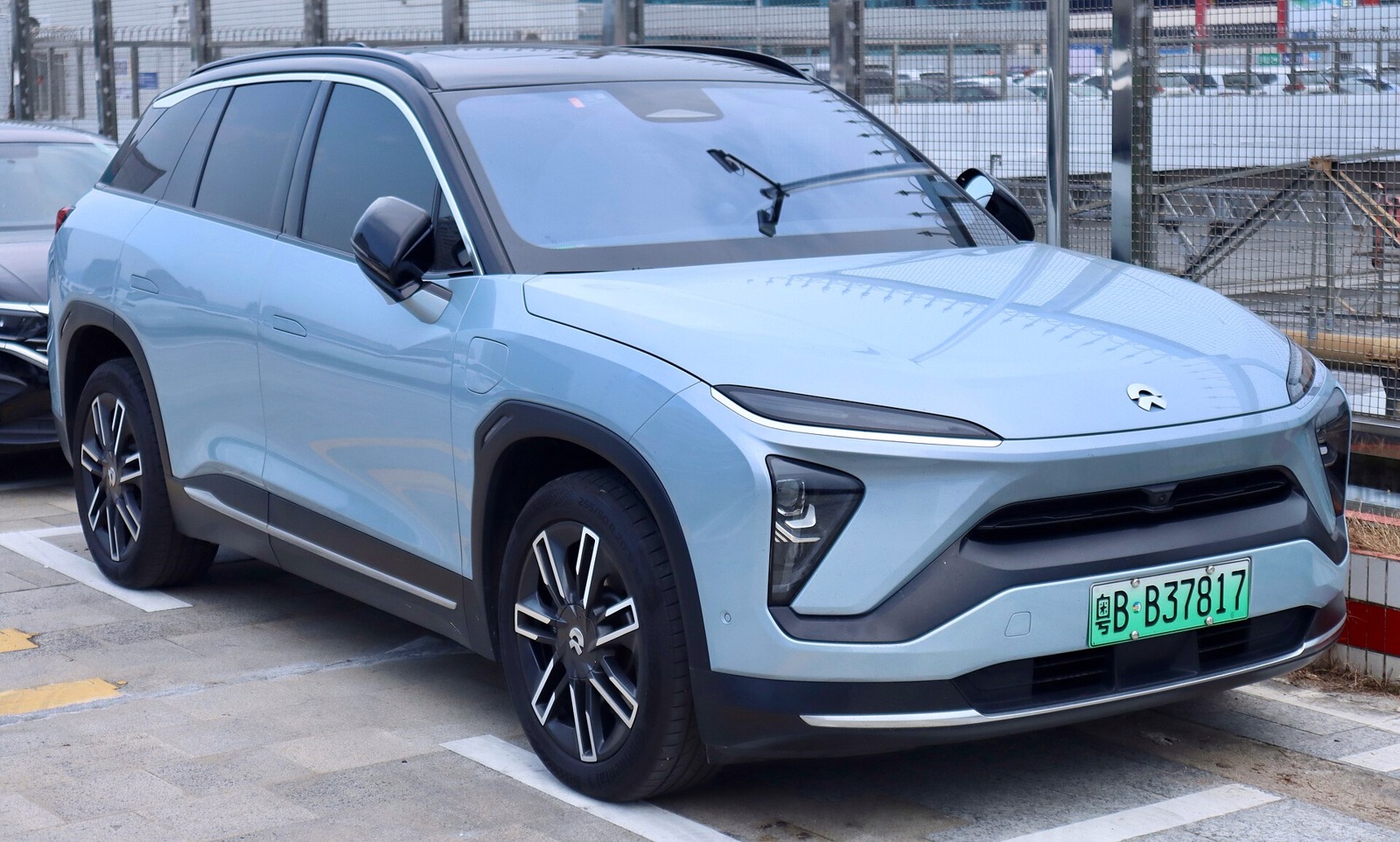
Begin with documentation naming the Premier Edition allocation, then connect it to the car’s complete vehicle identity and dated supply record. Photographs of exterior trim can help describe an example but should not replace those documents. The reference photograph bundled here shows a first-generation ES6; its caption explicitly avoids claiming authenticated Premier Edition status. No badge design, numbered-plaque format or special serial sequence is invented from the edition’s name alone.
The difference between an allocation and an option combination
A car can be unusual because of its paint, interior or battery choice without belonging to a factory-limited series. Premier Edition qualifies because the manufacturer identifies a finite named allocation. That distinction prevents an archive from manufacturing additional editions from every uncommon option pairing. It also means that a highly equipped regular ES6 does not become a Premier Edition simply because a seller calls it a launch specification.
Keeping the 6,000 figure in its proper place
The announced limit is attached to the Premier Edition programme. It is not the total number of all first-generation ES6s, every early delivery, or NIO vehicles built during a particular month. It also should not be combined with the ES8 Founders Edition, a different allocation whose 10,000-car limit exceeds this project’s threshold. Each name, quantity and model needs to stay together for the archive’s rarity information to remain useful.
What a well-documented surviving car would add
An individual history can connect the factory allocation with the delivery date, original configuration and later service or ownership records. Replaced equipment and changes should be described as part of that history. The strongest profile would let a reader follow the car from its original edition paperwork to its present condition without assuming that every component remains unchanged. This article provides the programme reference against which that individual evidence can be assessed.
Specification and identity reference
| Factory announcement | 15 December 2018 |
|---|---|
| Documented first delivery event | 18 June 2019 |
| Market | China |
| Announced edition limit | 6,000 |
| Body / generation | First-generation ES6, five-seat electric SUV |
| Edition-wide battery / motor configuration | Not assigned from the ordinary-model table |
| Completed production / survivors | Not assigned |
Rarity and production scope
Manufacturer-announced 6,000-unit factory edition limit. This is not an audited completed-production or current-survivor total.
Identifying the documented subject
Match the complete model name, date and programme to the linked evidence. Keep any chassis-specific provenance separate from a general description of the model. A period image confirms what was photographed, while a production or technical claim requires the corresponding document.
What the photograph represents
First-generation NIO ES6 reference vehicle. The image does not authenticate a Premier Edition allocation, numbered identity or original option specification.
Comparisons and related profiles
Continue through these connected NIO records, each with its own factory identity and production scope.
Frequently asked questions
Is the rarity figure a worldwide production total?
Manufacturer-announced 6,000-unit factory edition limit. This is not an audited completed-production or current-survivor total.
How should an individual example be authenticated?
Match the complete original model information to the appropriate dated documentation, then record the present condition and modifications separately. A badge, colour scheme or stripped interior alone is insufficient evidence of a factory grade.
Sources and further reading
- NIO: original ES6 / Premier Edition launch release and 6,000-car limit
- NIO: Premier Edition customer deliveries, 18 June 2019
Research checked 16 October 2026. Original manufacturer announcements, official competition history and photographic evidence are identified separately. Design readings and documentation guidance are editorial interpretation.
Built in limited numbers
Manufacturer-announced 6,000-unit factory edition limit. This is not an audited completed-production or current-survivor total.
Gallery
Specifications
Factory specifications may vary by model year, market and configuration.
Identity & production
- Official model
- NIO ES6 Premier Edition
Sources and verification
Source citations are being prepared for this profile.