2011 Toyota Fun-Vii Concept
Explore the Toyota Fun-Vii Concept: history, verified identity, specification references, rarity evidence and real credited photos.
The Fun-Vii imagined a vehicle whose body and cabin could become changeable information surfaces. Toyota presented the physical concept in 2011, alongside visions of connected services and personalised displays. The real show car and the promotional digital scenarios have different evidentiary roles.
A 2011 physical concept with a digital brief
Toyota’s contemporary announcement identifies the Fun-Vii for the 2011 Tokyo Motor Show. The project explored connected mobility, personalisation and a vehicle that could exchange information with users and its surroundings. That establishes a named concept, not a retail service ready for universal use. The archive follows the physical show proposal while describing digital scenarios as intentions. A rendered scene is not used as a substitute for a photograph of the car.
Toyota: contemporary Fun-Vii concept announcement
The exterior becomes an information surface
Toyota proposed changing the appearance of the body through displayed information and graphics. As design interpretation, this treats the exterior as an interface as well as a physical shell. That is a different role from permanent paint or a conventional badge. The article does not claim that every promotional image demonstrates a fully operational exterior display, or that the concept established production durability, visibility and regulatory approval for all proposed graphics.
The cabin proposal extends the connected theme
The official material also describes adaptable interior information and assistance concepts. Their historical interest is the attempt to join vehicle use with software-like personalisation. The archive keeps those proposals separate from independently tested autonomous capability or a guaranteed operating service. No engine output, battery range or road performance figure is invented to make the concept resemble a conventional production specification sheet.
Toyota: contemporary Fun-Vii concept announcement
An actual exhibition photograph supports the visual record
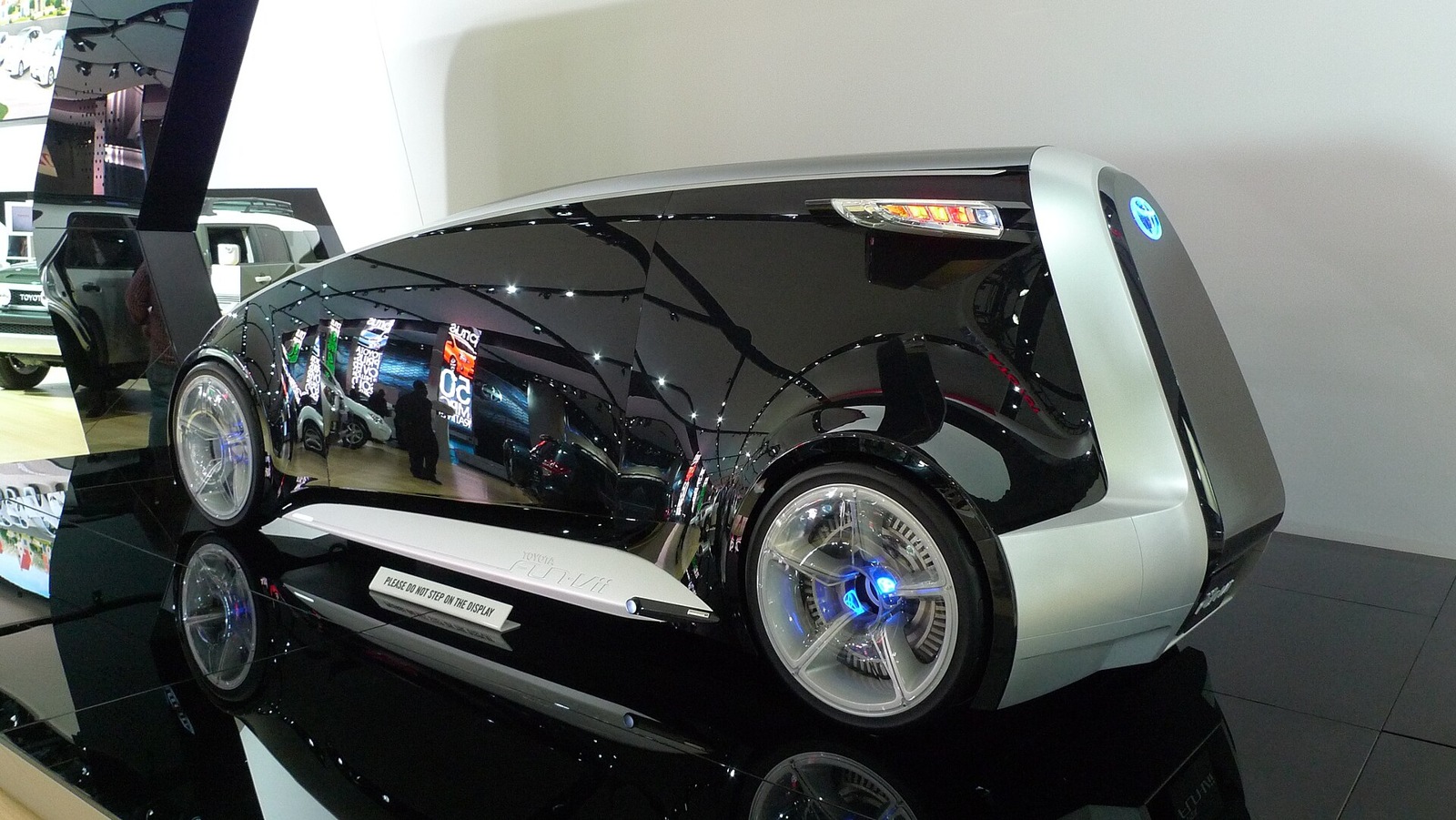
Andrew Duthie’s photograph shows the physical Fun-Vii at the January 2012 North American International Auto Show, following the 2011 debut. The black body, display graphics and show setting are visible. That later photograph is not relabelled as Tokyo 2011, and it is not a computer-generated promotional vision. The original creator, Creative Commons share-alike licence and image changes accompany the asset so its evidentiary role remains clear.
Toyota UK: contemporary Fun-Vii connected-car proposal
Later naming does not create another production total
Toyota later used Diji naming for the connected concept in its European presentation. Such naming context belongs in the identity history, but it does not by itself establish a new chassis or separate manufacture. The archive does not turn a single named show proposal into an audited one-off total. Repeated exhibition appearances, digital renderings and aliases are records of a project; construction claims require evidence of their own.
Specifications and identity reference
| Reference debut | 2011 Tokyo Motor Show |
|---|---|
| Primary theme | Connected vehicle and changeable information surfaces |
| Later naming context | Diji |
| Included photograph | Physical exhibit; Detroit, January 2012 |
| Image type | Real exhibition photograph; not a promotional rendering |
| Status | Concept intentions; no customer allocation verified |
Rarity and production scope
This Archive identity covers the named physical Fun-Vii concept introduced in 2011 and its later Diji naming context. Digital display and connectivity scenarios are attributed design intentions, not independently proven production capability. The included real photograph documents a 2012 exhibition appearance. No exact lifetime chassis total is established; aliases and repeat displays are not added as fresh manufacture, and completed production remains blank.
This is an Archive identity. The experimental or individually named car is not added as extra production on top of its underlying family. Repeated exhibition appearances do not establish additional chassis; the specific scope above governs the count.
What the photograph represents
Andrew Duthie’s real photograph of the physical Fun-Vii concept at the North American International Auto Show on 9 January 2012. This later exhibition appearance follows the 2011 debut. It is not one of Toyota’s computer-generated promotional scenarios and does not establish additional concept manufacture.
Related Toyota profiles
Frequently asked questions
Is the supplied image a computer-generated scene?
No. It is Andrew Duthie’s photograph of the physical concept at the January 2012 Detroit show.
Does Diji naming prove another concept was manufactured?
No. Naming and exhibition changes alone do not establish an additional chassis.
What is the production-count boundary for this profile?
This Archive identity covers the named physical Fun-Vii concept introduced in 2011 and its later Diji naming context. Digital display and connectivity scenarios are attributed design intentions, not independently proven production capability. The included real photograph documents a 2012 exhibition appearance. No exact lifetime chassis total is established; aliases and repeat displays are not added as fresh manufacture, and completed production remains blank.
Sources and further reading
- Toyota: contemporary Fun-Vii concept announcement
- Toyota UK: contemporary Fun-Vii connected-car proposal
- Toyota UK: later Diji naming context
Research checked 19 October 2026. Linked manufacturer heritage pages, factory announcements, official distributor publications and labelled contemporary coverage support the specifically identified claims. Photographic descriptions identify the illustrated subject. Design analysis and suggested authentication steps are editorial interpretation.
Built in limited numbers
This Archive identity covers the named physical Fun-Vii concept introduced in 2011 and its later Diji naming context. Digital display and connectivity scenarios are attributed design intentions, not independently proven production capability. The included real photograph documents a 2012 exhibition appearance. No exact lifetime chassis total is established; aliases and repeat displays are not added as fresh manufacture, and completed production remains blank.
Gallery
Specifications
Factory specifications may vary by model year, market and configuration.
Identity & production
- Official model
- Toyota Fun-Vii Concept
Sources and verification
Source citations are being prepared for this profile.