2007 Lotus 2-Eleven
Explore the 2007 Lotus 2-Eleven: programme history, design, verified rarity scope, specifications and credited photography.
The Lotus 2-Eleven is an open lightweight programme developed by Lotus Sport. The manufacturer identifies Type 123, correcting the inventory’s broader Type 111 lineage label without creating another profile.
History and verified programme identity
Lotus’s heritage record identifies the 2-Eleven programme across 2007–2010 and gives 356 explicitly for all models. Its manufacturer Type 123 designation is retained alongside the original workbook’s Type 111-derived family wording. The total therefore remains an umbrella reference that includes specialised configurations rather than an independent count for every named derivative. The exact 2008 photograph supplies a physical example at a later show. The separate GT4 reference is not added to 356. This profile also avoids claiming universal road registration, because a track-focused programme and an individual vehicle’s jurisdiction-specific approval are different questions.
Engineering and design
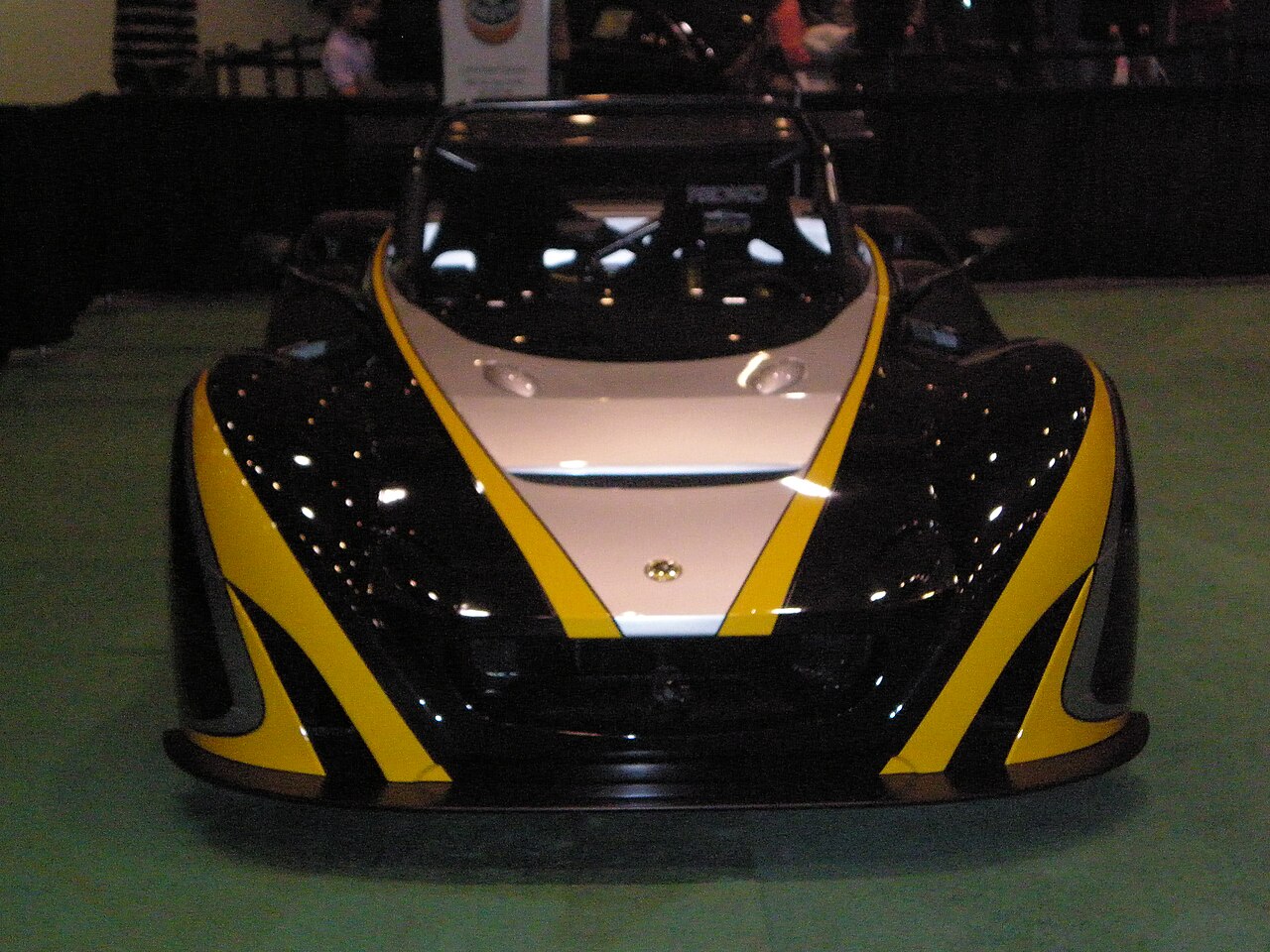
The manufacturer’s table describes a supercharged 1,796 cc four-cylinder with a six-speed transmission. In the supplied photograph, the low open cockpit, small wind deflector and minimal surrounding body make the lightweight track emphasis visible. They do not establish current engine output or competition eligibility. The model’s technical record should distinguish original family specification from later preparation and the separate GT4 branch. Lotus Sport is the supported manufacturer context here, rather than the original Team Lotus Formula One constructor. An individual file can then record chassis, engine and preparation history without turning an open body into proof of one universal legal or racing configuration.
The physical car in the supplied photograph
BrokenSphere’s photograph shows a dark-and-yellow 2008 Lotus 2-Eleven from the front at the San Francisco motor show in November 2008. Its low open passenger area and sparse body are visible on display. The source identifies the standard named family subject rather than certifying a GT4 allocation.
A closer look at the design
The front display view emphasizes the 2-Eleven’s physical openness. The cockpit sits behind a small upper deflector, while dark panels and yellow accents define a body with relatively little enclosure. The show context is a later public appearance, not evidence of a specific race entry. The manufacturer’s source establishes the model and Type number, allowing the image to be placed in the correct family. That separation is particularly useful when a workbook uses the broader Elise-derived Type 111 label. Correcting the supported nomenclature improves the profile without discarding the original identity trail, assigning a GT4 allocation by appearance or claiming registration rights that the photograph cannot demonstrate.
Collecting and chassis evidence
A 2-Eleven collecting file should begin with original factory identity and its configuration before adding track use, repairs and any approval documents. The maker’s 356 reference is explicitly all models and must not be summed again with the GT4 subset. Competition preparation can change seats, restraints, body elements and powertrain settings without creating another originally manufactured car. The exact show image illustrates the family but does not establish the photographed chassis’s event history or legal status in another country. Preserve those as documented individual facts. The corrected Type number clarifies nomenclature while the original workbook wording remains a duplicate-checking alias.
Related Lotus designs and meaningful comparisons
The earlier 340R provides an open lightweight design comparison, and the GT4 supplies a specific competition branch of the 2-Eleven family. These links make body design and racing preparation readable without conflating an all-model volume with a subset or claiming that every example shares road approval.
Reading the sources
The programme sources and the photograph answer different questions. Manufacturer and custodial records establish the original model, Type, category and published production scope. The creator’s file establishes the pictured subject, setting and image permission. An individual chassis history can then add ownership, competition entries and dated repairs without changing the scope of the original programme. Build references are not survivor counts, and a later specification does not automatically become an additional newly manufactured vehicle. Where primary evidence does not establish a complete fabrication census, that field remains unassigned.
Specifications and rarity evidence
| Programme reference year | 2007 |
|---|---|
| Model / Type | 2-Eleven — 2-Eleven / Type 123 |
| Body / competition role | Open lightweight Lotus Sport track-car family |
| Manufacturer Type | 123 |
| Inventory lineage retained | Type 111-derived |
| Manufacturer period | 2007–2010 |
| Engine programme | Supercharged 1,796 cc four-cylinder |
| Transmission reference | Six-speed |
| Count scope | All models, not additive with GT4 |
| Published build / register reference | 356, all models |
| Independently audited completed tally | Not assigned |
| Count scope | Manufacturer2-Eleven family reference356 for2007–2010 explicitly all models, including specialised configurations. GT4 subset described separately and not added to356. No claim of universal road registration; audited output and survivor census unassigned. |
| Original inventory status | LOT-136 — Verified |
Frequently asked questions
Is the GT4 reference additional to the 356 all-model figure?
No. The manufacturer identifies 356 across the 2-Eleven family. The GT4 is treated as a subset and is not added again to create a larger production total.
How is 2-Eleven classified?
This is a Lotus competition archive. It remains separate from Lotus road-car production. Customer cars, works entries and converted chassis need a reconciled scope before any complete fabrication tally is assigned.
Which technical details are established for the programme?
The primary record supports manufacturer type: 123; inventory lineage retained: Type 111-derived; manufacturer period: 2007–2010. These are programme or explicitly attributed photo references. A particular surviving car’s engine, chassis repairs and competition preparation require its own dated documentation.
Does the photographed appearance establish factory originality?
The caption records a real creator-identified 2-Eleven subject and its documented setting. It establishes the illustration’s scope, while original components, restoration work and individual race provenance require chassis-specific evidence. A competition number, current paint or museum display is not used as an originality certificate.
What rarity or archive scope is verified?
Manufacturer2-Eleven family reference356 for2007–2010 explicitly all models, including specialised configurations. GT4 subset described separately and not added to356. No claim of universal road registration; audited output and survivor census unassigned.
Who photographed the supplied image?
BrokenSphere via Wikimedia Commons, under CC BY-SA 3.0. The original file and licence are linked with the image. Retain the creator, source and licence when uploading, exporting or reusing it; local retouching and synthetic enlargement have not been performed.
Related Lotus profiles
Sources and photo credits
Photograph: BrokenSphere via Wikimedia Commons original source, CC BY-SA 3.0. Source-provided thumbnail supplied without local cropping, retouching or synthetic enlargement.
Built in limited numbers
Manufacturer2-Eleven family reference356 for2007–2010 explicitly all models, including specialised configurations. GT4 subset described separately and not added to356. No claim of universal road registration; audited output and survivor census unassigned.
Gallery
Specifications
Factory specifications may vary by model year, market and configuration.
Identity & production
- Official model
- 2-Eleven