2003 Citroën C-Airlounge Concept
Explore the 2003 Citroën C-Airlounge Concept: sourced history, design, specifications and rarity evidence, with credited documentary photos.
The 2003 Citroën C-Airlounge turns the luxury-car cabin into a configurable interior environment. Its smooth body surrounds a proposal in which seating, lighting and materials are treated as parts of the experience of travelling together.
Luxury organized around a shared cabin
Citroën’s preserved period release dates C-Airlounge to Frankfurt in 2003 and describes a modular four- or five-seat interior. It records a 3.0-litre V6, automatic transmission and Hydractive III suspension, with a 4.88-metre body and 2.90-metre wheelbase. Projected lighting, wool carpeting, leather and dedicated luggage help define the cabin’s presentation.
The concept’s archive role lies in the combination. An interior can become a complete design proposal when furniture, light and layout work together, rather than when expensive materials are simply added to a conventional cabin. C-Airlounge gives that idea a physical object through which readers can examine the relationship between private space and shared travel.
A restrained exterior around the interior experiment
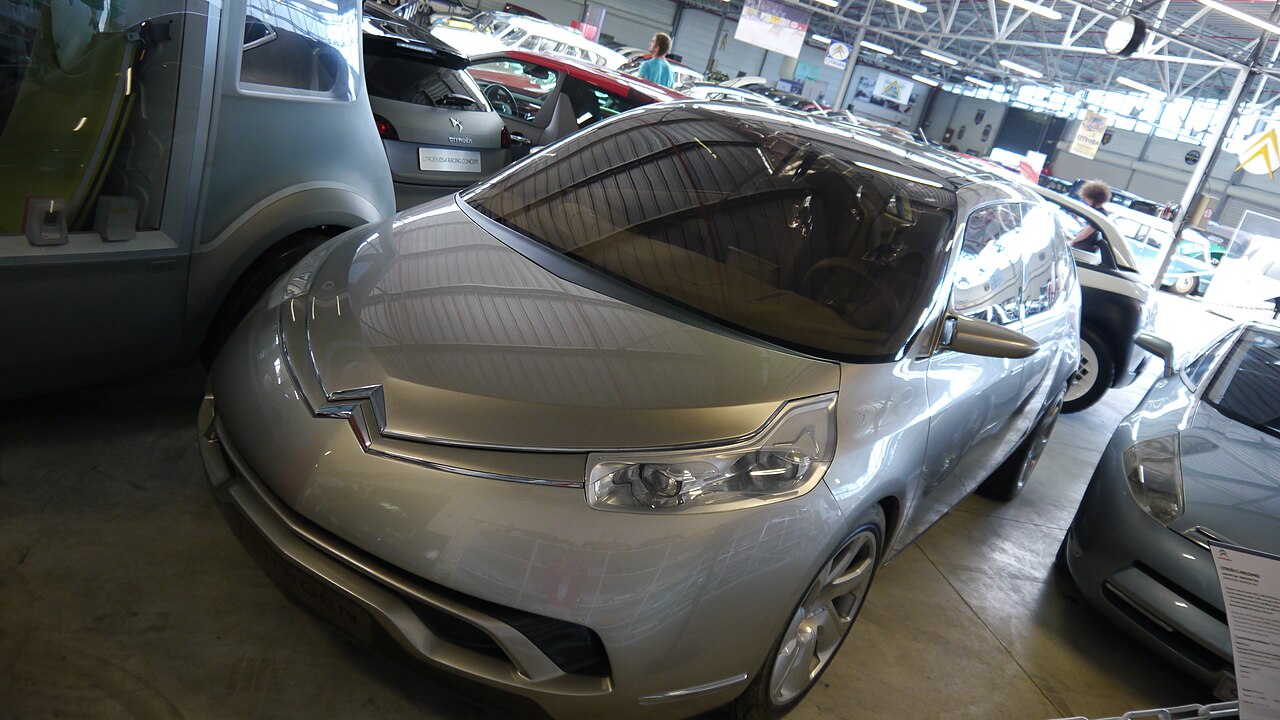
The collection photograph shows a broad silver nose with a small central chevron and narrow paired lamp elements. The windscreen sits above a rounded front volume, while the cabin extends rearward in a continuous sweep. A long dark glass area provides the main contrast with the pale body. The photographed form is calm compared with the more theatrical open-door presentation of some contemporary concepts.
That restraint is useful when interpreting the project. The body does not announce every cabin feature from outside. Instead, it establishes a smooth enclosure whose contents need separate explanation. The museum view identifies the physical concept, while interior photographs and period descriptions reveal the more elaborate passenger-space proposition.
Modularity and atmosphere are different questions
A four- or five-seat arrangement concerns how the space is organized. Lighting and materials concern how that space is perceived. The concept brings both questions together, but a precise history should keep them distinguishable. A diagram of the seats explains flexibility; an image of the lighting explains atmosphere.
Period connectivity equipment also deserves period terminology. A historical mention of an onboard computer network should not become a claim about modern cloud services or an app ecosystem. The archive is more compelling when it records what the designers actually proposed, using the technical and social context of the project’s own time.
Airlounge as a collector archive subject
The most informative record would include the exterior, alternative seating positions, light-projection equipment and custom interior fittings. Conservation can be particularly important for a concept whose meaning depends on electronic effects and unusual materials. Keeping those mechanisms legible helps preserve more than the body shell.
Compare C-Airlounge with Xanae through the passenger-space theme and with C-SportLounge through the grand-touring theme. The first comparison emphasizes access and flexible accommodation; the second asks how a later cockpit-focused concept presents the driver. Together they provide a specific path through Citroën’s experimental interiors.
Specifications and verified rarity
| Reference year | 2003 |
|---|---|
| Model / project | C-Airlounge Concept |
| Body / role | Modular luxury concept car |
| Powertrain | 3.0-litre V6; automatic transmission |
| Suspension | Hydractive III |
| Dimensions / wheelbase | 4.88 × 1.93 × 1.58 m / 2.90 m |
| Cabin | Four- or five-seat modular arrangement |
| Rarity scope | Documented physical C-Airlounge concept presented at Frankfurt in 2003; exact fabrication tally unset. |
| Exact manufacturing tally | Not established |
| Inventory reference | CIT-117 — Verified |
Frequently asked questions
How many seats were proposed?
The period material describes a modular four- or five-seat arrangement.
Was it an electric concept?
The cited specification identifies a 3.0-litre V6.
What does the exterior photo establish?
The physical concept’s body form and collection setting, rather than the operation of interior lighting.
Why preserve interior equipment?
The lighting, fittings and modular layout carry much of the concept’s meaning.
What rarity or archive scope is verified?
Documented physical C-Airlounge concept presented at Frankfurt in 2003; exact fabrication tally unset.
Who took the supplied photograph?
Klaus Nahr from Germany via Wikimedia Commons, under CC BY-SA 2.0. Keep the photographer, original-file link and licence credit with the image.
Related Citroën profiles
Sources and photo credits
Photograph: Klaus Nahr from Germany via Wikimedia Commons original file, CC BY-SA 2.0. Source photograph supplied without local cropping, retouching or text removal. A source-provided thumbnail is used where available. C-Airlounge at the Citroën Conservatoire.
Built in limited numbers
Documented physical C-Airlounge concept presented at Frankfurt in 2003; exact fabrication tally unset.
Gallery
Specifications
Factory specifications may vary by model year, market and configuration.
Identity & production
- Official model
- C-Airlounge Concept