2001 Ford Forty-Nine Concept
Explore 2001 Ford Forty-Nine Concept: history, specifications, rarity evidence and credited photography.
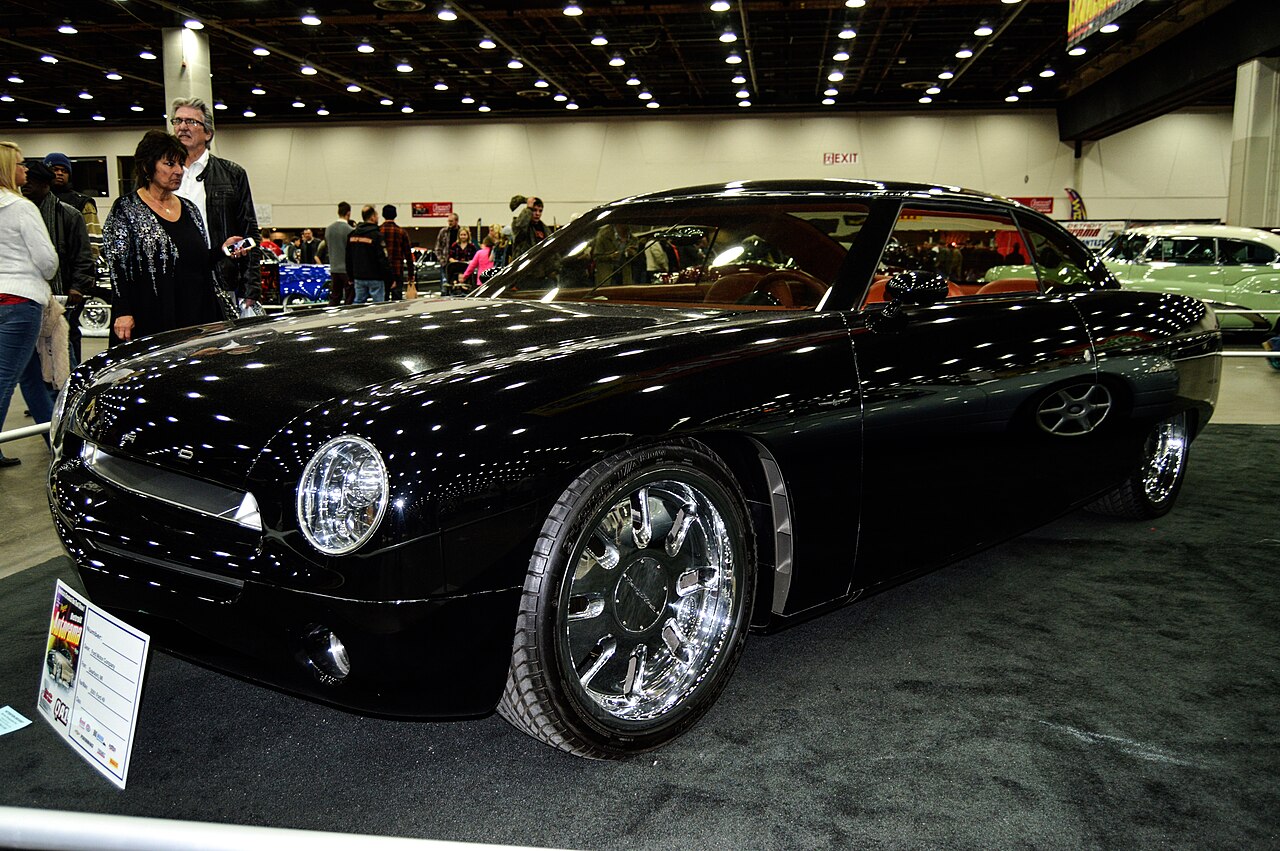
The Ford Forty-Nine Concept brought the shape of the 1949 Ford into the 2001 Detroit show season.
History and purpose
The Ford Forty-Nine Concept brought the shape of the 1949 Ford into the 2001 Detroit show season. Ford’s original introduction placed it within a deliberate return to recognisable company heritage. The manufacturer’s concept description supplies the mechanical specification, while the period debut announcement establishes that the physical coupe was publicly presented. Its name refers to its historical inspiration, not its own construction year. This profile covers the black coupe concept as a design archive subject. It leaves the complete fabrication tally unknown and does not count a related convertible display model as a second road-going coupe. That distinction matters when photographs and auction records for the two bodies appear together.
Design and engineering
The supplied photograph shows the black coupe’s remarkably smooth sides, bright wheels and low glasshouse. Round front lighting recalls an older Ford without copying the original car’s entire front structure. The long uninterrupted panels make the vehicle look closer to a carefully finished custom car than to a conventional early-2000s showroom coupe. The manufacturer described a glass upper structure and individual bucket seating around a substantial centre console. Those features place the concept firmly in its own era. Its interest lies in the balance between familiar proportions and modern presentation, rather than in treating it as a restored 1949 vehicle.
Identifying the original configuration
A useful Forty-Nine record should identify the body before listing specifications. The coupe’s documented V8 and automatic transmission belong to the manufacturer’s powered concept description; they must not be assigned automatically to the separate convertible display object. Likewise, the black coupe in this photograph is not proof of an individual chassis number or a complete tally of experimental parts. Keep the original concept name in the heading, retain the 2001 reference year and attach later display appearances as dated events. That gives the physical subject a coherent identity even if its custodial record changes.
Collector context and preservation
For a collection, the Forty-Nine provides a clear example of how a manufacturer can revisit an earlier silhouette without proposing an exact reproduction. A side photograph explains its smooth body and long roof line; a cabin view would add the contrast between custom-car atmosphere and modern seating. Preservation records should address glazing, paint, trim and the operation of the show vehicle separately. A concept’s public appearance does not establish retail certification, ordinary servicing arrangements or availability to customers. Those boundaries help an archive explain the design with confidence while keeping unanswered construction and ownership questions visible for future research.
Reading the evidence for this profile
The original source links below identify the programme and the historical statements used in this article. The photograph has its own creator and licence record, separate from the manufacturer’s vehicle history. Keep both when transferring this profile into a collection catalogue. A manufacturing tally describes how many cars belong to a defined original programme; it does not measure how many survive, how many are publicly visible, or how many retain all their original components. Those individual questions require dated chassis and restoration evidence. The reference year likewise describes the programme’s introduction or named historic configuration, while the supplied caption states the photographed setting and any established individual identity. This lets future research expand the car’s history without blurring the scope of the record already assembled here.
Specifications and verified rarity
| Reference year | 2001 |
|---|---|
| Model / programme | Forty-Nine Concept |
| Body / role | Two-door concept coupe |
| Documented engine | Thunderbird-derived 3.9-litre DOHC V8 |
| Architecture / transmission | Front engine, rear-wheel drive; five-speed automatic |
| Exact manufacturing tally | Not established |
| Eligibility bound | Physical concept archive scope; tally unknown |
| Rarity scope | Physical 2001 Forty-Nine coupe concept archive. Complete fabrication tally is not established; the related non-running convertible is a separate display object. No retail production series is claimed. |
| Inventory reference | FRD-257 — Verified |
Frequently asked questions
What is the Ford Forty-Nine Concept?
A physical Ford concept coupe introduced in 2001, inspired by the 1949 Ford; distinct from the historic production model and the separate convertible display object.
What engineering defines this Ford?
Thunderbird-derived 3.9-litre DOHC V8. Front engine, rear-wheel drive; five-speed automatic. These are the documented programme or preserved-concept specifications. Connect an individual vehicle’s installed components to its own dated records before assigning a factory configuration to that particular example.
Why is 2001 the reference year?
It identifies the introduction or original historical configuration described in this article. The photograph can show a later example or a later display of the original subject. The source inventory’s original heading remains an identity alias wherever the date or model name has been corrected.
How should an individual Forty-Nine Concept be documented?
Start with the chassis identity and connect it to dated construction, registration or custodial records. Keep exterior, interior, engine and underbody photographs together. Record changes to finish, equipment and mechanical specification as separate events, so the physical car’s history can grow without changing the definition of the original programme.
What rarity or archive scope is verified?
Physical 2001 Forty-Nine coupe concept archive. Complete fabrication tally is not established; the related non-running convertible is a separate display object. No retail production series is claimed.
Who took the supplied photograph?
Yahya S. via Wikimedia Commons, under CC BY 2.0. The original file and licence links accompany the image. Retain that credit when the photograph is uploaded, exported or reused.
Related Ford profiles
Sources and photo credits
Photograph: Yahya S. via Wikimedia Commons original file, CC BY 2.0. Source-provided photograph supplied without local cropping, retouching or text removal. A source thumbnail is used where available. Black Ford Forty-Nine coupe concept photographed on display; no individual chassis number assigned.
Built in limited numbers
Physical 2001 Forty-Nine coupe concept archive. Complete fabrication tally is not established; the related non-running convertible is a separate display object. No retail production series is claimed.
Gallery
Specifications
Factory specifications may vary by model year, market and configuration.
Identity & production
- Official model
- Forty-Nine Concept