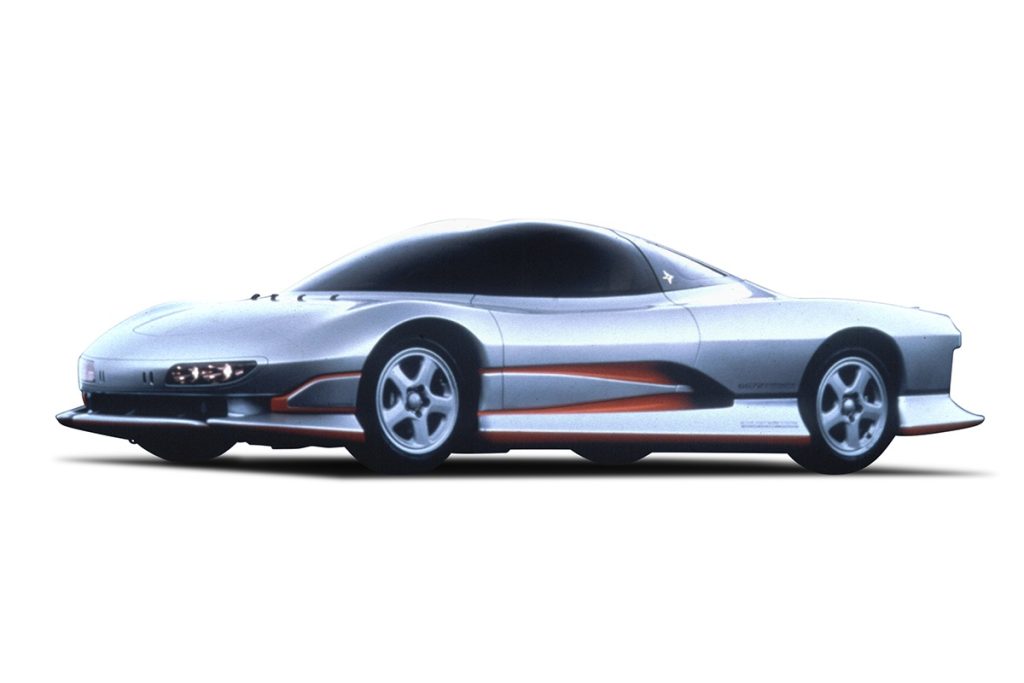
1995 Mitsubishi HSR-V
Explore HSR-V: factory identity, history, specifications, rarity evidence, identification notes and credited photos.
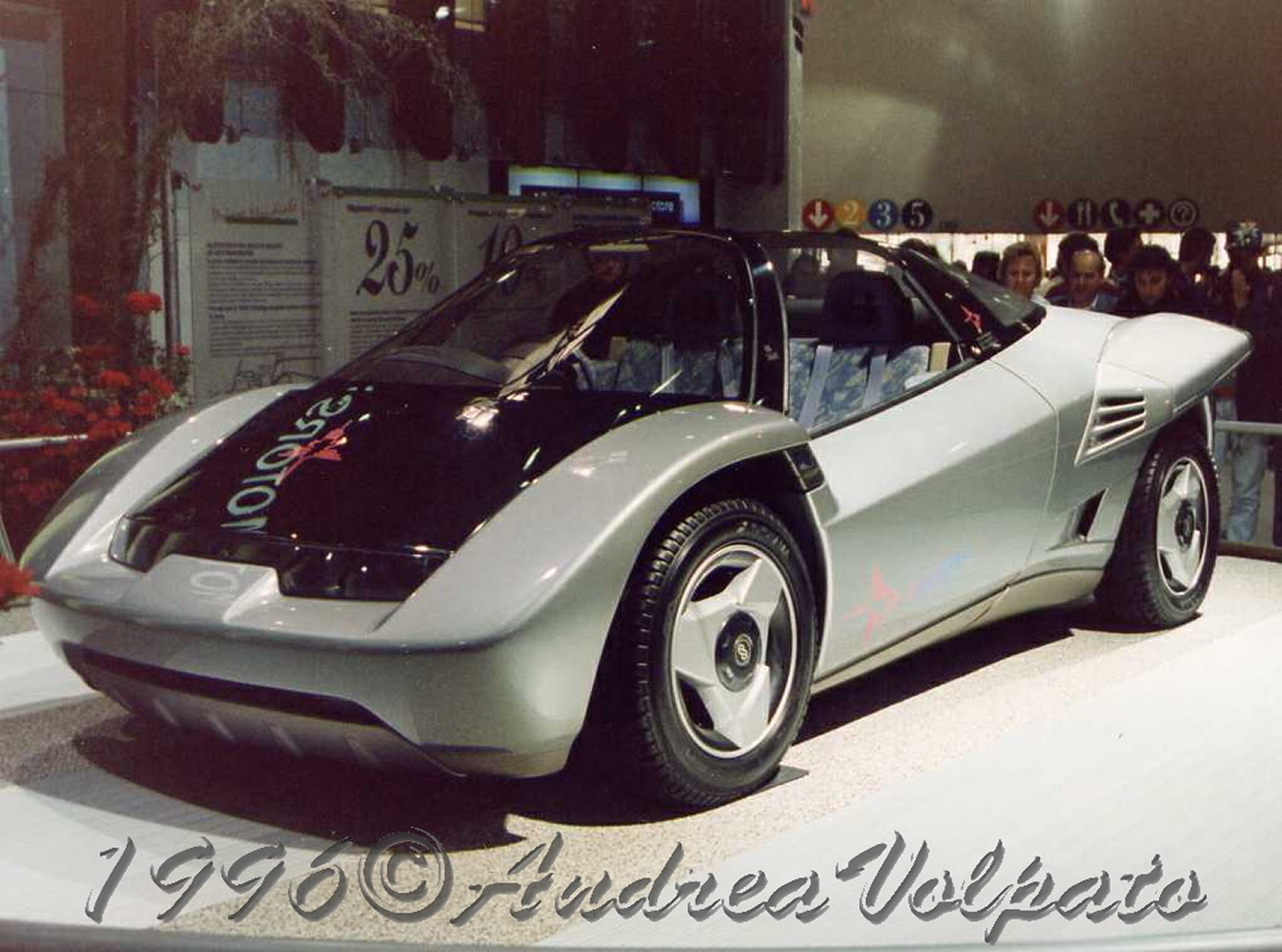
HSR-V is a physical research concept from Mitsubishi’s 1990s design programme. The period photograph included here records it on display in Turin in 1996, while Mitsubishi’s subsequent Tokyo show release identifies HSR-V with the 1995 show. Those dates describe different moments in one concept’s public history, rather than two separate production editions.
Establishing the correct concept
The fifth HSR should retain its Roman numeral wherever it appears in a vehicle record. Mitsubishi’s 1997 Tokyo Motor Show release names the HSR-V as the earlier concept displayed in 1995. That primary reference supports the date and the relationship between the concepts. It does not justify transferring the later HSR-VI’s equipment, dimensions or technical descriptions into this profile.
Mitsubishi Motors: 1997 Tokyo show release identifies the preceding 1995 HSR-V
What the period photograph shows
Andrea Volpato’s photograph provides direct visual evidence of a physical show vehicle. Its low nose, dark central glazing and open upper-body presentation distinguish it from an ordinary production Mitsubishi. The shape can be studied as a period design object, with attention to the relationship between the cabin and the rear body. These are observations of the image, rather than a claim that every visible component reached series production.
Mitsubishi Motors: 1997 Tokyo show release identifies the preceding 1995 HSR-V
A travelling show car is one archive subject
A concept may appear at more than one motor show, be photographed in different lighting and later enter a collection. That movement should be documented as chronology. It is not a reason to count a new vehicle every time the same design is exhibited. The 1995 reference year and the 1996 photographic event remain visible here to prevent precisely that kind of double counting.
Why technical scope matters
Specifications for experimental vehicles can change as projects develop. A brochure proposal, a running demonstrator and a surviving display car may not provide the same evidence. This entry leaves uncorroborated engine and performance fields unset. That keeps the profile usable as a researched design archive while reserving exact mechanical claims for an original technical document matched to the fifth HSR.
Mitsubishi Motors: 1997 Tokyo show release identifies the preceding 1995 HSR-V
Comparing two approaches to a Mitsubishi concept
HSR-III is the closest included comparison within the research lineage. The later Eclipse Concept-E provides a different comparison: its manufacturer release gives an explicit propulsion proposal and dimensions. Read those records according to their evidence. A missing field in the HSR-V record is not permission to substitute a figure from the Eclipse, another HSR or a production GTO.
Specification and identity reference
| Reference year | 1995 Tokyo Motor Show identity |
|---|---|
| Photographic event | Turin Motor Show, 1996 |
| Identity | HSR-V; distinct from HSR-III and HSR-VI |
| Classification | Physical research concept |
| Customer road-series quantity | Not assigned |
Rarity and production scope
Documented physical concept or competition-development archive identity. No customer road-production quantity or audited prototype-build census assigned.
This record belongs to the concept and competition archive. Exhibition quantities and prototype activity are excluded from customer road-production totals.
Identifying the documented subject
Match the complete model name, date and programme to the linked evidence. Keep any chassis-specific provenance separate from a general description of the model. A period image confirms what was photographed, while a production or technical claim requires the corresponding document.
Comparisons and related profiles
Continue through these connected Mitsubishi records, each with its own factory identity and production scope.
Frequently asked questions
Was this a numbered customer production edition?
No customer series is assigned in this record. It covers the documented physical concept or competition programme; a motor-show display count does not establish the total number of engineering builds.
Does the title date match every photograph?
1995 is the documentary reference used for the profile. A later exhibition or museum photograph can show the same programme. Its caption identifies the photographic scope without creating another edition.
Sources and further reading
- Mitsubishi Motors: 1997 Tokyo show release identifies the preceding 1995 HSR-V
- Andrea Volpato: HSR-V photographed at Turin in 1996
Research checked 15 October 2026. Factory literature, independent EPC-derived records and photographic evidence are identified separately. Design readings and documentation guidance are editorial interpretation.
Built in limited numbers
Documented physical concept or competition-development archive identity. No customer road-production quantity or audited prototype-build census assigned.
Gallery
Specifications
Factory specifications may vary by model year, market and configuration.
Identity & production
- Official model
- Mitsubishi HSR-V
Sources and verification
Source citations are being prepared for this profile.