1990 Citroën Activa 2 Concept
Explore the 1990 Citroën Activa 2 Concept: sourced history, design, specifications and rarity evidence, with credited documentary photos.
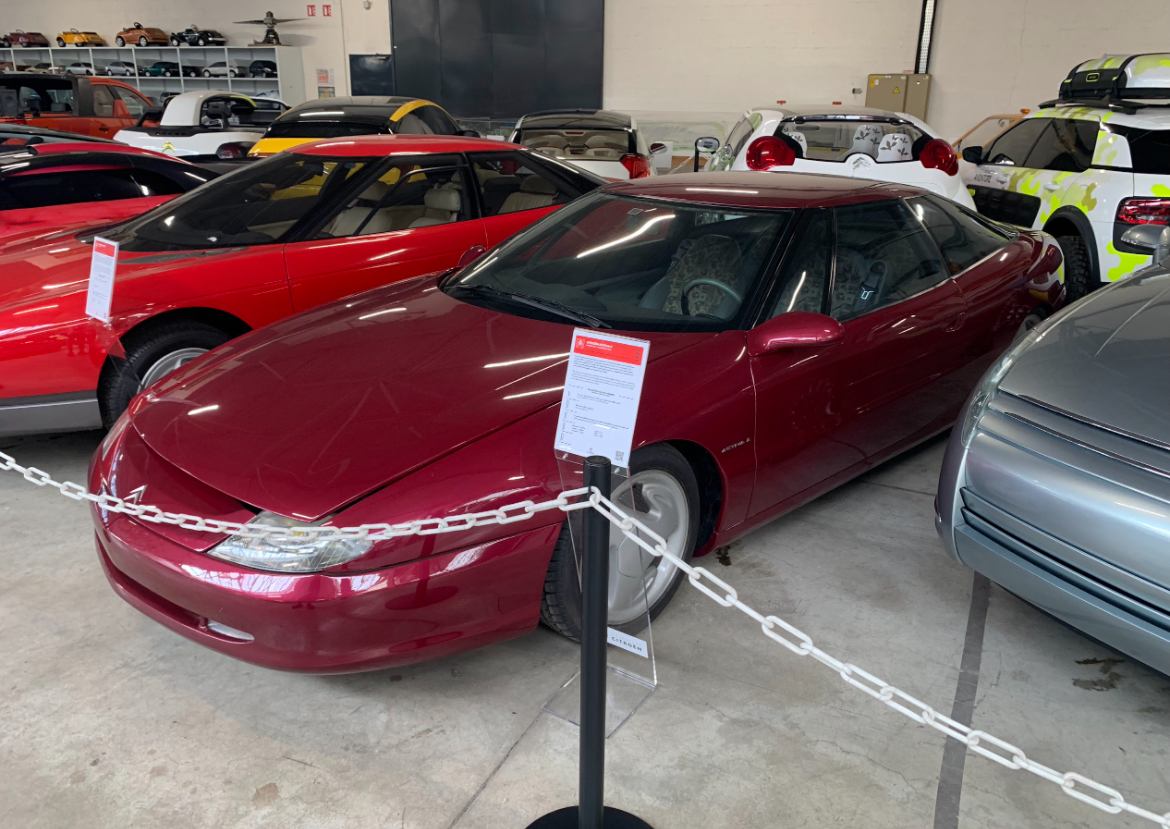
The 1990 Citroën Activa 2 wraps an experimental chassis in an elegant coupé. It is an appealing case of a concept that can be understood both as a complete visual design and as a step in the development of active roll control.
A coupé with an engineering role
The designer-supported Citroënët account identifies a two-door concept using XM-related mechanical components, a 3.0-litre 24-valve V6 and a four-speed automatic transmission. It dates the car’s major show appearance to Paris in 1990 and credits the exterior to Dan Abramson. The preserved Citroën period account of Xantia Activa explicitly traces the SC.CAR roll-limitation demonstration to Activa 2.
These sources connect the physical coupé to an engineering lineage without turning it into a production model. They also permit a distinction between design and construction contributions. The profile avoids speculative explanations of boardroom decisions; the body and the documented technical programme provide enough substance for the car’s history.
The supplied image shows the second Activa clearly
The red collection photograph presents a low front, a smooth bonnet and a curved cabin with a long door opening. Its narrow lamps form a horizontal line across the face. Unlike the first Activa’s broader saloon proposition, the second car communicates a concentrated coupé identity. A chain barrier and neighbouring cars establish the museum setting.
The smoothness makes the technical project easy to overlook. There is little in the photograph to advertise the roll-control system directly. That contrast is part of the car’s appeal: the experimental significance lies behind a form that can be appreciated without an engineering diagram. The image should be read for design and identification, not for proof of a measured handling result.
What active roll limitation means here
The period Xantia account explains an electronically informed hydraulic approach to controlling sideways body movement in corners. Its historical value for this concept is the explicit connection to Activa 2’s demonstration. The customer Xantia’s detailed settings and performance should not be applied wholesale to the earlier coupé.
In general engineering terms, body movement and wheel control are related but distinct questions. A complete development record would describe the sensors, actuators and control choices, then add evidence of how the prototype behaved. This profile therefore treats the concept as a documented development vehicle while reserving quantitative handling claims for sources that actually measure them.
A useful pair with the first concept
Activa 1 and Activa 2 can be presented together as a design comparison: saloon and coupé, broad passenger-car experiment and more concentrated sporting form. Separate photographs make the distinction immediate. The pair then provides a natural route into the later production application, which deserves its own bounded history.
An archive should preserve working drawings, interior images and records of changes to the physical coupé. Development cars can evolve between public displays, and a later photograph may show a detail that was different at the debut. Recording those dates strengthens the object’s identity and gives readers a more precise understanding of the experiment.
Specifications and verified rarity
| Reference year | 1990 |
|---|---|
| Model / project | Activa 2 Concept |
| Body / role | Two-door experimental coupé |
| Powertrain | 3.0-litre 24-valve V6; four-speed automatic |
| Chassis theme | Active roll limitation |
| Debut | Paris Motor Show, 1990 |
| Body | Two-door coupé |
| Rarity scope | Physical 1990 Activa 2 concept project with documented chassis development; exact fabrication tally unset. |
| Exact manufacturing tally | Not established |
| Inventory reference | CIT-092 — Verified |
Frequently asked questions
Is Activa 2 a production Xantia?
No. It is a separate 1990 experimental coupé.
Who receives the exterior design credit?
The designer-supported account credits Dan Abramson.
What transmission is documented?
A four-speed automatic with the V6 powertrain.
What connects it to Xantia Activa?
Citroën’s period account identifies Activa 2 as a demonstration of the roll-limitation system.
What rarity or archive scope is verified?
Physical 1990 Activa 2 concept project with documented chassis development; exact fabrication tally unset.
Who took the supplied photograph?
GerdeeX via Wikimedia Commons, under CC BY-SA 4.0. Keep the photographer, original-file link and licence credit with the image.
Related Citroën profiles
Sources and photo credits
- Citroënët: Activa 2, including designer-supplied material
- Citroën period press: Xantia Activa roll control, preserved by Citroënët
Photograph: GerdeeX via Wikimedia Commons original file, CC BY-SA 4.0. Source photograph supplied without local cropping, retouching or text removal. A source-provided thumbnail is used where available. Activa 2 on collection display. This is the 1990 coupé, not the earlier Activa 1 saloon or a production Xantia.
Built in limited numbers
Physical 1990 Activa 2 concept project with documented chassis development; exact fabrication tally unset.
Gallery
Specifications
Factory specifications may vary by model year, market and configuration.
Identity & production
- Official model
- Activa 2 Concept