1989 Mitsubishi Galant VR-4 RS (Japan)
Explore Galant VR-4 RS (Japan): factory identity, history, specifications, rarity evidence, identification notes and credited photos.
The Galant VR-4 RS is the competition-oriented factory grade that sits before the Lancer Evolution in Mitsubishi’s road-car story. It deserves a record of its own, with a clear distinction between the E38A and E39A specifications. The subject here is the Japanese RS family, not every Galant VR-4 and not a particular works rally chassis.
A dated factory reference
The original Japanese RS brochure inspected for this profile is dated October 1989. Its illustrations and technical table identify an RS rather than a generic Galant with sporting accessories. The title uses that documented specification date, correcting the workbook’s unqualified 1988 reference. It is not a claim that every RS was built in 1989 or that the brochure establishes the first day of RS production.
Mitsubishi Galant VR-4 RS factory brochure, October 1989 (digitised original)
Two chassis specifications within one RS profile
The factory material distinguishes four-wheel-steering equipment, and the EPC-derived dataset separates E38A RS from E39A RS with four-wheel steering. The workbook’s E39A-only family label is therefore expanded. The combined Japanese RS record count is 3,688: 2,890 E38A and 798 E39A records. These are disjoint chassis-grade groups, not overlapping market allocations or an RS quantity to add again to the ordinary VR-4 count.
JDM Catalogues: Galant ASA/CAPS-derived domestic production records
The technical reference and its limits
The inspected 1989 brochure specifies a 2.0-litre turbocharged engine, full-time four-wheel drive and 220 PS for the illustrated period specification. It discusses the RS drivetrain and steering choices together. Those details should be matched to the applicable build rather than applied unchanged across the model’s entire life. A later engine, steering or differential conversion belongs in a surviving car’s modification history.
Reading a surviving RS
An RS may have been used as a road car, prepared for motorsport or returned to road use after competition. Those possibilities can produce very different interiors and exterior presentations. Check the full model information, original documents and shell history before interpreting missing trim as proof of an RS. Equally, added convenience equipment does not erase a well-documented original RS identity.
Mitsubishi Galant VR-4 RS factory brochure, October 1989 (digitised original)
Why the comparison with a Lancer matters
The first Evolution RS provides a useful later comparison because both grades express the factory competition-base role. They remain different cars, with different body families and specification documents. Shared engine-family terminology does not make a Galant an Evolution or establish common chassis provenance. The collector interest lies in studying the relationship while preserving the individual identities.
How the rarity figure is used
The cited figure is a Japanese ASA/CAPS-derived catalogue record count published by JDM Catalogues. It is not presented as a Mitsubishi-issued limited-edition cap, a worldwide census or a survivor count. The completed-production field stays unset. Readers can use the record count as a carefully scoped indication of scarcity, with the underlying chassis split and source method visible.
Specification and identity reference
| Documented specification year | 1989; October factory RS brochure |
|---|---|
| Chassis scope | E38A RS and E39A RS with four-wheel steering |
| Engine reference | 2.0-litre turbocharged four-cylinder |
| Brochure output reference | 220 PS, period specification |
| Japanese catalogue records | 3,688 combined: 2,890 E38A + 798 E39A |
| Count type | EPC-derived domestic records; not a worldwide audited total |
Rarity and production scope
3688 Japanese catalogue records in the explicitly described grade scope; independently compiled from ASA/CAPS information. Completed worldwide production is not assigned.
Identifying the documented subject
Match the complete model name, date and programme to the linked evidence. Keep any chassis-specific provenance separate from a general description of the model. A period image confirms what was photographed, while a production or technical claim requires the corresponding document.
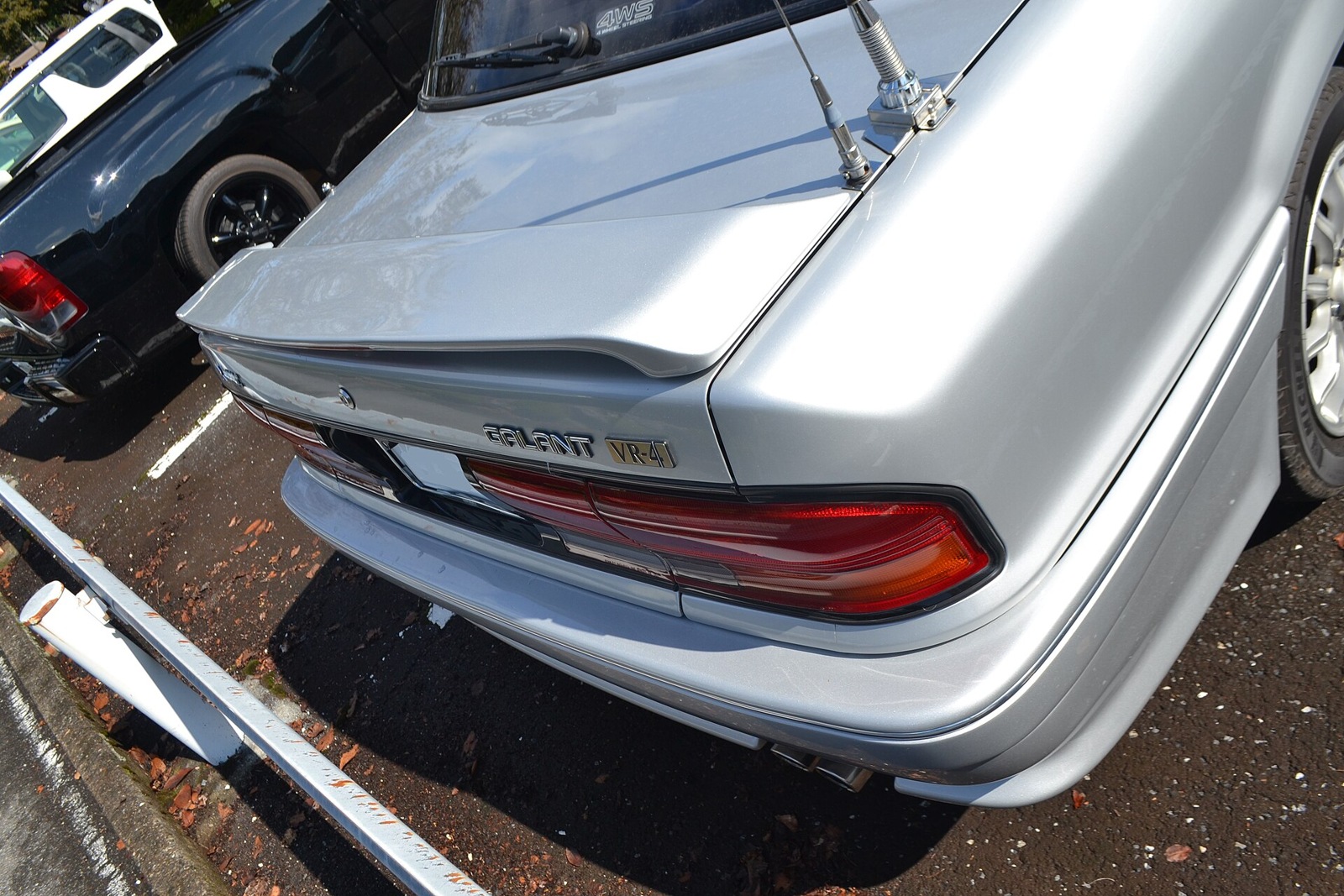
What the photograph represents
Sixth-generation Galant VR-4 reference car, photographed as a 1989 E39A. This image does not authenticate an RS specification.
Comparisons and related profiles
Continue through these connected Mitsubishi records, each with its own factory identity and production scope.
Frequently asked questions
Is the rarity figure a worldwide production total?
3688 Japanese catalogue records in the explicitly described grade scope; independently compiled from ASA/CAPS information. Completed worldwide production is not assigned.
How should an individual example be authenticated?
Match the complete original model information to the appropriate dated documentation, then record the present condition and modifications separately. A badge, colour scheme or stripped interior alone is insufficient evidence of a factory grade.
Sources and further reading
- Mitsubishi Galant VR-4 RS factory brochure, October 1989 (digitised original)
- JDM Catalogues: Galant ASA/CAPS-derived domestic production records
Research checked 15 October 2026. Factory literature, independent EPC-derived records and photographic evidence are identified separately. Design readings and documentation guidance are editorial interpretation.
Built in limited numbers
3688 Japanese catalogue records in the explicitly described grade scope; independently compiled from ASA/CAPS information. Completed worldwide production is not assigned.
Gallery
Specifications
Factory specifications may vary by model year, market and configuration.
Identity & production
- Official model
- Mitsubishi Galant VR-4 RS (Japan)
Sources and verification
Source citations are being prepared for this profile.