1981 Porsche 936/81 Spyder
Explore the 936/81 Spyder: history, verified identity, specification references, rarity evidence and real credited photos.
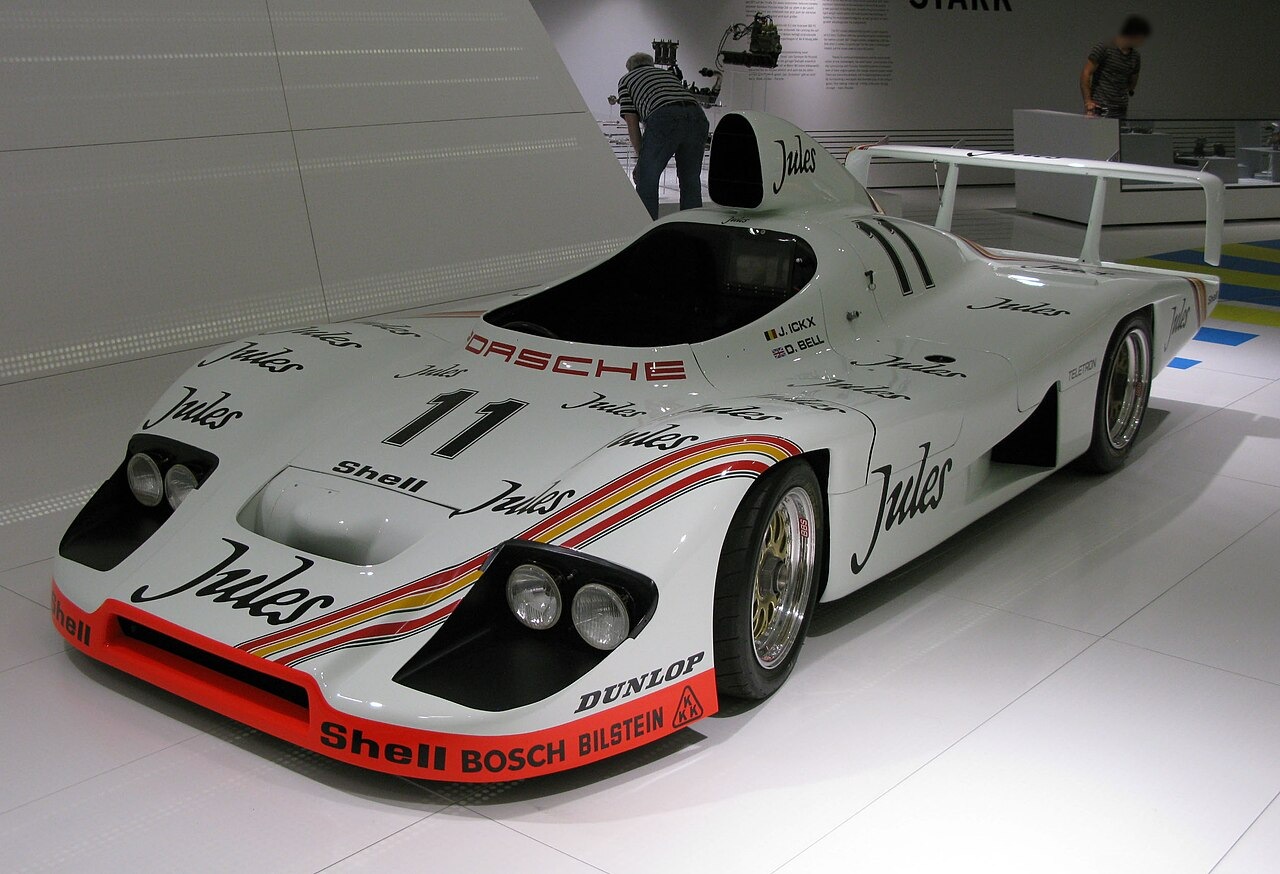
The Porsche 936/81 gave an established open prototype a new technical chapter and delivered the 1981 Le Mans victory for Jacky Ickx and Derek Bell. Its 2.65-litre twin-turbo engine distinguished that configuration from earlier 936 seasons. This profile is bounded to the 1981 development and its documented programme history. It does not treat two race entries as a total for every 936 built or authenticate the present identity of an individual winning chassis.
A return built around an established prototype
Porsche’s Le Mans retrospective describes the 936/81 in the context of the 1981 works effort. The suffix is important because it preserves the date of the development rather than suggesting that every 936 had the same engine or equipment. A programme can reuse and develop an established architecture while still requiring a distinct technical reference. The article follows that 1981 configuration, leaving earlier seasons’ specifications outside its default table.
Porsche: 936/81 technical development and 1981 result
The 2.65-litre twin-turbo reference
The factory account describes the installation of a 2.65-litre biturbo engine and an output of more than 620 PS. That is a period programme reference, not a new test of a preserved car. Engine and body configuration should remain attached to their event date. An exhibited 936 may represent another season, so a generic 936 caption cannot verify the 1981 configuration without additional source information or an identifiable collection record.
Ickx and Bell at Le Mans
Porsche identifies Ickx and Bell as the winning crew and records a 14-lap margin. Bell’s later factory interview recalls the event as a particularly important success. These sources establish the sporting milestone, while a specific surviving car’s link to it requires its chassis history. A later demonstration or a matching race number is useful context, but it does not independently prove uninterrupted custody or original component retention.
Porsche: 936/81 technical development and 1981 result
Two entries are not a construction census
The Le Mans retrospective states that two 936s were entered in the works effort. A race-entry count describes the event field, not the total construction history of the model family. Development cars, earlier chassis and later rebuilds have different boundaries. This profile therefore keeps the two-car entry reference in the sporting narrative and leaves the completed chassis total unassigned rather than converting a convenient event number into a production claim.
Porsche: Derek Bell’s recollection of the 1981 victory
Identifying a 936/81 illustration
Prefer a source caption that explicitly names the 1981 configuration and retain the date of a later museum photograph. Inspect the body and livery alongside the collection description, but do not rely on colour alone. For an individual car, request the original chassis record, workshop history and dated event entries. Restored presentation and original race condition can be different layers of an authentic car’s history and should be described as such.
Specifications and identity reference
| Reference season | 1981 |
|---|---|
| Competition | Le Mans 24 Hours |
| Winning crew | Jacky Ickx / Derek Bell |
| Factory result reference | Overall win; 14-lap margin |
| Engine | 2.65-litre twin-turbo six-cylinder |
| Factory output reference | More than 620 PS |
| Event entry reference | Two works 936s; not a build total |
| Scope | 1981 development, not every 936 season |
Rarity and production scope
Verified 936/81 works development and 1981 Le Mans result. Two works entries are an event measure, not the construction census of the 936 family. No individual surviving winning-chassis provenance or road-production total is assigned.
This is an Archive record. Concepts, restored heritage vehicles, works cars and competition programmes are not added to customer road-production totals. A programme profile does not establish how many physical chassis were made, and repeated exhibition appearances do not create additional vehicles.
What the photograph represents
Porsche 936/81 in a later heritage display, catalogued as the 1981 Le Mans-winning configuration. Programme illustration; the image alone does not authenticate current chassis custody or original components.
Related Porsche heritage profiles
Frequently asked questions
Does 936/81 describe every earlier 936?
No. The suffix retains the specific 1981 development context.
Do two race entries prove only two 936s existed?
No. An event entry list and the full construction history are different boundaries.
What is the production-count boundary for this profile?
Verified 936/81 works development and 1981 Le Mans result. Two works entries are an event measure, not the construction census of the 936 family. No individual surviving winning-chassis provenance or road-production total is assigned.
Sources and further reading
- Porsche: 936/81 technical development and 1981 result
- Porsche: Derek Bell’s recollection of the 1981 victory
Research checked 17 October 2026. Linked factory, heritage and specialist-register records support the specifically attributed claims. Photographic descriptions identify the illustrated subject. Design analysis and suggested authentication steps are editorial interpretation.
Built in limited numbers
Verified 936/81 works development and 1981 Le Mans result. Two works entries are an event measure, not the construction census of the 936 family. No individual surviving winning-chassis provenance or road-production total is assigned.
Gallery
Specifications
Factory specifications may vary by model year, market and configuration.
Identity & production
- Official model
- Porsche 936/81 Spyder
Sources and verification
Source citations are being prepared for this profile.