1981 Lotus Type 88 Twin Chassis Formula One
Explore the 1981 Lotus Type 88 Twin Chassis Formula One: programme history, design, verified rarity scope, specifications and credited photography.
The Lotus Type 88 develops the twin-chassis idea into a controversial Formula One programme. Its physical existence and track participation are documented, while the eventual ban remains part of its period history.
History and verified programme identity
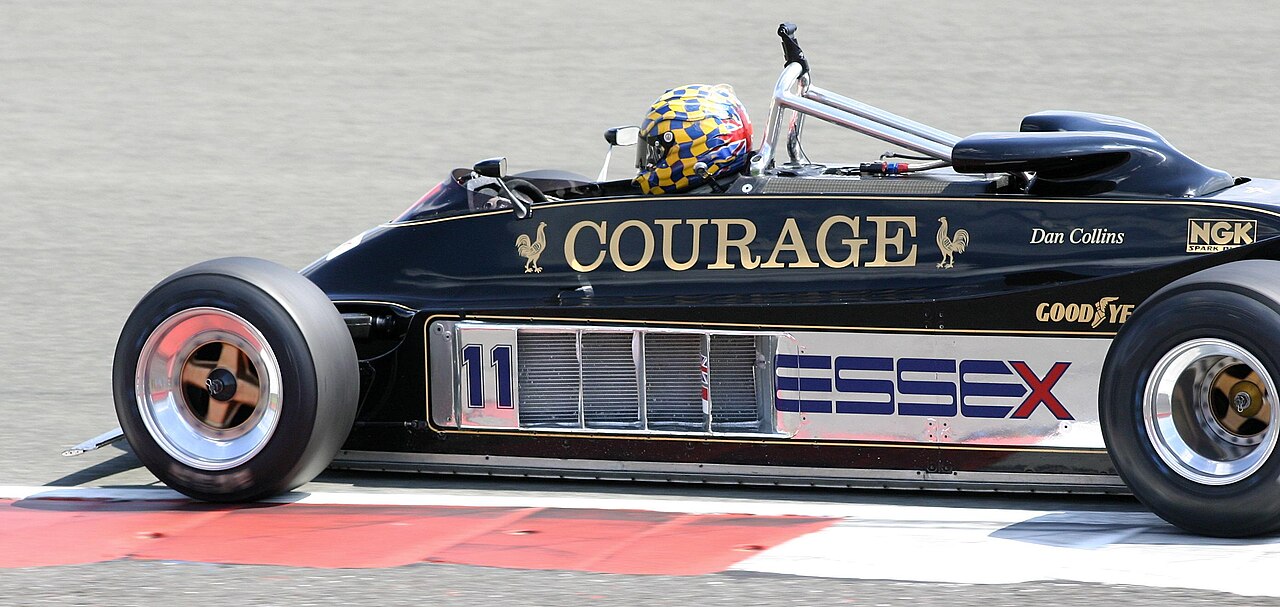
Classic Team Lotus dates the Type 88 to 1981 and describes its developed twin-chassis arrangement. The custodian identifies a composite secondary monocoque and records that the car ran on track and participated at a Grand Prix before being banned. Three entries appear in the register. These are qualified chassis references rather than a road-car allocation or a complete present survivor count. The supplied photograph shows the exact Type 88 at Silverstone Classic in 2008; that later appearance does not establish that it started an original-season championship race.
Engineering and design
The primary structure was suspended onto the uprights, with fixed skirts, while the secondary structure contained the composite monocoque. That description distinguishes the Type 88 from the earlier Type 86 prototype’s stated arrangement. The design separates aerodynamic and driver/powertrain functions in a way that a single conventional chassis does not. The photograph makes the broad outer body visible but cannot identify the internal suspension of the two structures by itself. The custodian’s account supplies the functional relationship, while original drawings and individual chassis records are needed for a detailed reconstruction of its hardware.
The physical car in the supplied photograph
Russell Whitworth’s photograph shows a blue Essex-liveried Type 88 with a driver at Silverstone Classic in July 2008. Its broad side body, narrow cockpit and exposed wheels are visible in a real track setting. The source identifies the model, while the modern run remains separate from its original eligibility controversy.
A closer look at the design
The Type 88’s outer body makes the twin-chassis question visually intriguing because its decisive arrangement is concealed beneath a relatively familiar racing silhouette. The side enclosure and low cockpit can be studied in the photograph, but they do not explain how the primary and secondary structures were supported. The primary source is needed to make that distinction intelligible. The later track setting also provides a useful boundary: the car can be preserved and demonstrated while its original regulatory outcome remains unchanged. This gives the archive a richer account than either a simple banned-car headline or a modern action image on its own. It preserves the physical engineering project, the competition decision and the subsequent public appearance as connected but separately dated parts of the Type 88 story.
Collecting and chassis evidence
A Type 88 file should distinguish original development, the governing-body decision and later demonstration preparation. Running at a modern historic event does not undo a period ban or prove that every part matches the original submission. The three register entries provide a chassis framework, with the listed identities retained independently of a fabrication audit. Composite repairs and changed skirts deserve dated technical records. An exact-model photograph is useful for understanding the programme’s outer form, but a present livery or painted race number is not a complete provenance certificate.
Related Lotus designs and meaningful comparisons
The Type 86 provides the earlier prototype comparison, while the Type 87 explains the related conventional car. Their separate profiles reveal a design problem with more than one physical response. A component or concept shared among them does not make them duplicate vehicles or justify combining their register references as a production total.
Reading the sources
The programme sources and the photograph answer different questions. Manufacturer and custodial records establish the original model, Type, category and published production scope. The creator’s file establishes the pictured subject, setting and image permission. An individual chassis history can then add ownership, competition entries and dated repairs without changing the scope of the original programme. Build references are not survivor counts, and a later specification does not automatically become an additional newly manufactured vehicle. Where primary evidence does not establish a complete fabrication census, that field remains unassigned.
Specifications and rarity evidence
| Programme reference year | 1981 |
|---|---|
| Model / Type | Type 88 Twin Chassis Formula One — Type 88 |
| Body / competition role | Developed twin-chassis Formula One design |
| Programme year | 1981 |
| Primary structure | Suspended onto uprights; fixed skirts |
| Secondary structure | Composite monocoque |
| Period outcome | Eventually banned |
| Photo event | Silverstone Classic, July 2008 |
| Published build / register reference | 3 listed register entries |
| Independently audited completed tally | Not assigned |
| Count scope | Published reference: 3 listed register entries. The named programme scope is retained independently of audited completed output and current survivor counts. |
| Original inventory status | LOT-088 — Verified |
Frequently asked questions
Does the 2008 photograph mean the Type 88 raced in the original championship?
No. The custodian records track participation and an eventual ban. A later Silverstone Classic run belongs to its preservation history and is not substituted for a period championship start.
How is Type 88 Twin Chassis Formula One classified?
This is a Team Lotus competition Type archive. It remains separate from Lotus road-car production. Customer cars, works entries and converted chassis need a reconciled scope before any complete fabrication tally is assigned.
Which technical details are established for the programme?
The primary record supports programme year: 1981; primary structure: Suspended onto uprights; fixed skirts; secondary structure: Composite monocoque. These are programme or explicitly attributed photo references. A particular surviving car’s engine, chassis repairs and competition preparation require its own dated documentation.
Does the photographed appearance establish factory originality?
The caption records a real creator-identified Type 88 Twin Chassis Formula One subject and its later setting. It establishes the illustration’s scope, while original components, restoration work and individual race provenance require chassis-specific evidence. A competition number, current paint or museum display is not used as an originality certificate.
What rarity or archive scope is verified?
Published reference: 3 listed register entries. The named programme scope is retained independently of audited completed output and current survivor counts.
Who photographed the supplied image?
Russell Whitworth via Wikimedia Commons, under CC BY-SA 2.0. The original file and licence are linked with the image. Retain the creator, source and licence when uploading, exporting or reusing it; local retouching and synthetic enlargement have not been performed.
Related Lotus profiles
Sources and photo credits
Photograph: Russell Whitworth via Wikimedia Commons original source, CC BY-SA 2.0. Source-provided thumbnail supplied without local cropping, retouching or synthetic enlargement.
Built in limited numbers
Published reference: 3 listed register entries. The named programme scope is retained independently of audited completed output and current survivor counts.
Gallery
Specifications
Factory specifications may vary by model year, market and configuration.
Identity & production
- Official model
- Type 88 Twin Chassis Formula One