1980 Citroën Karin Concept
Explore the 1980 Citroën Karin Concept: sourced history, design, specifications and rarity evidence, with credited documentary photos.
The 1980 Citroën Karin is an exceptionally direct statement of geometric design. Its broad lower body and tiny upper roof make the car appear to gather around the driver, creating a concept whose visual logic is apparent before any technical explanation begins.
Trevor Fiore’s geometric proposal
Citroën identifies Trevor Fiore as Karin’s designer and dates the concept to the 1980 Paris Motor Show. The manufacturer describes its pyramidal form, central driving position and electronic information theme. Its continued physical existence is supported by the preservation award reported at Rétromobile in January 2026. That evidence verifies the archive object without supplying a complete fabrication census.
The central driver is an especially useful way to understand the proposal. Instead of simply reshaping an ordinary passenger-car exterior, Karin asks the viewer to imagine a different organizing point inside the cabin. The geometry outside and the seating idea inside can therefore be discussed together, with the object giving each idea a physical form.
A period photograph of the front and cabin
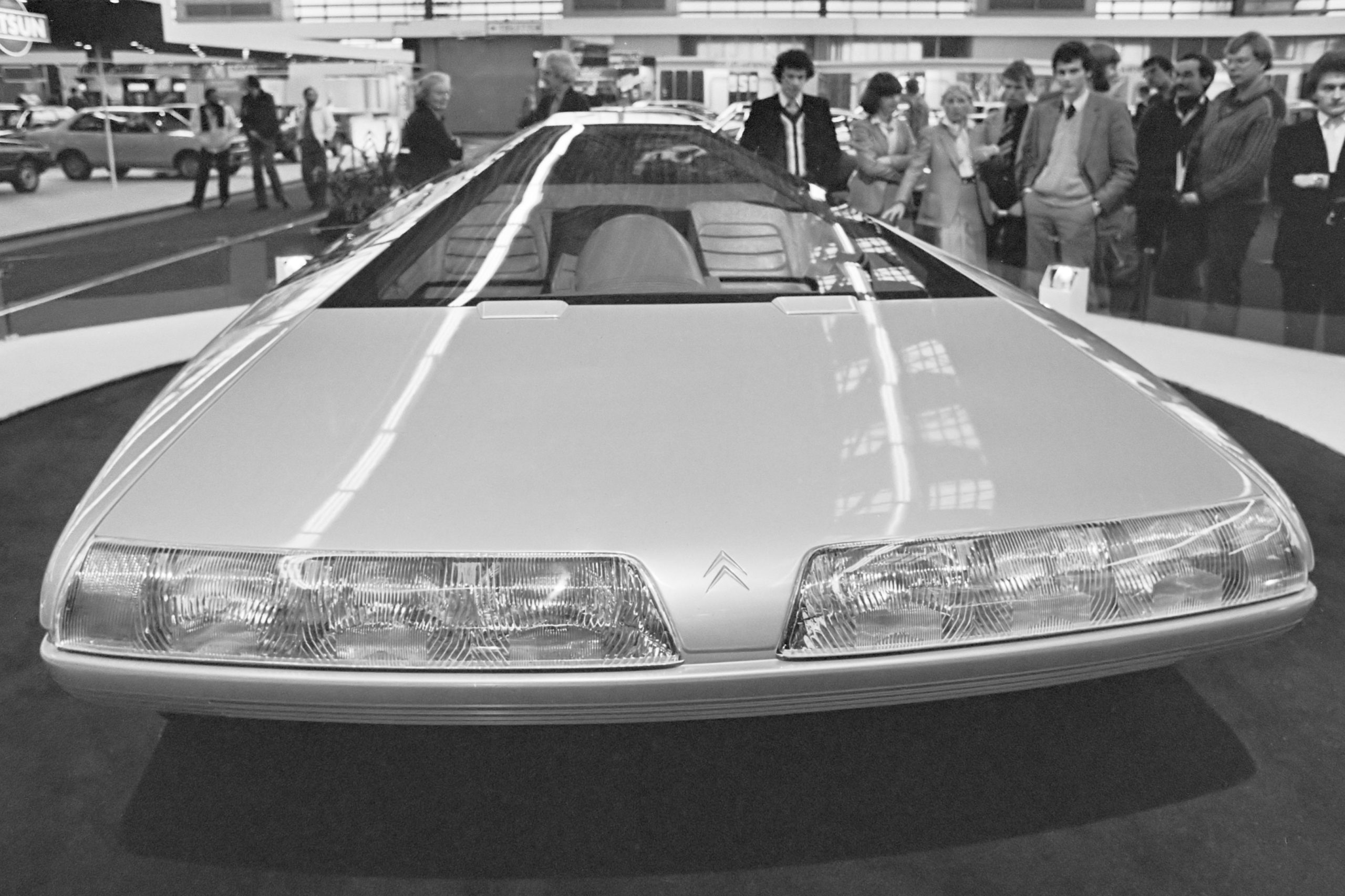
The supplied black-and-white photograph shows Karin at the 1981 AutoRAI. Wide rectangular lamps dominate the low nose, and the central double-chevron badge is small against the broad surface. Behind it, the windscreen climbs sharply toward the little roof. The visible centre seat reinforces the relationship between the cabin’s geometry and the driving position.
People standing around the car help communicate its scale without requiring a speculative measurement. Their conventional clothing and the surrounding exhibition hall also preserve the period setting. A modern collection photograph can show condition very well; this contemporary display image offers the additional value of showing the concept being encountered near the time of its creation.
Why the simple shape is so memorable
Karin uses the contrast between a very wide base and a very small top to create an unmistakable identity. The eye follows sloping planes rather than a sequence of familiar saloon elements. Even with the colour removed, the concept remains easy to recognize. Its strong silhouette does most of the work.
That simplicity should not be confused with a simple construction task. Unusual glazing, seals and openings can require highly specific fabrication solutions. An informed archive would pair the dramatic overall view with detail photographs and construction evidence. Those records can explain the practical consequences of the shape without relying on a modern guess about how the car must have been built.
Preservation makes the experimental object readable
A preserved concept allows later visitors to examine decisions that a photograph can flatten: surface transitions, visibility from the seating position and the relationship of door openings to the cabin. Conservation records are therefore part of the design story. They explain how the object has retained, or recovered, the features through which its original proposal can be understood.
Karin is a rewarding counterpart to the GS Camargue. Both use strong geometry and a pronounced glass enclosure, but their visual centres differ. The comparison helps reveal the variety inside Citroën’s experimental history. It also gives the reader a way to move from one rare archive object to another through a specific design question.
Specifications and verified rarity
| Reference year | 1980 |
|---|---|
| Model / project | Karin Concept |
| Body / role | Three-seat geometric concept |
| Designer | Trevor Fiore |
| Debut | Paris Motor Show, 1980 |
| Cabin theme | Central driving position |
| Design form | Pyramidal glazed enclosure |
| Rarity scope | Documented physical 1980 Karin concept and preserved archive object. Exact fabrication tally unset. |
| Exact manufacturing tally | Not established |
| Inventory reference | CIT-059 — Verified |
Frequently asked questions
Who designed Karin?
Citroën credits Trevor Fiore.
When was the concept introduced?
At the 1980 Paris Motor Show.
Is the supplied photo a modern recreation?
It is an archival AutoRAI photograph from 1981, credited to Rob Bogaerts / Anefo.
Why does the central seat matter?
It connects the unusual cabin organization with the exterior’s converging geometry.
What rarity or archive scope is verified?
Documented physical 1980 Karin concept and preserved archive object. Exact fabrication tally unset.
Who took the supplied photograph?
Rob Bogaerts / Anefo via Wikimedia Commons, under CC0. Keep the photographer, original-file link and licence credit with the image.
Related Citroën profiles
Sources and photo credits
Photograph: Rob Bogaerts / Anefo via Wikimedia Commons original file, CC0. Source photograph supplied without local cropping, retouching or text removal. A source-provided thumbnail is used where available. Karin at AutoRAI, 4 February 1981, photographed by Rob Bogaerts / Anefo. Period display photo of the 1980 concept.
Built in limited numbers
Documented physical 1980 Karin concept and preserved archive object. Exact fabrication tally unset.
Gallery
Specifications
Factory specifications may vary by model year, market and configuration.
Identity & production
- Official model
- Karin Concept