1972 Porsche 911 Carrera RS 2.7
Explore the 911 Carrera RS 2.7: history, verified identity, specification references, rarity evidence and real credited photos.
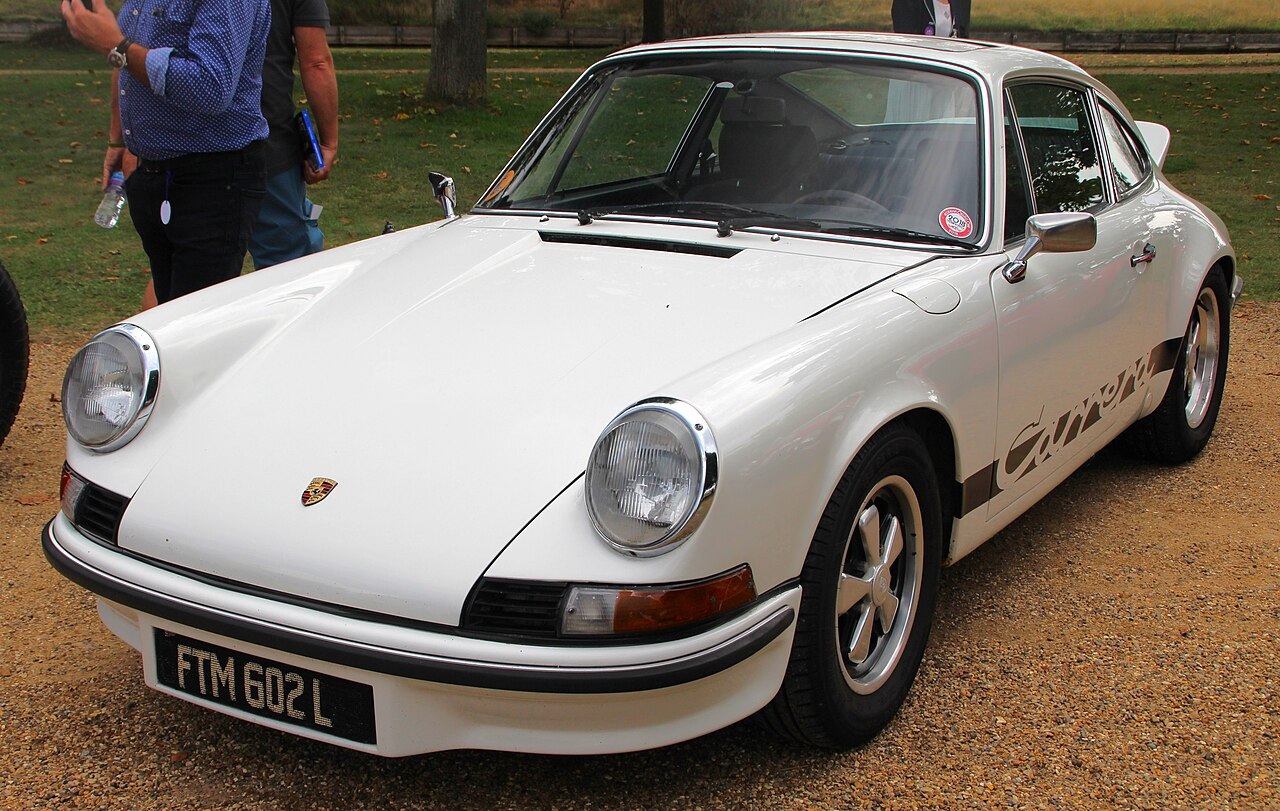
The Porsche 911 Carrera RS 2.7 joined a larger engine, carefully reduced weight and the famous ducktail into a road-approved homologation special. Presented in Paris in October 1972, it exceeded the original 500-car plan. Porsche’s retrospective reports 1,580 examples by July 1973. This profile covers the RS 2.7 programme, with Sport and Touring specifications retained as parts of the same family rather than counted as duplicate editions.
A homologation project that exceeded its original plan
Porsche’s anniversary dossier describes an initial intention to build 500 cars for Group 4. The Paris presentation on 5 October 1972 was followed by unexpectedly strong demand. The distinction between plan and outcome is central to the model’s story: 500 is not the completed production total. Keeping both figures with their roles explains how a competition-driven product became a broader commercial success without losing its specific homologation identity.
Porsche: detailed 50th-anniversary RS 2.7 dossier
The 2.7-litre six and the lightweight brief
The factory gives 210 PS for the 2.7-litre engine and describes intensive work on mass, aerodynamics and chassis. Sport and Touring equipment created different weights and interior experiences within the programme. An individual car’s specification therefore needs its original option and build records. Quoting the lightest version’s weight for every RS would erase the equipment differences that are particularly important when assessing authenticity and restoration.
The ducktail as part of an aerodynamic package
The rear spoiler is the easiest feature to recognise, but the factory account treats front and rear aerodynamic measures together. A ducktail added to an ordinary early 911 does not establish RS identity. Its historical interest is the integration of a recognisable body feature with a particular production and competition brief. Read the complete package rather than using one exterior detail as a shortcut to authentication.
Porsche: detailed 50th-anniversary RS 2.7 dossier
What the 1,580 reference includes
Porsche’s detailed retrospective reports 1,580 examples and explains the later Group 3 homologation threshold. Other factory summaries sometimes describe the combined RS and related racing context more broadly. This profile retains the detailed dossier’s attributed figure without adding Touring, Sport and competition-derived descriptions as new independent batches. It is a manufacturer historical production reference, not a fresh reconciliation of every chassis number or every later conversion.
Porsche Museum: RS 2.7 identity reference
Identifying an original RS 2.7
Compare the original chassis record, engine and gearbox identities, equipment specification and dated body history. Restored panels, replacement motors and later performance modifications should be described individually. A well-executed tribute may reproduce the visual character while remaining a different vehicle. Keep competition results connected to a documented chassis and event; the fame of the RS programme does not give every surviving road car the same sporting provenance.
Specifications and identity reference
| Reveal | Paris, 5 October 1972 |
|---|---|
| Engine | 2.7-litre naturally aspirated flat six |
| Factory output | 210 PS |
| Original plan | 500 for Group 4 homologation |
| Historical production reference | 1,580 by July 1973, according to Porsche |
| Equipment boundaries | Sport and Touring within one programme |
| Visual identity | Integrated front and ducktail rear aerodynamic measures |
| Count status | Attributed factory historical figure; no new chassis audit |
Rarity and production scope
Verified RS 2.7 programme. Porsche reports 1,580 examples after an initial 500-car plan. Sport, Touring and associated homologation references are not added as separate overlapping batches. Completed-count metadata does not claim a newly performed chassis audit.
What the photograph represents
A car catalogued as a 1972 Porsche 911 Carrera RS 2.7. Programme illustration; badges and body details alone do not authenticate its original equipment package, engine or chassis history.
Related Porsche heritage profiles
Frequently asked questions
Were only 500 RS 2.7s built?
No. That was the initial plan; Porsche’s retrospective reports 1,580.
Does a ducktail prove a 911 is an original RS?
No. Factory identity and build documentation remain essential.
What is the production-count boundary for this profile?
Verified RS 2.7 programme. Porsche reports 1,580 examples after an initial 500-car plan. Sport, Touring and associated homologation references are not added as separate overlapping batches. Completed-count metadata does not claim a newly performed chassis audit.
Sources and further reading
Research checked 17 October 2026. Linked factory, heritage and specialist-register records support the specifically attributed claims. Photographic descriptions identify the illustrated subject. Design analysis and suggested authentication steps are editorial interpretation.
Built in limited numbers
Verified RS 2.7 programme. Porsche reports 1,580 examples after an initial 500-car plan. Sport, Touring and associated homologation references are not added as separate overlapping batches. Completed-count metadata does not claim a newly performed chassis audit.
Gallery
Specifications
Factory specifications may vary by model year, market and configuration.
Identity & production
- Official model
- Porsche 911 Carrera RS 2.7
Sources and verification
Source citations are being prepared for this profile.