1973 Porsche 917/30 Can-Am Spyder
Explore the 917/30 Can-Am Spyder: history, verified identity, specification references, rarity evidence and real credited photos.
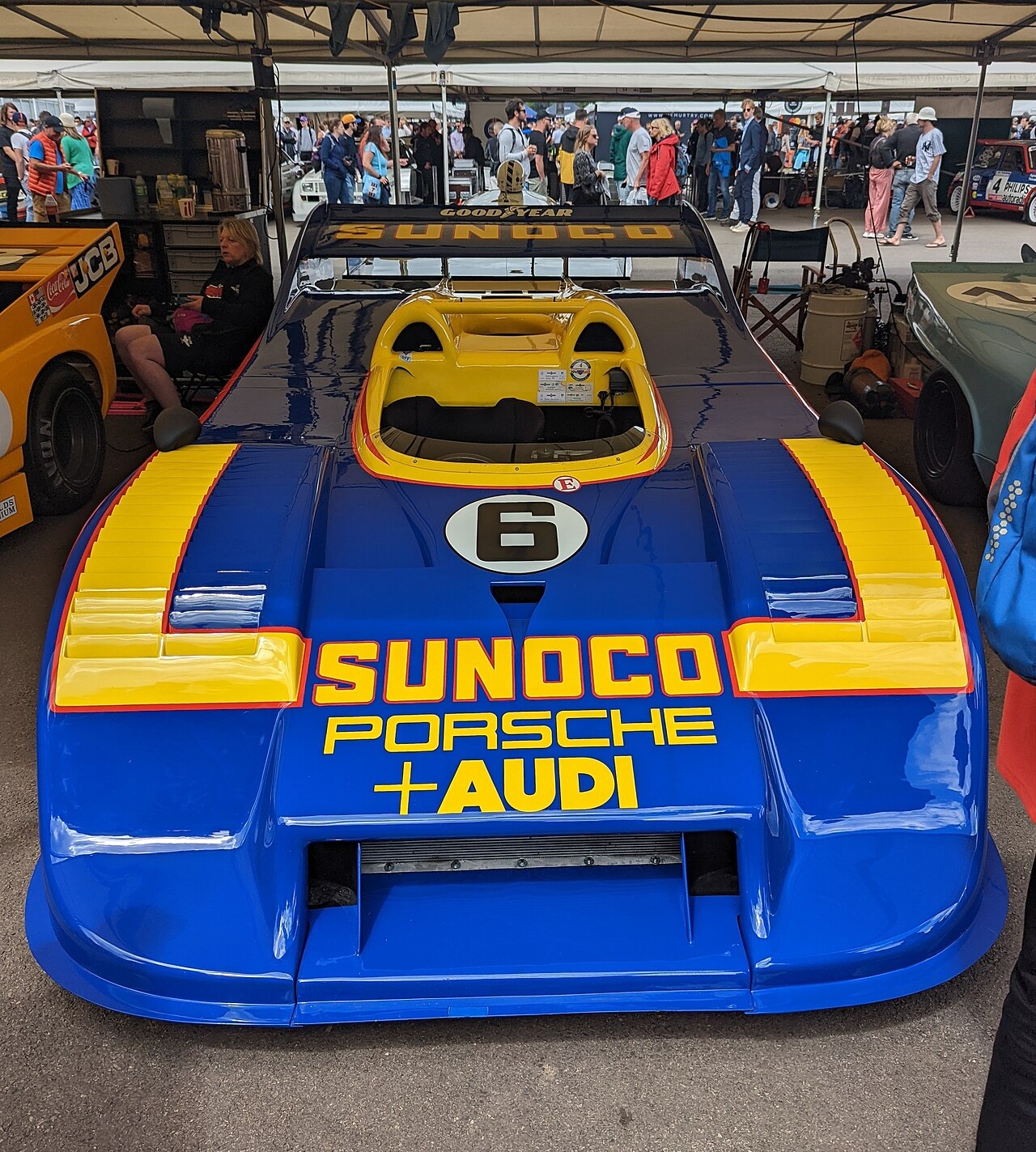
The Porsche 917/30 transformed the 917’s competition lineage into an open, turbocharged Can-Am machine. Mark Donohue and Penske made it the defining car of the 1973 season. Its extraordinary power figures depend on the stated configuration, so a museum reference is kept separate from qualifying, race and later record-run settings. This profile follows the 917/30 programme rather than folding it into the original endurance car’s 25-car homologation milestone.
A different task from the endurance 917
Porsche’s Can-Am history describes the turbocharged development path through the 917/10 to the 917/30. The open Spyder format, North American competition setting and powertrain development give it a distinct programme identity. Sharing the 917 family name does not make it a body option on the original homologation group. Keeping the programmes separate allows their engines, rules and results to be described without a misleading combined production figure.
Porsche Museum: 917/30 technical reference
Donohue, Penske and the 1973 season
The manufacturer associates the 917/30 with Mark Donohue’s 1973 Can-Am success and Penske’s engineering partnership. The important point is the combination of driver development and a highly focused competition machine. A later demonstration in the familiar Sunoco colours illustrates that story but cannot establish the complete history of the pictured chassis. Retain the event date and any collection caption before connecting a present-day appearance to a particular period win.
A power figure with a stated reference
The museum page lists a 5,374 cc twelve-cylinder turbo engine and a 1,200 hp reference for its 1973 exhibit. Other histories discuss different operating settings and later developments. Those numbers should not be treated as contradictory measurements of one fixed road-car specification. Boost, event preparation and test purpose matter. This profile uses the museum figure as a labelled reference and does not claim a new measurement of a surviving car.
Porsche Museum: 917/30 technical reference
The later high-speed chapter
Porsche’s comparison with the 919 Evo also discusses the 917/30’s later record-run role. A later high-speed configuration belongs to a different occasion from a 1973 road-circuit race. That distinction is useful when interpreting aerodynamics, cooling or headline speed. A programme can include both achievements while preserving which configuration performed each task. It should not create a single imaginary specification combining every peak figure from several appearances.
Porsche: 917/30, Donohue and the later record context
Identifying a genuine 917/30 record
For an individual car, seek the chassis history, original team role, subsequent reconstruction and dates of major engine or body changes. A restored competition object may represent a chosen period rather than its last active specification. Scale models and replicas require separate labels. The archive’s role is to explain the verified programme; authentication of a specific original or record-setting chassis requires the associated documents rather than a familiar colour scheme alone.
Specifications and identity reference
| Reference season | 1973 |
|---|---|
| Discipline | Can-Am |
| Team association | Penske; Mark Donohue |
| Body | Open Spyder competition prototype |
| Museum engine reference | 5,374 cc turbocharged twelve-cylinder |
| Museum output reference | 1,200 hp; not every operating configuration |
| Separate earlier programme | Original endurance 917 |
| Chassis census | No completed total assigned |
Rarity and production scope
Verified 917/30 Can-Am programme. Museum, race and later record-run specifications have separate roles. No exclusive chassis census or addition to the original 917’s 25-car homologation group is assigned.
This is an Archive record. Concepts, restored heritage vehicles, works cars and competition programmes are not added to customer road-production totals. A programme profile does not establish how many physical chassis were made, and repeated exhibition appearances do not create additional vehicles.
What the photograph represents
Porsche 917/30 identified with the 1973 Can-Am design. Later programme illustration; no particular original race or record-setting chassis identity is authenticated from this image alone.
Related Porsche heritage profiles
Frequently asked questions
Does every 917/30 power claim describe the same setting?
No. Museum references, race settings and later test configurations need their own dates and context.
Is the 917/30 included in the first 25 endurance 917s?
The initial homologation milestone is not used as a total for the later Can-Am programme.
What is the production-count boundary for this profile?
Verified 917/30 Can-Am programme. Museum, race and later record-run specifications have separate roles. No exclusive chassis census or addition to the original 917’s 25-car homologation group is assigned.
Sources and further reading
Research checked 17 October 2026. Linked factory, heritage and specialist-register records support the specifically attributed claims. Photographic descriptions identify the illustrated subject. Design analysis and suggested authentication steps are editorial interpretation.
Built in limited numbers
Verified 917/30 Can-Am programme. Museum, race and later record-run specifications have separate roles. No exclusive chassis census or addition to the original 917’s 25-car homologation group is assigned.
Gallery
Specifications
Factory specifications may vary by model year, market and configuration.
Identity & production
- Official model
- Porsche 917/30 Can-Am Spyder
Sources and verification
Source citations are being prepared for this profile.