1970 Lotus Type 72 Formula One
Explore the 1970 Lotus Type 72 Formula One: programme history, design, verified rarity scope, specifications and credited photography.
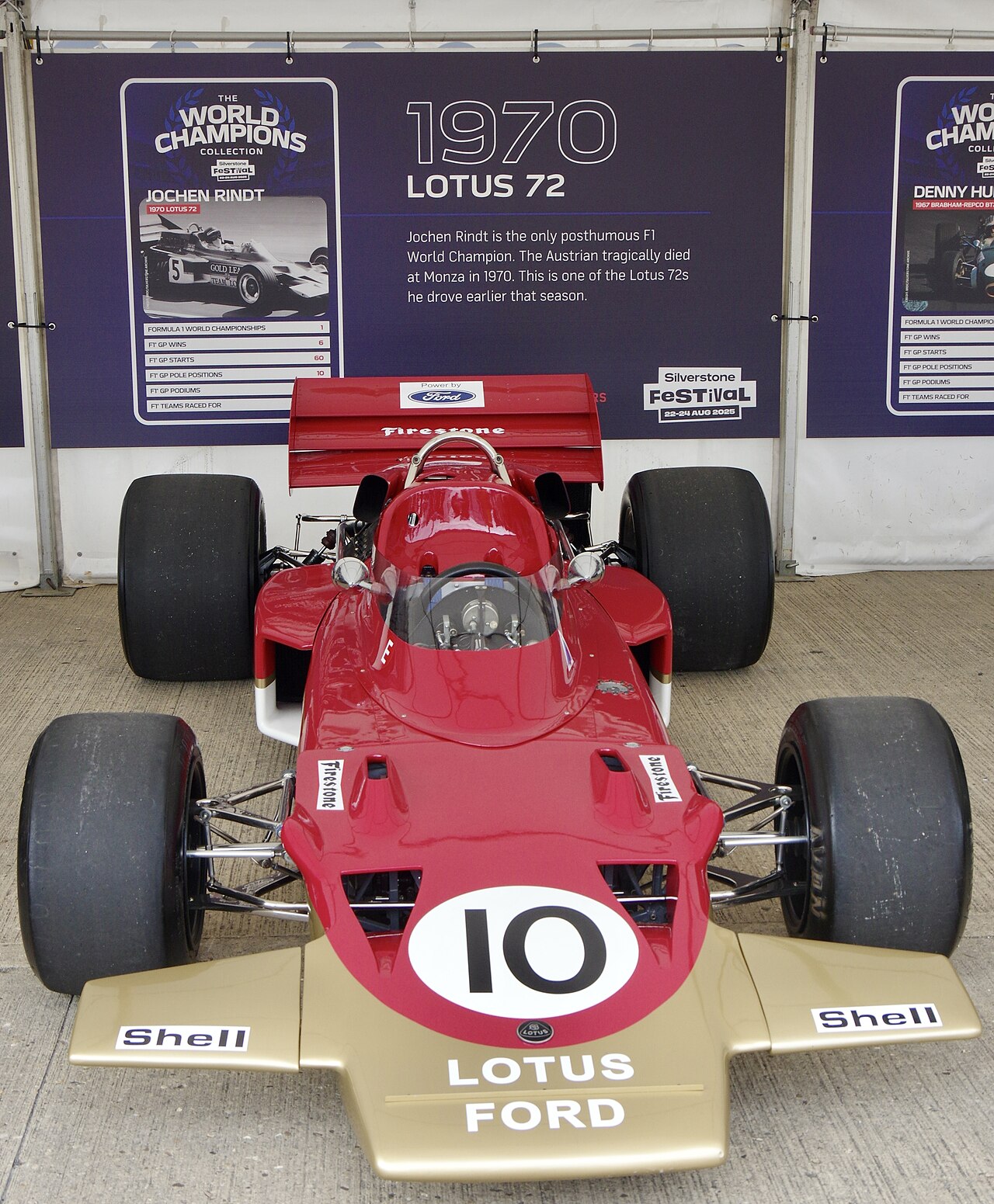
The Lotus Type 72 records a long-running Formula One family beginning in 1970. Its evolving body, liveries and chassis histories remain one connected programme, with a real photographed early Gold Leaf example.
History and verified programme identity
Classic Team Lotus dates the Type 72 programme to 1970–1975 and reports twenty Grand Prix victories. Its public register lists ten entries, including a repeated quoted identifier that should not be simplified into a survivor tally. The record also connects the programme with the later black-and-gold era. The supplied photograph is titled as a 1970 Type 72 in the Silverstone Festival championship-car display and shows a red-and-gold appearance. That earlier livery is retained rather than labelling every Type 72 as a John Player Special car.
Engineering and design
A long-lived Formula One programme can evolve through body, suspension and aerodynamic changes while retaining its family identity. The Type 72’s low wedge nose and broad side areas are visible in the photograph, making its form different from the earlier Type 49. The model history should explain that progression without assigning every later development to an initial 1970 configuration. Hidden structure, current engine parts and restored components need the specific chassis record. A family profile can connect the stages while leaving their technical details dated and accurately scoped.
The physical car in the supplied photograph
David Merrett’s photograph shows a red-and-gold 1970 Type 72 in the Silverstone Festival championship-winning-car display. Its low front body, exposed wheels and cockpit are visible in a later indoor exhibit. The source’s example-year title is kept separate from the date of the photograph.
A closer look at the programme
The early red-and-gold photograph is particularly useful because public memory often associates the Type 72 almost entirely with black and gold. The image restores a visible earlier phase without claiming that a current paint finish is untouched factory material. Its creator title, primary programme period and separate register work together to explain the family. An individual chassis’s actual races and restoration history would still need to be reconciled. Keeping those levels distinct preserves the model’s importance while preventing one famous livery or victory from becoming the identity of every car built or rebuilt within the programme. The Type 72’s low front body and larger side areas make a clear visual contrast with the earlier narrow-nose Lotus racers. The red-and-gold display appearance preserves an early phase within a family often associated with later black-and-gold imagery. The creator’s 1970 example title helps locate the illustration, while the custodial period explains the longer programme. A current exhibition label and competition number are not substituted for a chassis file. The image and register therefore remain complementary evidence: one records a real later object, and the other organizes the original family history.
Collecting and chassis evidence
The public register is a starting point for R-number and chassis research, not proof that every listed identity describes an unchanged survivor. Date major rebuilds, body configurations and livery changes before attaching individual victories. The programme’s twenty-win reference belongs to the family, not to every car illustrated. Its longer period also does not imply a road-production model or an annual numbered-edition allocation.
Related Lotus designs and meaningful comparisons
The Type 49 supplies the earlier Formula One structural comparison, while the Type 63 represents a contemporary experimental branch. These connections explain how an established competition family and an alternative design could coexist. Their separate registers and photographed examples remain distinct.
Reading the sources
The programme sources and the photograph answer different questions. Manufacturer and custodial records establish the original model, Type, category and published production scope. The creator’s file establishes the pictured subject, setting and image permission. An individual chassis history can then add ownership, competition entries and dated repairs without changing the scope of the original programme. Build references are not survivor counts, and a later specification does not automatically become an additional newly manufactured vehicle. Where primary evidence does not establish a complete fabrication census, that field remains unassigned.
Specifications and rarity evidence
| Programme reference year | 1970 |
|---|---|
| Model / Type | Type 72 Formula One — Type 72 |
| Body / competition role | Long-running Formula One chassis family |
| Custodial period | 1970–1975 |
| Category | Formula One |
| Published programme victories | Twenty Grand Prix wins, custodian statement |
| Register scope | Ten listed entries with qualified identifiers |
| Photo example | 1970 Type 72, Silverstone Festival display |
| Published build / register reference | 10 listed register entries |
| Independently audited completed tally | Not assigned |
| Count scope | Published source reference: 10 listed register entries. Scope follows the named programme or register; independently audited completed output and survivor census remain unassigned. |
| Original inventory status | LOT-064 — Verified |
Frequently asked questions
Were all Type 72s originally black and gold?
No. The supplied 1970 example is shown in red-and-gold presentation, while the custodial history records the programme’s later black-and-gold association. Livery is dated within the family history.
How is Type 72 Formula One classified?
This is a Team Lotus competition Type archive. It remains separate from Lotus road-car production. Customer cars, works entries and converted chassis need a reconciled scope before any complete fabrication tally is assigned.
Which technical details are established for the programme?
The primary record supports custodial period: 1970–1975; category: Formula One; published programme victories: Twenty Grand Prix wins, custodian statement. These are programme or explicitly attributed photo references. A particular surviving car’s engine, chassis repairs and competition preparation require its own dated documentation.
Does the photographed appearance establish factory originality?
The caption records a real creator-identified Type 72 Formula One subject and its later setting. It establishes the illustration’s scope, while original components, restoration work and individual race provenance require chassis-specific evidence. A competition number, current paint or museum display is not used as an originality certificate.
What rarity or archive scope is verified?
Published source reference: 10 listed register entries. Scope follows the named programme or register; independently audited completed output and survivor census remain unassigned.
Who photographed the supplied image?
David Merrett from Daventry, England via Wikimedia Commons, under CC BY 4.0. The original file and licence are linked with the image. Retain the creator, source and licence when uploading, exporting or reusing it; local retouching and synthetic enlargement have not been performed.
Related Lotus profiles
Sources and photo credits
Photograph: David Merrett from Daventry, England via Wikimedia Commons original source, CC BY 4.0. Source-provided thumbnail supplied without local cropping, retouching or synthetic enlargement.
Built in limited numbers
Published source reference: 10 listed register entries. Scope follows the named programme or register; independently audited completed output and survivor census remain unassigned.
Gallery
Specifications
Factory specifications may vary by model year, market and configuration.
Identity & production
- Official model
- Type 72 Formula One