1967 Ford GT40 Mk III
Explore 1967 Ford GT40 Mk III: sourced history, design, specifications, rarity evidence and a real photograph with creator credits.
The Ford GT40 Mk III gave the GT40 a dedicated roadgoing configuration with a visibly altered body.
History and purpose
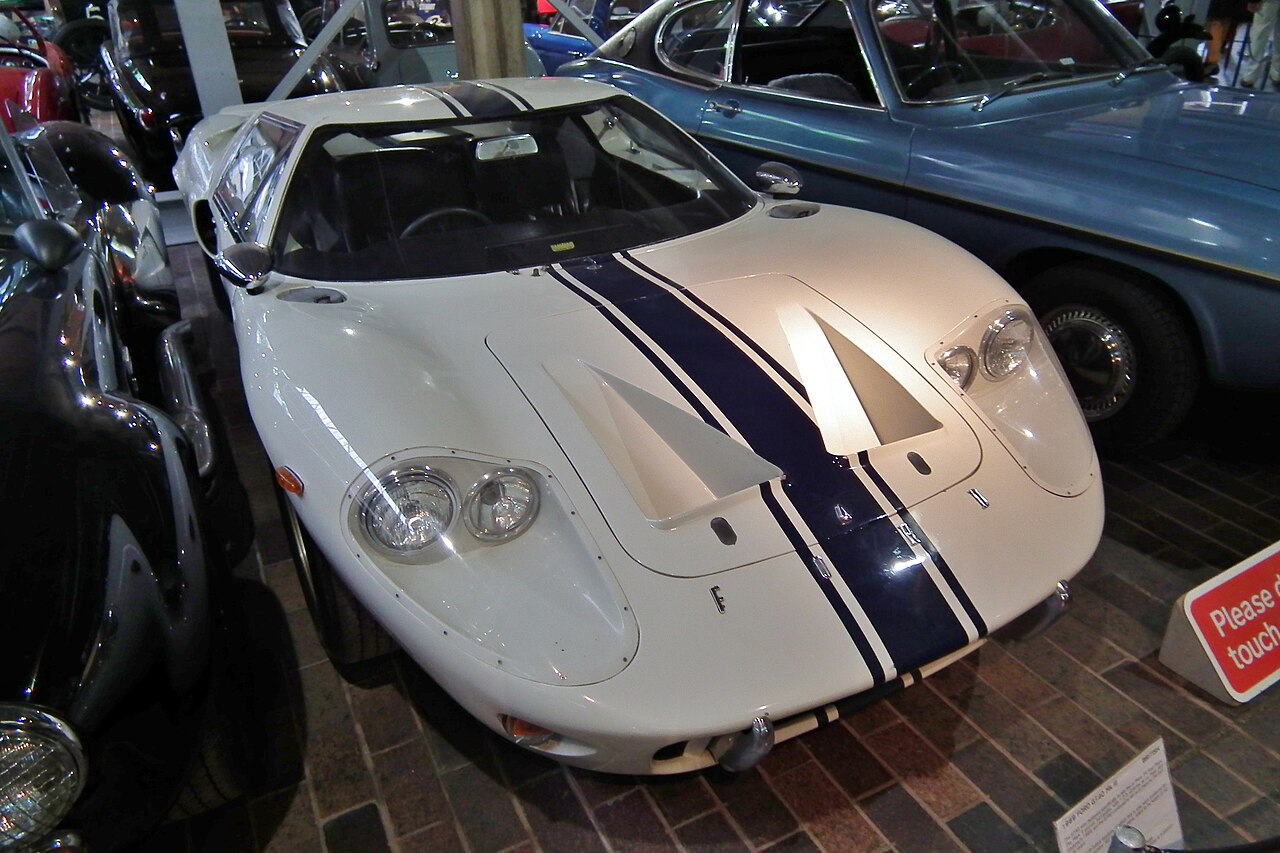
The Ford GT40 Mk III gave the GT40 a dedicated roadgoing configuration with a visibly altered body. The Shelby American Collection records seven original Mk III cars and describes an early chassis completed late in 1966. This article uses 1967 as the programme reference year while preserving that earlier construction chronology. The subject is the complete seven-car road series, not every GT40 that later received road registration. All seven remain part of the wider original GT40 family rather than an additional programme to add to its total. The photograph shows a Mk III preserved at the National Motor Museum, supplying a genuine road-car illustration.
Design and engineering
The museum view makes the Mk III’s unusual face immediately apparent. Twin round lamps sit in raised front wings, and the broad low nose is more conventional in its detailing than the racing Mk I. The institutional account also documents an extended rear body, opening windows and a central gear lever. Together these changes explain the roadgoing purpose without reducing the car to a badge variation. The photograph shows the front and passenger area particularly well; it does not reveal all the rear luggage accommodation. A future side view would complement it by showing how the longer tail changed the balance of the compact GT40 silhouette.
Identifying the original configuration
A road-registered Mk I should not be relabelled Mk III merely because it can be driven on the road. The Mk III has its own body and interior arrangements, and the collection’s account treats it as a purpose-built seven-car series. Keep the Roman numeral, roadgoing programme description and reference year together in the vehicle record. The supplied photo’s source labels the displayed example 1968, which is compatible with a later specimen within the programme. Its individual chassis number is not assigned here. The early M3/1102 discussed by the linked custodial source is a separate documented example, not an inferred identity for the museum photograph.
Collector context and preservation
The Mk III is an effective counterpart to the Mk I programme article because it shows how a specialised racing shape was reconsidered for road use. Visitors can compare lamp arrangements and body proportions before reading about the mechanical package. Preserve the distinctive front details, window openings and interior layout through dated photography. Individual files can then add construction and registration records for the particular car. The complete seven-car figure is useful because its scope is clear: original Mk IIIs. It does not include later replicas, road-converted Mk Is or modern Ford GTs, all of which require their own identities and production histories.
Reading the evidence for this profile
The original source links below identify the programme and the historical statements used in this article. The photograph has its own creator and licence record, separate from the manufacturer’s vehicle history. Keep both when transferring this profile into a collection catalogue. A manufacturing tally describes how many cars belong to a defined original programme; it does not measure how many survive, how many are publicly visible, or how many retain all their original components. Those individual questions require dated chassis and restoration evidence. The reference year likewise describes the programme’s introduction or named historic configuration, while the supplied caption states the photographed setting and any established individual identity. This lets future research expand the car’s history without blurring the scope of the record already assembled here.
Specifications and verified rarity
| Reference year | 1967 |
|---|---|
| Model / programme | GT40 Mk III |
| Body / role | Purpose-built roadgoing GT40 |
| Documented engine | Ford small-block V8; factory literature cited by the collection rates 306 bhp |
| Architecture / transmission | Two-seat roadgoing mid-engine architecture; central gear lever |
| Exact manufacturing tally | 7 |
| Eligibility bound | 133 for the documented scope or parent programme |
| Rarity scope | Complete original GT40 Mk III programme: seven road cars, as recorded by the Shelby American Collection. All belong within the wider approximately 133-car original GT40 family; the figures are not additive. Reference year 1967; an early original chassis was completed late in 1966. |
| Inventory reference | FRD-113 — Verified |
Frequently asked questions
What is the Ford GT40 Mk III?
The complete seven-car original GT40 Mk III roadgoing series, with body and interior changes distinct from road-registered Mk Is.
What engineering defines this Ford?
Ford small-block V8; factory literature cited by the collection rates 306 bhp. Two-seat roadgoing mid-engine architecture; central gear lever. These are the documented programme or preserved-concept specifications. Connect an individual vehicle’s installed components to its own dated records before assigning a factory configuration to that particular example.
Why is 1967 the reference year?
It identifies the introduction or original historical configuration described in this article. The photograph can show a later example or a later display of the original subject. The source inventory’s original heading remains an identity alias wherever the date or model name has been corrected.
How should an individual GT40 Mk III be documented?
Start with the chassis identity and connect it to dated construction, registration or custodial records. Keep exterior, interior, engine and underbody photographs together. Record changes to finish, equipment and mechanical specification as separate events, so the physical car’s history can grow without changing the definition of the original programme.
What rarity or archive scope is verified?
Complete original GT40 Mk III programme: seven road cars, as recorded by the Shelby American Collection. All belong within the wider approximately 133-car original GT40 family; the figures are not additive. Reference year 1967; an early original chassis was completed late in 1966.
Who took the supplied photograph?
sv1ambo via Wikimedia Commons, under CC BY 2.0. The original file and licence links accompany the image. Retain that credit when the photograph is uploaded, exported or reused.
Related Ford profiles
Sources and photo credits
- Manufacturer, institutional or original custodial record
- Original GT40 family programme scale, approximate
Photograph: sv1ambo via Wikimedia Commons original file, CC BY 2.0. Source-provided photograph supplied without local cropping, retouching or text removal. A source thumbnail is used where available. Original-type GT40 Mk III at the National Motor Museum, Beaulieu, photographed in 2011 and labelled 1968 by the image source; chassis unspecified.
Built in limited numbers
Complete original GT40 Mk III programme: seven road cars, as recorded by the Shelby American Collection. All belong within the wider approximately 133-car original GT40 family; the figures are not additive. Reference year 1967; an early original chassis was completed late in 1966.
Gallery
Specifications
Factory specifications may vary by model year, market and configuration.
Identity & production
- Official model
- GT40 Mk III