1962 Ferrari 330 TR / TRI Le Mans
Explore 330 TR / TRI Le Mans: verified history, design, rarity scope and specifications, with a credited documentary photograph.
The Ferrari 330 TR belongs to 1962, rather than the 1963 reference carried in the source inventory.
History and purpose
The Ferrari 330 TR belongs to 1962, rather than the 1963 reference carried in the source inventory. Ferrari’s own model page identifies the one-off as the last front-engined Ferrari sports car to win the Le Mans 24 Hours, with Phil Hill and Olivier Gendebien taking the 1962 victory. The car used a modified Testa Rossa chassis arrangement and independent rear suspension. This profile scopes the original racing identity associated with chassis 0808. Its history includes earlier chassis development and later body changes; those stages are kept within one documented object rather than being counted as separate newly manufactured examples.
Design and engineering
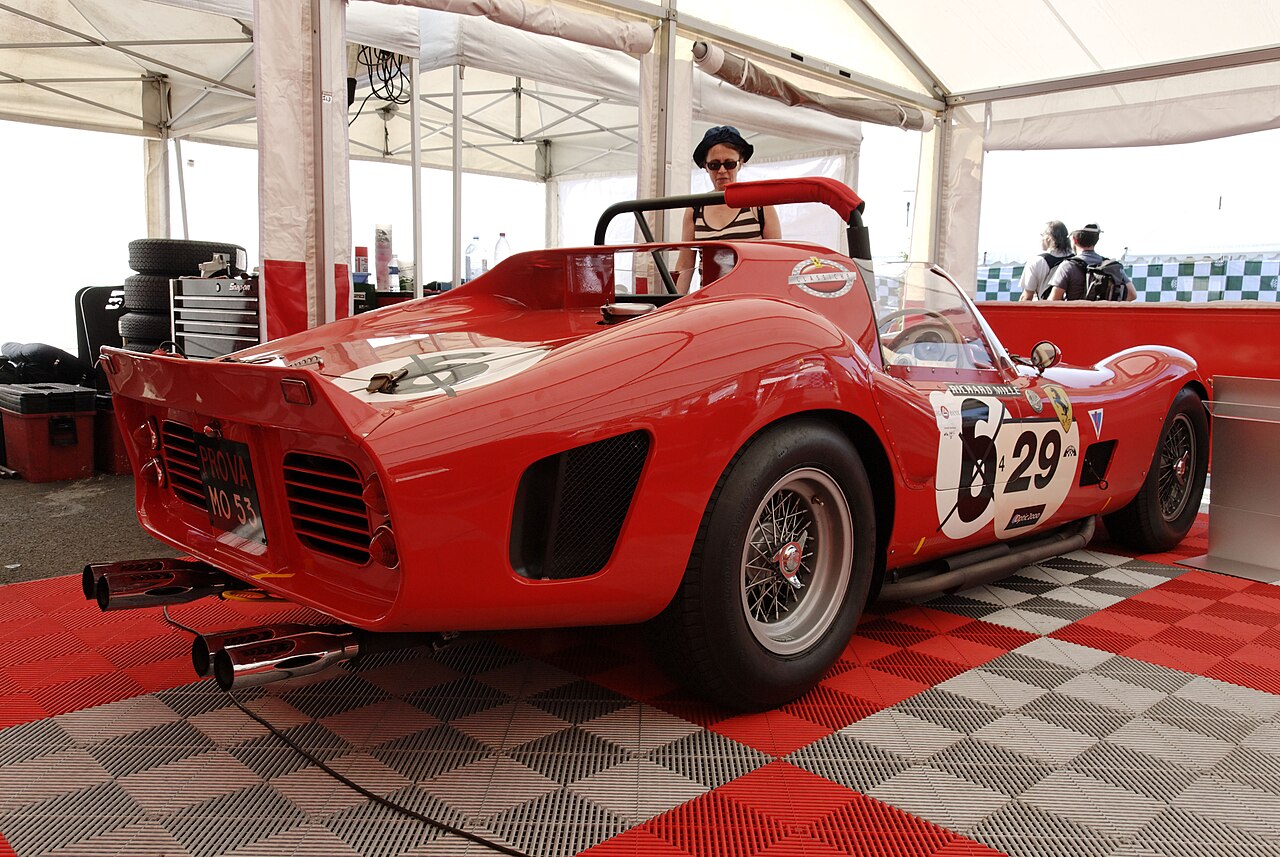
The modern photograph identifies the original car by chassis 0808 at Le Mans Classic. Its open racing body, small passenger enclosure and extensive rear ventilation make its purpose visible even away from its original event. Ferrari records the front-mounted four-litre V12 architecture. The image is evidence of current exhibition configuration and chassis attribution through the source; it does not show an untouched 1962 surface. A historic race car may be restored to a significant earlier configuration after later alterations. The correct question is therefore how the present body relates to the documented chassis history, not whether a polished photograph can certify that every component has survived unchanged.
Identifying the original configuration
TR, TRI and TRI/LM appear in historical descriptions of this car. The title retains the common relationship while the factory source uses 330 TR. A suffix should not be allowed to create another inventory identity for the same car. The corrected-year alias is equally important: a legacy record titled 1963 Ferrari 330 TR must resolve to this profile instead of generating a second upload. The single-car count applies to the scoped original racing subject. It does not mean that every chassis component was newly fabricated in 1962, nor does it turn later rebodied or reconstructed presentations into additional original 330 TR examples.
Collector context and preservation
The car can anchor a collection discussion about the end of the front-engine endurance era without requiring an unsupported claim about what it feels like to drive today. Its documented Le Mans result and engine placement already explain its significance. For an individual provenance file, retain the chassis-lineage research, period photographs, subsequent body chronology and restoration records. Comparing those layers is more useful than repeating a race-winning label beside an unidentified image. The credited modern photograph gives a real car and setting to the article; the factory history supplies the event and technical context. Together, they preserve the difference between an authentic competition identity and the visual form in which that identity is now displayed.
Reading the evidence for this profile
The original source links below identify the programme and the historical statements used in this article. The photograph has its own creator and licence record, separate from the manufacturer’s vehicle history. Keep both when transferring this profile into a collection catalogue. A manufacturing tally describes how many cars belong to a defined original programme; it does not measure how many survive, how many are publicly visible, or how many retain all their original components. Those individual questions require dated chassis and restoration evidence. The reference year likewise describes the programme’s introduction or named historic configuration, while the supplied caption states the photographed setting and any established individual identity. This lets future research expand the car’s history without blurring the scope of the record already assembled here.
Specifications and verified rarity
| Reference year | 1962 |
|---|---|
| Model / programme | 330 TR / TRI Le Mans |
| Body / role | One-off open endurance racing car |
| Engine architecture | Front-mounted 4.0-litre V12 |
| Transmission | Five-speed competition manual |
| Exact manufacturing tally | 1 |
| Eligibility bound | 1 for the documented scope or parent programme |
| Rarity scope | Original 1962 Le Mans-winning 330 TR / TRI, chassis 0808, in its documented identity lineage. One scoped racing car; later body configurations do not create additional original cars. |
| Inventory reference | FER-075 — Verified |
Frequently asked questions
Why was the year corrected to 1962?
Ferrari identifies the original 330 TR and its Le Mans victory in 1962.
Who won Le Mans in it?
Ferrari records Phil Hill and Olivier Gendebien as the winning pairing.
Which chassis is shown?
The photograph source identifies the original 0808 racing identity.
Do later body changes increase the original count?
No. They belong to the configuration history of the scoped car.
What rarity or archive scope is verified?
Original 1962 Le Mans-winning 330 TR / TRI, chassis 0808, in its documented identity lineage. One scoped racing car; later body configurations do not create additional original cars.
Who took the supplied photograph?
ZANTAFIO56 from FRANCE via Wikimedia Commons, under CC BY-SA 2.0. The original file and licence links accompany the image. Retain that credit when the photograph is uploaded, exported or reused.
Related Ferrari profiles
Sources and photo credits
Photograph: ZANTAFIO56 from FRANCE via Wikimedia Commons original file, CC BY-SA 2.0. Source-provided photograph supplied without local cropping, retouching or text removal. A source thumbnail is used where available. Original Ferrari 330 TRI/LM, source-identified as chassis 0808, photographed at Le Mans Classic in 2010 in a restored open racing configuration.
Built in limited numbers
Original 1962 Le Mans-winning 330 TR / TRI, chassis 0808, in its documented identity lineage. One scoped racing car; later body configurations do not create additional original cars.
Gallery
Specifications
Factory specifications may vary by model year, market and configuration.
Identity & production
- Official model
- 330 TR / TRI Le Mans