1952 Fiat 8V Rapi
Discover Fiat’s factory-bodied 8V Rapi: original V8 architecture, compact coupé design, the 114-chassis parent scope and credited photography.
The Fiat 8V Rapi places Fiat’s early-1950s sports-car experiment within its original factory design language.
History and purpose
The Fiat 8V Rapi places Fiat’s early-1950s sports-car experiment within its original factory design language. The 8V programme was introduced in 1952 and produced 114 chassis across its original body arrangements. Rapi’s name identifies the factory styling association used for this profile. That broad chassis programme supplies a conservative eligibility bound for the factory-bodied subset, while a separate exact subset tally remains open. This approach keeps the model rare without manufacturing a precision that the checked sources do not provide. It also allows the factory body and the Zagato interpretation to be compared as related expressions of the same original sports-car architecture.
Design and engineering
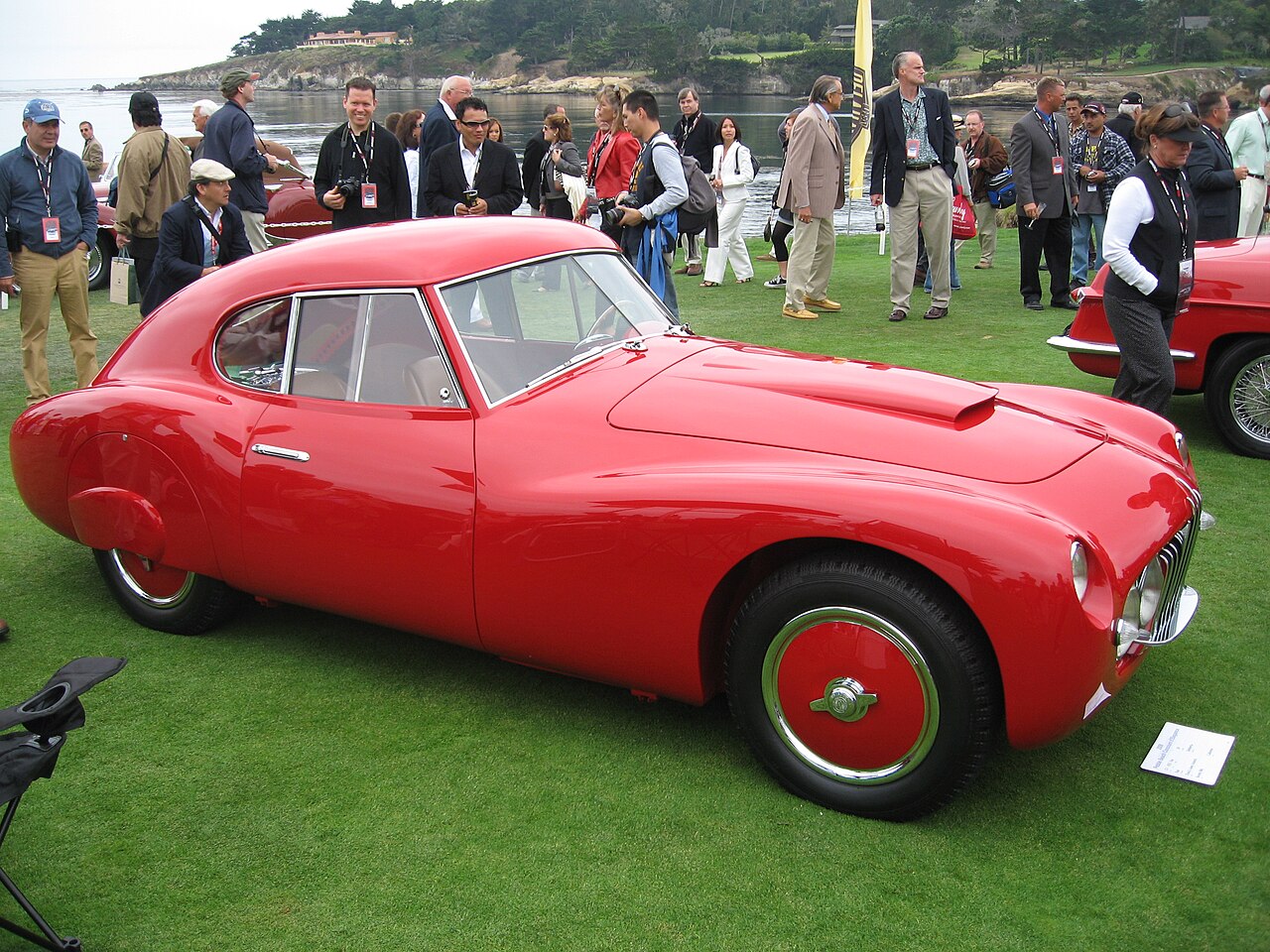
The credited photograph from Pebble Beach shows an early factory-style closed body. Its compact roof, rounded front wings and low central nose create a distinctly sporting stance, while the enclosed passenger compartment gives it the scale of a small grand touring coupé. The visual interest comes from the relationship between the roof and the flowing lower body rather than from elaborate decoration. In this setting the car can be studied as an object of design as well as a rare chassis programme. The photograph’s subject identification supports the body reference; it does not supply an individual gearbox inspection or certify every panel’s construction date.
Identifying the original configuration
The profile title keeps Rapi attached to 8V because the wider programme includes several original coachbuilding interpretations. A Fiat 8V with a later replacement body needs a configuration history, not an automatic claim to the production tally of an original body subset. The 114 figure describes the complete chassis programme and is not presented as 114 Rapi bodies. That distinction is reflected in the manufacturing fields: the exact subset total is unset, and the parent-programme bound is explicit. The photograph shows a factory-style body identified by its source, while individual originality and restoration questions remain matters for the chassis and body records.
Collector context and preservation
The Rapi body is particularly useful in a collection that follows how a common mechanical package can support different visual answers. Displaying it beside the original Zagato-bodied 8V makes the roof treatment, front openings and surface transitions easier to understand. A preservation file should record those features before body work, including panel joins, glazing dimensions and the relationship between trim and paint. Period photographs can then be linked to the same chassis identity. The complete 8V programme is already small; the more enduring collector value of this profile is its clear description of which body tradition is being studied and how that tradition relates to the wider Fiat experiment.
Reading the evidence for this profile
The original source links below identify the programme and the historical statements used in this article. The photograph has its own creator and licence record, separate from the manufacturer’s vehicle history. Keep both when transferring this profile into a collection catalogue. A manufacturing tally describes how many cars belong to a defined original programme; it does not measure how many survive, how many are publicly visible, or how many retain all their original components. Those individual questions require dated chassis and restoration evidence. The reference year likewise describes the programme’s introduction or named historic configuration, while the supplied caption states the photographed setting and any established individual identity. This lets future research expand the car’s history without blurring the scope of the record already assembled here.
Specifications and verified rarity
| Reference year | 1952 |
|---|---|
| Model / programme | 8V Rapi |
| Body / role | Factory-bodied V8 sporting coupé |
| Documented engineering | Front-mounted 1,996 cc V8 |
| Architecture / transmission reference | Original Fiat 8V road architecture |
| Exact manufacturing tally | Not established |
| Eligibility bound | 114 for the documented scope or parent programme |
| Rarity scope | Original factory-bodied Fiat 8V associated with Luigi Rapi. The whole 1952–1954 8V programme comprised 114 chassis; the exact Rapi-bodied subset is not separately established here. No rebuilt body is counted as an additional original chassis. |
| Inventory reference | FIA-031 — Verified |
Frequently asked questions
What is the Fiat 8V Rapi?
The original factory-bodied 8V styling associated with Luigi Rapi. Its rarity is bounded by the complete 114-chassis 8V programme, not an invented body-subset total.
What engineering details are documented?
Front-mounted 1,996 cc V8. Original Fiat 8V road architecture. The specification table identifies the documented model, concept package or explicitly named donor architecture. It does not certify an unseen engine number, individual component condition or a restoration specification from the exterior photograph.
Why is 1952 used in the profile title?
This is the reference year for the original configuration, introduction or public presentation explained in the history section. A photographed example can be younger. Where the supplied inventory used a different date, its original title remains an identity alias so that the same programme is not uploaded twice.
What belongs in an individual vehicle file?
Connect the chassis identity with original configuration records, dated photographs, custodial history and restoration paperwork. Record changes to paint, trim, mechanical components and bodywork as dated events. This profile establishes the named subject and its rarity or physical archive scope; the individual file supplies the history of the particular example.
What rarity or archive scope is verified?
Original factory-bodied Fiat 8V associated with Luigi Rapi. The whole 1952–1954 8V programme comprised 114 chassis; the exact Rapi-bodied subset is not separately established here. No rebuilt body is counted as an additional original chassis.
Who took the supplied photograph?
Simon Davison from Los Gatos, United States via Wikimedia Commons, under CC BY 2.0. The original file and licence links accompany the image. Retain that credit when the photograph is uploaded, exported or reused.
Related Fiat profiles
Sources and photo credits
Photograph: Simon Davison from Los Gatos, United States via Wikimedia Commons original file, CC BY 2.0. Source-provided photograph supplied without local cropping, retouching or text removal. A source thumbnail is used where available. Factory-style Fiat 8V photographed at Pebble Beach in 2006; exact body-subset tally and individual component originality are not inferred from the photo.
Built in limited numbers
Original factory-bodied Fiat 8V associated with Luigi Rapi. The whole 1952–1954 8V programme comprised 114 chassis; the exact Rapi-bodied subset is not separately established here. No rebuilt body is counted as an additional original chassis.
Gallery
Specifications
Factory specifications may vary by model year, market and configuration.
Identity & production
- Official model
- 8V Rapi