1910 Buick Bug / 60 Special Racer
Explore the 1910 Buick Bug / 60 Special Racer: sourced history, rarity, specifications, six FAQs and authentic photographs with visible credits.
1910 Buick Bug / 60 Special Racer brings Buick’s early competition engineering into a two-car racing programme. This profile explains its history, specification, production scope and collector significance with named sources and credited photographs.
Record: BUI-006 · Buick · 1910 · Archive.
1910 Buick Bug / 60 Special Racer: history and background
The Buick Bug was the nickname attached to the remarkable 60 Special racers built for Buick’s racing team in 1910. Historical research identifies two cars, assigned to Bob Burman and Louis Chevrolet. That distinction corrects the inventory’s shorthand reference to a single known heritage vehicle: one surviving racer and two originally built racers are different statements.
Specifications and production scope
| Item | Documented reference |
|---|---|
| Production scope | Two original Buick 60 Special racing cars built in 1910; one surviving car is not a one-car production total. |
| Reference year | 1910 |
| Factory/model identity | Bug / 60 Special Racer |
| Body | Single-seat competition car |
| Engine | Purpose-built valve-in-head inline-four |
| Manufacturer / origin | Buick / United States |
| Inventory reference | BUI-006 — Verified |
| Source basis | Manufacturer, museum, period literature or named historical reference; production qualifications retained below |
Design and engineering
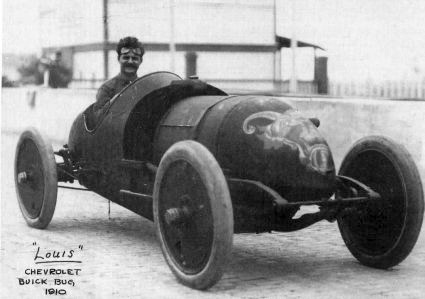
The narrow, enclosed nose and central driving position made the Bug strikingly different from a stripped touring car. Its radiator arrangement used finned tubes over the body ahead of the driver. The unusual shape therefore reflected a real engineering solution. A single seat also removed the usual place for a riding mechanic, giving the car a distinctive competition layout.
Model identity and rarity
The Society of Automotive Historians in Britain traces Chevrolet’s car through a 1910 accident and repair before its later disappearance. The surviving car is believed to be Burman’s and has a documented restoration and museum history. That attribution should retain the source’s qualification. It must not be turned into an absolute chassis claim or confused with the racer in every period picture.
Collector significance
The Bug reveals why Durant supported competition: racing put Buick’s engineering in public view. The period photograph of Chevrolet records a real driver and car, while the later surviving exhibit tells another part of the programme’s history. A good archive profile holds those threads together and explains the two-car programme without creating duplicate records for the nickname and official model name.
Compare related verified Buick profiles
Read this 1910 Bug / 60 Special Racer beside the 1907 Buick Model D and 1908 Buick Model 10 to place its single-seat competition car in context. The related entries retain their own years, model identities and production scopes, so their figures are not added to this record.
Frequently asked questions
How many Buick Bugs were built?
Historical research identifies two Buick 60 Special racers built in 1910, one for Burman and one for Chevrolet.
Is the surviving Bug definitely Chevrolet’s car?
No. The surviving car is believed to be Burman’s; Chevrolet’s racer disappeared after its early competition history.
Why does the nose have no normal front radiator?
Cooling used a series of finned tubes over the body ahead of the driver, allowing an enclosed nose.
Why is the Bug / 60 Special Racer included as a rare Buick?
Two original Buick 60 Special racing cars built in 1910; one surviving car is not a one-car production total. The scope is tied to this specific year, body or original project. It does not confer the same rarity on every car carrying the broader Buick Racing name, and it does not describe how many survive today.
What records help identify an individual Bug / 60 Special Racer?
Begin with the documented year and single-seat competition car. Read the original model/body identification and surviving factory or collection records together. Record replacement components and restoration work separately. For a concept or racing car, its physical-car provenance is especially important; for an optioned production model, retain the equipment paperwork.
What photographs and credits accompany this profile?
The bundled photograph is retrieved from named Wikimedia Commons file records. Each image has a visible photographer or archive credit, its own licence link and an accurate subject caption. The pictures illustrate the documented model; they do not establish ownership, present condition or every component’s originality.
Sources and photo credits
Production figures retain the scope and qualifications of the named references. Manufacturer and museum records establish project identity; auction and historical model references supply additional body-specific context.
Photo: Unknown photographer (period Louis Chevrolet photograph) / Wikimedia Commons · Public domain. No local cropping, retouching or content removal. A source-supplied size variant is used where available.
Why this machine matters
The Bug reveals why Durant supported competition: racing put Buick’s engineering in public view. The period photograph of Chevrolet records a real driver and car, while the later surviving exhibit tells another part of the programme’s history. A good archive profile holds those threads together and explains the two-car programme without creating duplicate records for the nickname and official model name.
Built in limited numbers
Two original Buick 60 Special racing cars built in 1910; one surviving car is not a one-car production total.
Gallery
Specifications
Factory specifications may vary by model year, market and configuration.
Identity & production
- Official model
- Bug / 60 Special Racer
- Base model
- Buick Racing
Powertrain & performance
- Engine
- Purpose-built valve-in-head inline-four