1908 Buick Model 10
Explore the 1908 Buick Model 10: sourced history, rarity, specifications, six FAQs and authentic photographs with visible credits.
1908 Buick Model 10 brings a defining early chapter of Buick engineering and manufacture. This profile explains its history, specification, production scope and collector significance with named sources and credited photographs.
Record: BUI-004 · Buick · 1908 · Archive.
1908 Buick Model 10: history and background
The Model 10 was a more accessible Buick and a key part of the company’s growth around the time Durant formed General Motors. Its compact open body gave buyers an alternative to Buick’s larger touring cars. This profile is deliberately limited to 1908: the later Model 10 programme was more numerous, and combining all years would obscure the first year’s distinct historical scope.
Specifications and production scope
| Item | Documented reference |
|---|---|
| Production scope | 4,002 Model 10 cars reported for the introductory 1908 year; later Model 10 years excluded. |
| Reference year | 1908 |
| Factory/model identity | Model 10 |
| Body | Open brass-era runabout/touring family |
| Engine | Overhead-valve inline-four |
| Manufacturer / origin | Buick / United States |
| Inventory reference | BUI-004 — Verified |
| Source basis | Manufacturer, museum, period literature or named historical reference; production qualifications retained below |
Design and engineering
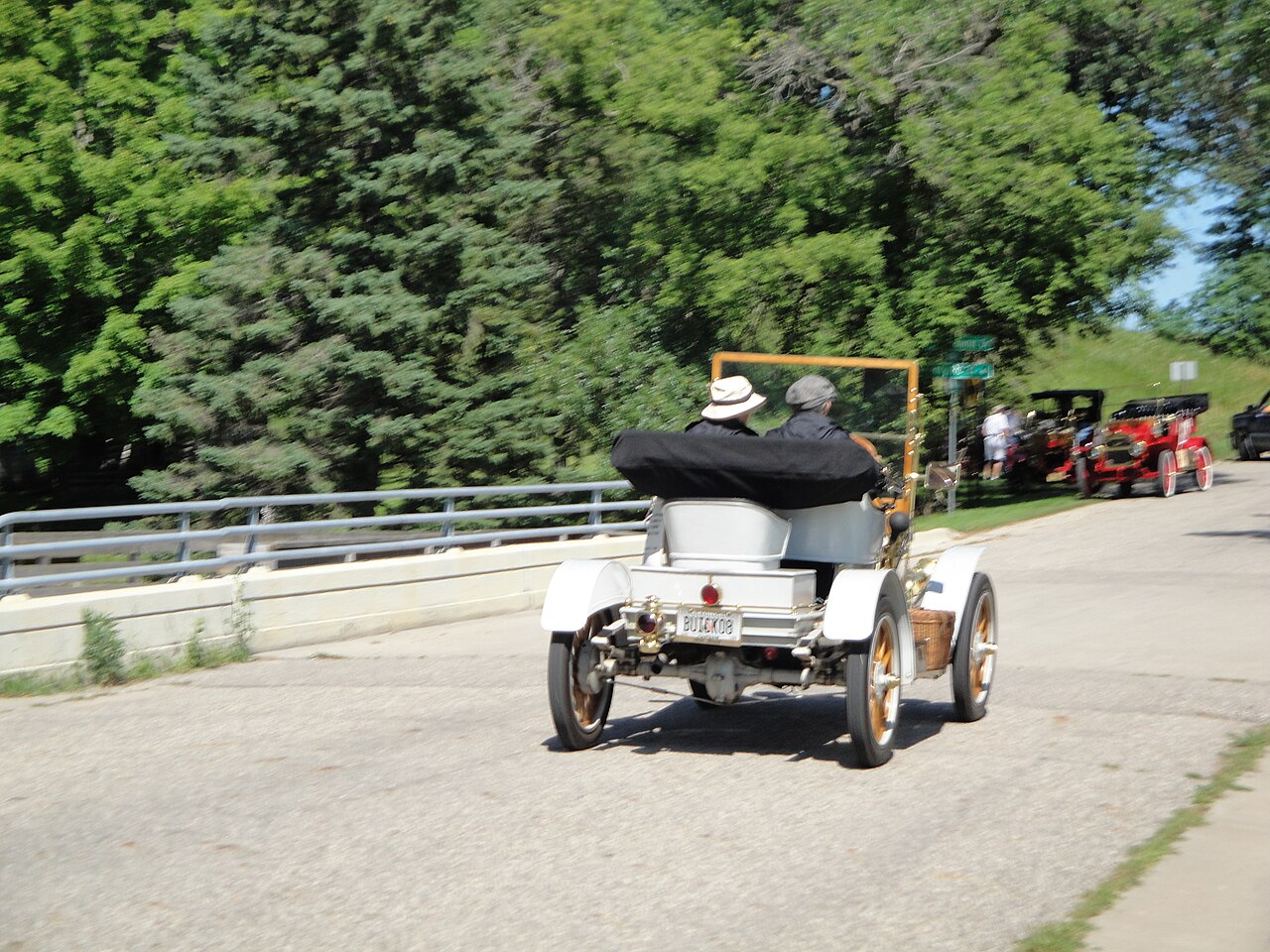
Period design and surviving examples show the exposed wheels, narrow body and upright seating associated with early light automobiles. A modern touring event photograph helps readers understand its proportions more directly than a list of dimensions. The car predates the closed, weatherproof cabins that later became normal, so its appearance should be assessed within its own era of motoring.
Model identity and rarity
The 4,002 figure is a reported first-year total, not a survivor count. A restored 1908 example should be assessed using its documentary trail and appropriate Model 10 components. Later Model 10 cars, period racers built from other chassis and modern speedster conversions need separate descriptions. Attractive paint or participation in an antique-car event cannot substitute for model identification.
Collector significance
The Model 10’s interest is the combination of manageable size, Buick engineering and an important moment of industrial expansion. It is a useful companion to the Model D because it illustrates a different product strategy. The same model name across several seasons does not justify multiplying profiles by colour or counting a touring-event photograph as another factory edition.
Compare related verified Buick profiles
Read this 1908 Model 10 beside the 1905 Buick Model C and 1907 Buick Model D to place its open brass-era runabout/touring family in context. The related entries retain their own years, model identities and production scopes, so their figures are not added to this record.
Frequently asked questions
Why is the profile limited to 1908?
The qualifying scope is the introductory model year. Later Model 10 production is separate and is not included in the reported 4,002 total.
Was it one of Buick’s earliest small cars?
Yes. Its compact open format contrasts with the larger touring Buicks of the same early period.
Are Model 10 race cars included here?
This is the road-model profile. A documented racing chassis needs its own provenance and should not be assumed to belong to this annual road-car count.
Why is the Model 10 included as a rare Buick?
4,002 Model 10 cars reported for the introductory 1908 year; later Model 10 years excluded. The scope is tied to this specific year, body or original project. It does not confer the same rarity on every car carrying the broader Early Buick name, and it does not describe how many survive today.
What records help identify an individual Model 10?
Begin with the documented year and open brass-era runabout/touring family. Read the original model/body identification and surviving factory or collection records together. Record replacement components and restoration work separately. For a concept or racing car, its physical-car provenance is especially important; for an optioned production model, retain the equipment paperwork.
What photographs and credits accompany this profile?
The bundled photograph is retrieved from named Wikimedia Commons file records. Each image has a visible photographer or archive credit, its own licence link and an accurate subject caption. The pictures illustrate the documented model; they do not establish ownership, present condition or every component’s originality.
Sources and photo credits
Production figures retain the scope and qualifications of the named references. Manufacturer and museum records establish project identity; auction and historical model references supply additional body-specific context.
- Vermont Automobile Enthusiasts — owner account of a 1908 Model 10
- Classic Automobile Appraisal and Resource Guide — 1908–1919 Buick
- GM Heritage — William Durant and the first Flint Buick
Photo: Greg Gjerdingen from Willmar, USA / Wikimedia Commons · CC BY 2.0. No local cropping, retouching or content removal. A source-supplied size variant is used where available.
Why this machine matters
The Model 10’s interest is the combination of manageable size, Buick engineering and an important moment of industrial expansion. It is a useful companion to the Model D because it illustrates a different product strategy. The same model name across several seasons does not justify multiplying profiles by colour or counting a touring-event photograph as another factory edition.
Built in limited numbers
4,002 Model 10 cars reported for the introductory 1908 year; later Model 10 years excluded.
Gallery
Specifications
Factory specifications may vary by model year, market and configuration.
Identity & production
- Official model
- Model 10
- Base model
- Early Buick
Powertrain & performance
- Engine
- Overhead-valve inline-four