1909 Cadillac Model Thirty
Explore the 1909 Cadillac Model Thirty: history, design, scoped rarity, collector details, specifications and an authentic photograph with full credit.
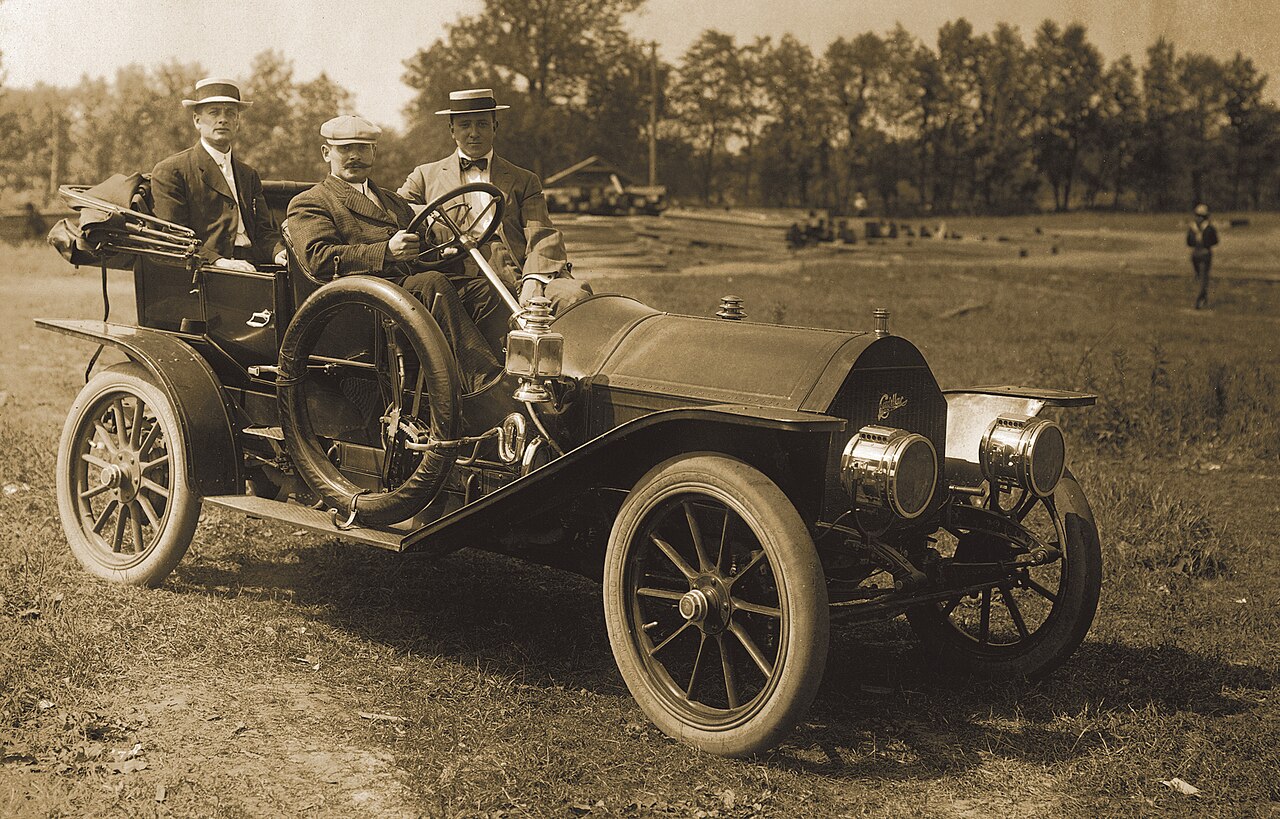
The 1909 Cadillac Model Thirty presents a more developed touring-car shape than the marque’s early single-cylinder machines. Its long bonnet, forward-facing seats and recognizable front radiator place mechanical equipment and passengers in a clearer sequence. The Thirty name belongs to this four-cylinder chapter, and the 1909 profile keeps its production and appearance separate from later Cadillac Model Thirty records.
History, identity and design
The period-style photograph gives the Model Thirty a useful human scale. Two occupants sit in the forward compartment, above the running boards and behind a long bonnet. Large lamps flank the radiator, and a raised rear seating area extends the touring body. The car has a more purposeful front-to-rear organization than an early detachable-body runabout. That observation is about visible form: the engine compartment, driving position and passenger body are now distinct parts of one recognizable automobile rather than a near-carriage silhouette with machinery beneath the seat.
Cadillac’s archival reference places the Thirty’s introduction in 1909 and associates the model name with its horsepower designation. It identifies four-cylinder construction and a three-speed transmission. These are useful landmarks for understanding the model’s position without treating every later Thirty as mechanically identical. A long-lived nameplate can cover changing dimensions, equipment and body choices. The year therefore belongs in the title, search metadata and identity checks. It also matters when studying lamps, wheels or the transition to electric starting in later Cadillac history.
The original appearance carries a mixture of delicacy and functional exposure. Thin wheel spokes contrast with substantial seats and a comparatively large radiator face. The steering position rises high above the chassis, while the running boards act as visible steps into the body. Seen as design, these details suggest a car whose passenger experience was shaped by access and elevation as much as by enclosure. A present-day photograph of a restored example would document another stage in its life; the supplied historical image preserves a different sort of evidence, including people and setting.
A Model Thirty collection file benefits from a separate record for the year, the body and the individual car. The bundled image represents the model, rather than certifying an auction chassis, and its identified source remains linked. Body vocabulary such as touring car, roadster and demi-tonneau should be matched to the actual seating and rear body before a more specific title is used. This profile deliberately retains the broader Model Thirty identity in the inventory. Its value is a clear view of the 1909 Cadillac programme, with the documented annual count attached to that year alone.
Specifications and production scope
| Reference year | 1909 |
|---|---|
| Subject | Model Thirty |
| Engineering context | Four-cylinder gasoline engine; three-speed manual |
| Design focus | A unified four-cylinder Cadillac |
| Rarity scope | 5,903 examples for the named 1909 model/body or edition only. This is not the output of the full nameplate across other years or the complete Cadillac range. |
| Exact scoped build tally | 5903 |
| Inventory reference | CAD-005 — Verified |
Keeping the collector record useful
A useful Model Thirty file separates the model story from the life of an individual vehicle. Record the body or edition designation exactly as it appears in matching documents, then keep clear front, side, rear and cabin photographs with the dates attached. Changes made during restoration deserve their own entries, including the reason for the work and the evidence used. That approach lets future readers compare the physical car with this profile without confusing a present appearance, an original factory specification and an attractive historical association.
Documentary photograph
1909 Cadillac Model Thirty. Documentary model photograph; individual car provenance is certified only where separately stated in the article. The source image was checked for the pictured body or physical project and its file-specific reuse terms. The visible photograph caption links the photographer, original file and licence so the illustration can be traced independently of the article.
Frequently asked questions
What does Thirty mean in this Cadillac name?
The archival model description links the name to its horsepower designation. It should be read as the historic model name, rather than a modern performance measurement or a promise that every later Model Thirty used the same specification.
Is this the electric-start Cadillac?
This is the 1909 record. The later electric-start chapter needs its own year and evidence. The photograph and engine description here should not be relabelled as the 1912 self-starter model simply because the Thirty name continued.
What production scope applies to the 1909 Model Thirty?
5,903 examples for the named 1909 model/body or edition only. This is not the output of the full nameplate across other years or the complete Cadillac range.
What should a collector document on an individual example?
Keep the vehicle’s identification, body or edition evidence, dated photographs and restoration records together. This Model Thirty profile explains the model subject; ownership, original finish and present condition require records that match the individual car being considered.
Does this profile provide a complete original specification?
The specification table records the supported identity and engineering context for this year. An exterior photograph cannot establish every optional feature or later component change. Preserve any matching build record before adding more precise equipment claims to the Model Thirty file.
Who took the photograph and how may it be reused?
The bundled image is credited to William Creswell from Bremerton, Washington, USA, under CC BY 2.0 on its individual Commons file page. Keep the visible named credit and licence link. The supplied source version has no local image edits; background signage and photographer marks remain where present.
Sources
- Cadillac Database archival reference
- Primary museum, manufacturer, event or contemporary source
- Photograph: 1909 Cadillac Model 30 (2532601027).jpg
Related Cadillac profiles
Compare the body forms and clearly scoped identities in 1903 Cadillac Model A Rear-Entrance Tonneau and 1930 Cadillac V-16 Series 452 Convertible Coupe. Each profile keeps its own year, photograph and rarity scope.
Built in limited numbers
5,903 examples for the named 1909 model/body or edition only. This is not the output of the full nameplate across other years or the complete Cadillac range.
Gallery
Specifications
Factory specifications may vary by model year, market and configuration.
Identity & production
- Official model
- Model Thirty