1903 Cadillac Model A Rear-Entrance Tonneau
Explore the 1903 Cadillac Model A Rear-Entrance Tonneau: history, design, scoped rarity, collector details, specifications and an authentic photograph with.
The 1903 Cadillac Model A rear-entrance tonneau belongs to the moment when a motorcar still looked closely related to a carriage. Its raised seats, narrow wheels and exposed running gear make that relationship visible. The extra passenger compartment is the defining feature of this profile: a detachable rear body that changes how the little Cadillac carries people, without establishing a separate manufacturing programme.
History, identity and design
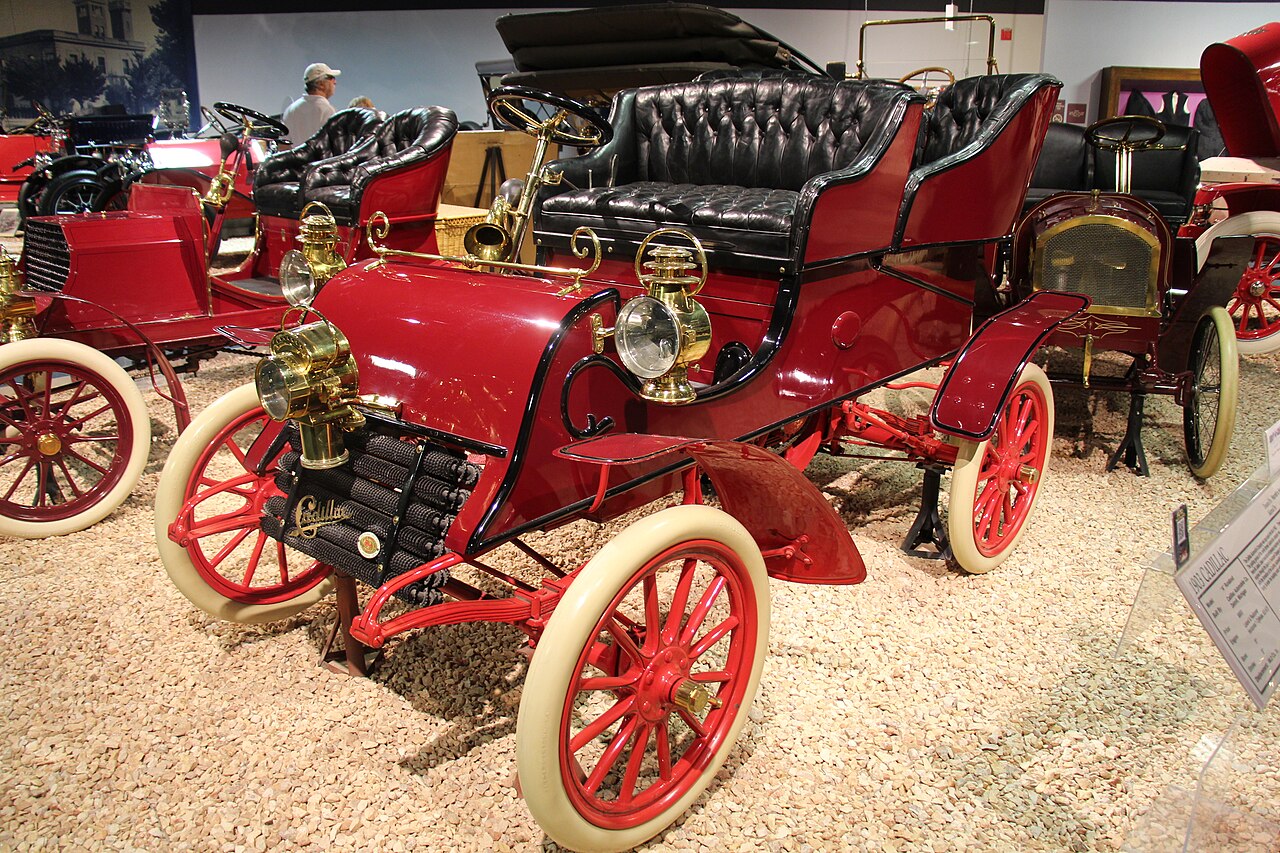
Approach the photograph from the passenger’s point of view. The seating sits high above the axles, and the forward compartment has very little surrounding bodywork. The rear seating structure rises behind it, creating a compact two-level composition. That arrangement gives the tonneau its character. Rather than concealing the mechanical vehicle beneath a continuous shell, the body looks like a carefully fitted piece of furniture carried by a small motorized platform. The visual connection with carriage construction is especially clear in the upright seat backs and narrow wheel rims.
The archival description identifies the tonneau as a detachable rear-entrance addition. Its purpose was to expand passenger capacity beyond the basic runabout arrangement. A reader should therefore distinguish a body configuration from a chassis identity. A surviving Cadillac can have a documented history of different bodies, restorations or fittings. The rear compartment makes this catalogue subject distinctive, but it does not justify adding a second production total to the runabout count. The shared early Cadillac population provides the rarity ceiling; a precise original tonneau tally remains unconfirmed here.
In the selected museum photograph, red paint, bright lamps and dark upholstered seats divide the car into strong visual elements. The lamps stand apart from the body and wheels rather than disappearing into fenders. The steering wheel sits above a slim column, and the front axle remains readable underneath. As visual interpretation, this openness helps explain why early motorcars reward slow observation. A visitor can follow the relationship between the people, the supporting frame and the wheels without needing a cutaway illustration or an imagined reconstruction of concealed components.
For a collector, the useful questions begin with the detachable body and its history. An early period photograph can help establish the rear entrance, seating proportions and body outline; workshop records can explain later upholstery or paint work. Lamp patterns, wheels and trim deserve their own evidence rather than automatic acceptance as original factory fittings. This Cadillac’s appeal is the small-scale passenger solution itself. Keeping the tonneau configuration clearly named preserves that story and makes comparison with later four-door open Cadillacs far more interesting than a generic claim that every old Cadillac was a luxury limousine.
Specifications and production scope
| Reference year | 1903 |
|---|---|
| Subject | Model A Rear-Entrance Tonneau |
| Engineering context | Single-cylinder gasoline engine |
| Design focus | Cadillac’s detachable passenger body |
| Rarity scope | A conservative ceiling of 2,497 within the 1903 Cadillac parent programme. Exact output for this body is not established. Shared parent ceilings are non-additive, and numbered positions are not certified completed body totals. |
| Exact scoped build tally | Unset; see scoped eligibility note |
| Inventory reference | CAD-001 — Verified |
Keeping the collector record useful
A useful Model A file separates the model story from the life of an individual vehicle. Record the body or edition designation exactly as it appears in matching documents, then keep clear front, side, rear and cabin photographs with the dates attached. Changes made during restoration deserve their own entries, including the reason for the work and the evidence used. That approach lets future readers compare the physical car with this profile without confusing a present appearance, an original factory specification and an attractive historical association.
Documentary photograph
1903 Cadillac with detachable rear-entrance tonneau fitted, in a museum. The uploader retains a Model A Runabout file name; the visible rear compartment determines this body illustration. The source image was checked for the pictured body or physical project and its file-specific reuse terms. The visible photograph caption links the photographer, original file and licence so the illustration can be traced independently of the article.
Frequently asked questions
What is a rear-entrance tonneau?
It is the additional rear passenger compartment, entered from behind. The early Cadillac reference describes it as detachable. Its presence changes the seating configuration; it does not by itself identify a different chassis or establish a separate production series.
Why is the photo file labelled Runabout?
The source retains the uploader’s runabout designation. The photographed car visibly carries the rear seating compartment, consistent with the detachable tonneau arrangement. The original source name is preserved in the credit trail rather than silently rewritten as factory documentation.
What production scope applies to the 1903 Model A Rear-Entrance Tonneau?
A conservative ceiling of 2,497 within the 1903 Cadillac parent programme. Exact output for this body is not established. Shared parent ceilings are non-additive, and numbered positions are not certified completed body totals.
What should a collector document on an individual example?
Keep the vehicle’s identification, body or edition evidence, dated photographs and restoration records together. This Model A profile explains the model subject; ownership, original finish and present condition require records that match the individual car being considered.
Does this profile provide a complete original specification?
The specification table records the supported identity and engineering context for this year. An exterior photograph cannot establish every optional feature or later component change. Preserve any matching build record before adding more precise equipment claims to the Model A Rear-Entrance Tonneau file.
Who took the photograph and how may it be reused?
The bundled image is credited to Sicnag, under CC BY 2.0 on its individual Commons file page. Keep the visible named credit and licence link. The supplied source version has no local image edits; background signage and photographer marks remain where present.
Sources
Related Cadillac profiles
Compare the body forms and clearly scoped identities in 1909 Cadillac Model Thirty and 1930 Cadillac V-16 Series 452 Convertible Coupe. Each profile keeps its own year, photograph and rarity scope.
Built in limited numbers
A conservative ceiling of 2,497 within the 1903 Cadillac parent programme. Exact output for this body is not established. Shared parent ceilings are non-additive, and numbered positions are not certified completed body totals.
Gallery
Specifications
Factory specifications may vary by model year, market and configuration.
Identity & production
- Official model
- Model A Rear-Entrance Tonneau