Rotary and flat engines: five rare cars beyond the usual layout
An engine description can name several different things at once. Rotary describes an operating architecture. Flat or horizontally opposed describes the arrangement of cylinders in a piston engine. Turbocharged describes how intake air is supplied. Those labels belong to different questions.
This edition separates them through five rare vehicles. Three Mazdas show rotary power in different periods and bodies. A Subaru and a Porsche then show how horizontally opposed piston engines can sit within very different vehicle layouts. The collection connects unusual mechanical ideas without pretending that all five share one mechanism.
Start with what moves inside the engine, then ask where the engine sits and which wheels receive its output. Only after that does the edition identity complete the picture. This route through the subject is more informative than comparing headline displacement figures across rotary and piston designs, where the numbers alone do not describe equivalent machinery or driving experiences.
01 / Rotors in a compact coupé — Mazda Cosmo Sport Series II
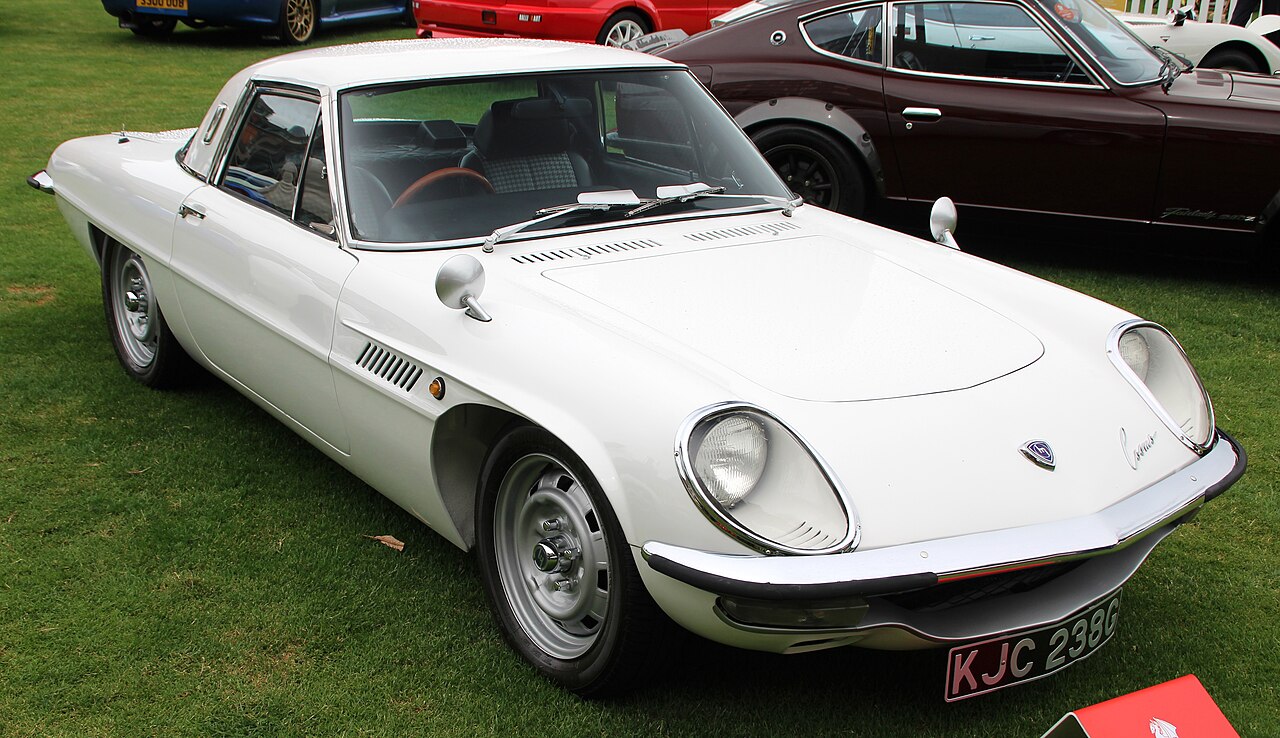
Mazda’s Cosmo Sport made the twin-rotor engine central to a compact, low sports-car shape. The Series II profile belongs to the later version introduced in 1968, so its identity should remain separate from the first 1967 cars and from the lifetime total of the Cosmo Sport family. [1]
A rotary engine uses rotors moving within shaped housings to carry out its working cycle. It does not arrange a conventional set of reciprocating pistons in a V or a horizontally opposed bank. That basic distinction explains why calling the Cosmo a flat-engined car would be misleading, regardless of how low its bonnet appears.
For a first visit, follow the relationship between the compact engine concept and the elegant two-seat body. For a return visit, use the exact Series II profile to investigate the later specification. The series name supplies a useful boundary around the vehicle, while Mazda’s historical account explains the larger significance of the rotary programme.
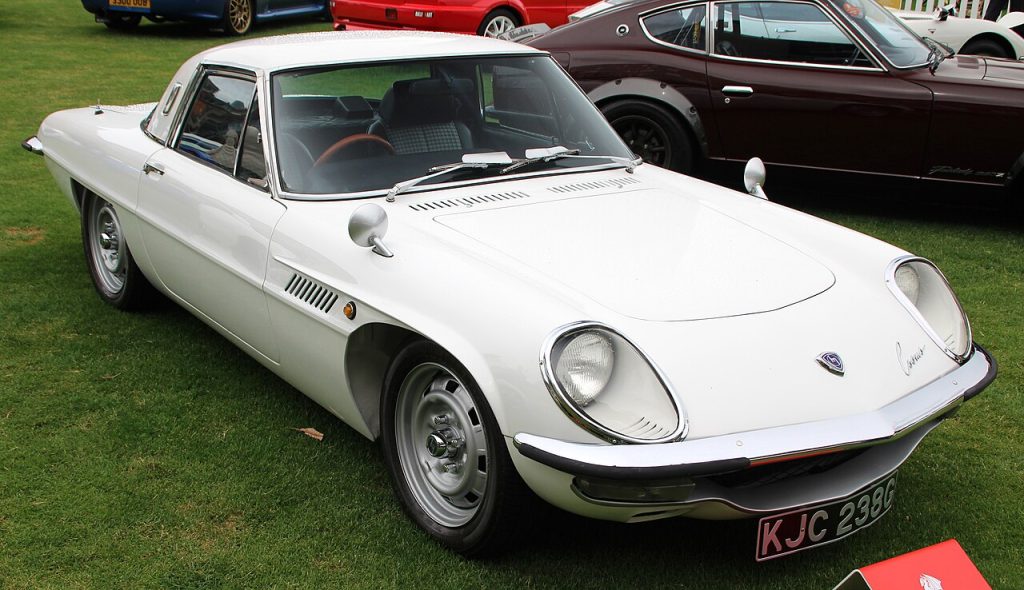
1968 Mazda Cosmo Sport 110S Series II
The Mazda Cosmo Sport 110S Series II continued the original twin-rotor sports car in its later L10B form. Its 1968 programme reference separates the revised series from the early L10A. A creator-identified…
Explore the full profile02 / Add boost, retain the architecture — RX-7 10th Anniversary
The 1988 RX-7 10th Anniversary Edition placed a turbocharged rotary powertrain in the second-generation RX-7. Its white exterior treatment and anniversary identity give this particular programme a recognisable visual signature. Mazda’s period RX-7 brochure documents the contemporary rotary and turbocharged model context. [2]
Turbocharging changes the way air is delivered to the engine; it does not turn a rotary into a piston engine. Keeping those ideas separate makes the RX-7 easier to compare with the naturally aspirated Mazda examples on either side of it. One label concerns the working mechanism, the other an additional part of the intake and exhaust system.
The anniversary treatment adds another layer of identity without replacing that mechanical explanation. Look at the edition as a defined version within the RX-7 family, rather than treating a white finish as sufficient proof of its specification. The exact profile and period material belong together when building a record of a car like this.
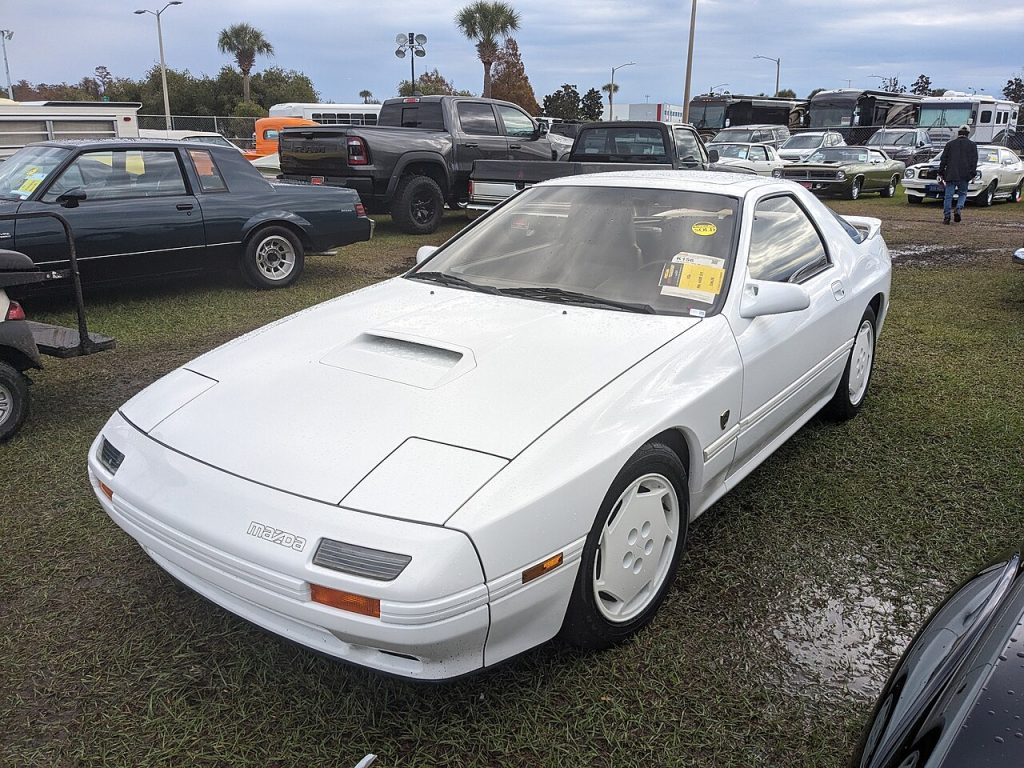
1988 Mazda RX-7 10th Anniversary Edition
The 1988 Mazda RX-7 10th Anniversary Edition marked a decade of RX-7 with a distinct Turbo-based specification. Its white presentation and anniversary identity gave the second-generation coupé a defined collector programme. The…
Explore the full profile03 / Develop the chassis around the rotary — Mazda RX-8 PZ
The UK-market RX-8 PZ was an 800-car programme developed with Prodrive involvement. Its naturally aspirated RENESIS rotary engine sat within the RX-8’s four-seat arrangement, while the PZ work concentrated on chassis-related changes. The original UK brochure is the useful starting point for separating those changes from a presumed power upgrade. [3]
That distinction gives the PZ a clear place in this story. A special edition can alter the way a vehicle supports and controls its movement without introducing a different engine architecture or adding forced induction. Its rotary identity is inherited from the RX-8, while the limited programme develops the surrounding package.
The contrast with the earlier Cosmo also broadens the subject. Rotary power appeared in a small two-seat coupé and, decades later, in a car organised around four occupants and distinctive rear door access. An engine architecture can support more than one kind of passenger environment; the rest of the vehicle helps determine its role.
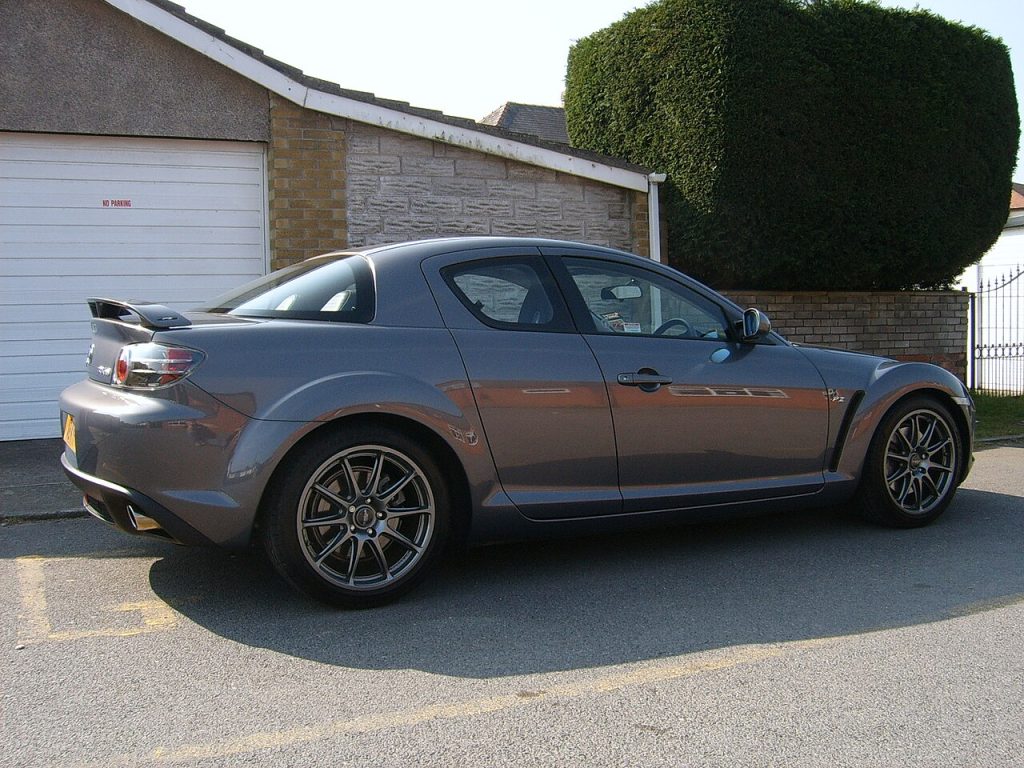
2006 Mazda RX-8 PZ
The 2006 Mazda RX-8 PZ brought Prodrive development to a named 800-car UK edition. Its purpose was sharper chassis behaviour in a four-seat rotary road car. The original Mazda brochure identifies the…
Explore the full profile04 / Opposed pistons, front-mounted — Subaru Impreza 22B-STI
Subaru’s 1998 22B-STI used a 2.2-litre turbocharged horizontally opposed four-cylinder engine, a manual transmission and all-wheel drive. STI’s historical account identifies the 400-car Japanese programme. That domestic figure should stay attached to its market rather than being presented as an independently established global total. [4]
Here there are pistons and cylinders. The cylinders are arranged in opposing banks across the engine, creating the characteristic boxer layout. This is a different working architecture from the Mazda rotary, even though both can be discussed as alternatives to more familiar inline and V arrangements.
The front-mounted engine and all-wheel-drive system then place that architecture in a particular vehicle package. They distinguish the Subaru from the rear-engined Porsche that follows. The 22B’s widened body and limited programme make it memorable, but the powertrain description becomes much clearer when engine arrangement, aspiration and driven wheels are each identified separately.
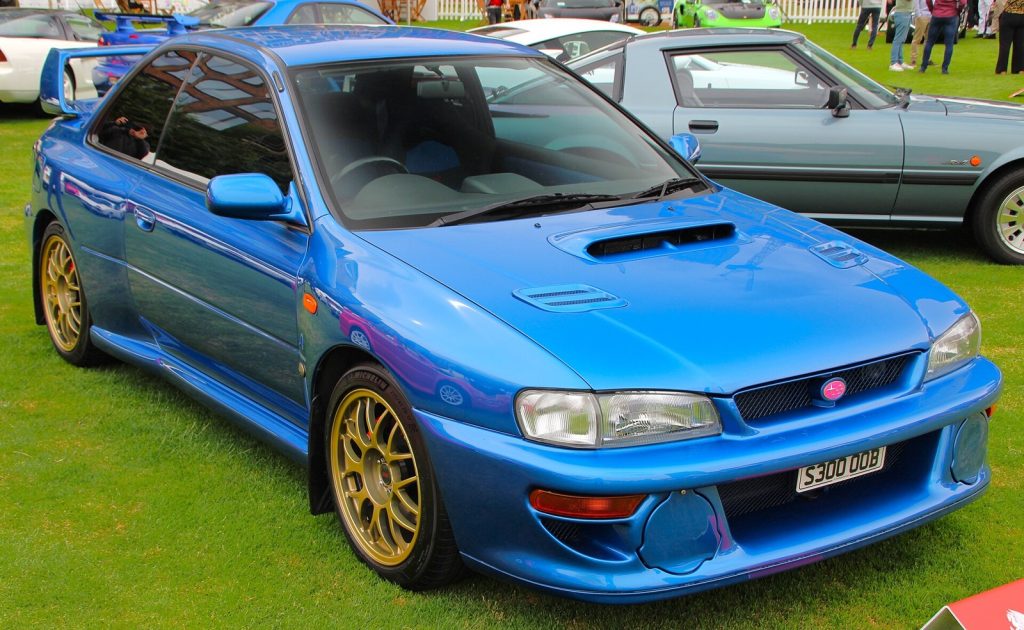
1998 Subaru Impreza 22B-STI Version
The Impreza 22B-STI Version gave Subaru’s rally-era coupe a wider body and a larger boxer engine. STI’s own heritage record identifies a 1998 complete car with a 400-unit programme reference, rather than…
Explore the full profile05 / Opposed pistons, rear-mounted — Porsche 911 GT2 RS
Porsche’s 2010 997-generation 911 GT2 RS used a 3.6-litre twin-turbocharged six-cylinder boxer engine. The manufacturer’s contemporary announcement identified a 500-car limited series. This is the earlier 997 programme, rather than the later 991-generation car that shares the GT2 RS name. [5]
Its flat-six sits at the rear of the 911 and drives the rear wheels. That gives a horizontally opposed engine a substantially different setting from the Subaru’s front-mounted flat-four and all-wheel-drive arrangement. The shared word boxer is meaningful, but it does not imply that the complete vehicles organise their mass or deliver their output in the same way.
Placed at the end of this collection, the GT2 RS helps separate the layers of description. Six cylinders rather than four, two turbochargers, a rear engine position and a specific small-series identity each add information. The architecture is the starting point; the package around it explains which rare car is actually being discussed.
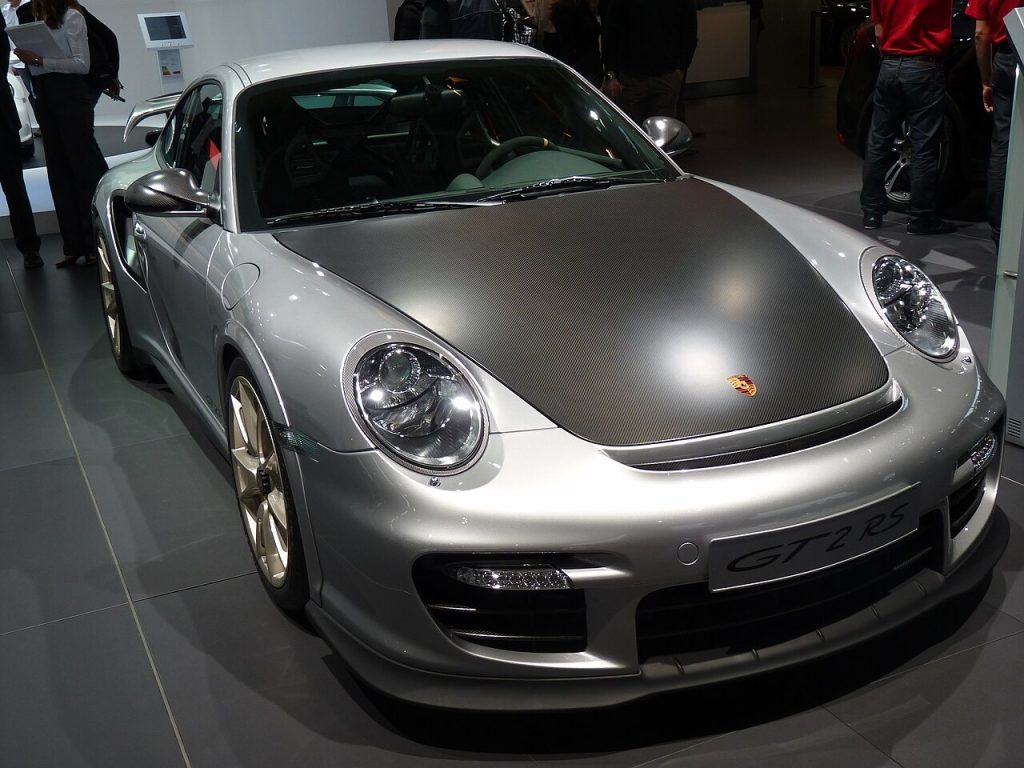
2010 Porsche 911 GT2 RS — 997
The 2010 Porsche 911 GT2 RS took the 997 Turbo-derived road-car formula to a more focused extreme: rear-wheel drive, a six-speed manual gearbox and a 3.6-litre twin-turbo flat-six. Porsche announced a 500-car…
Explore the full profileRead the machinery in layers
Begin with the working mechanism: rotary or reciprocating piston. Move to cylinder arrangement where that applies, then aspiration, engine position and driven wheels. Finally attach the exact model, year, market and edition. Each step answers a different question.
That method avoids two tempting shortcuts. A low body does not prove a flat piston engine, and a shared architecture does not make two complete cars mechanically interchangeable. The Mazda sequence shows variety within rotary-powered vehicles; the Subaru and Porsche show variety around horizontally opposed piston engines.
Save the profiles whose combinations interest you. Returning to them with a clearer vocabulary makes the details easier to recognise, and it gives a personal collection a theme that extends beyond a list of cylinder counts or headline output figures.
Sources & further reading
- Mazda: Cosmo Sport history — Manufacturer history of the rotary-powered Cosmo Sport.
- Mazda: 1988 RX-7 brochure — Original manufacturer brochure preserved by an independent archive.
- Mazda: RX-8 PZ UK brochure — Original manufacturer brochure; UK PZ programme and chassis specification.
- STI: 1998 Impreza 22B — Manufacturer heritage entry; engine and Japanese programme scope.
- Porsche: 2010 GT2 RS announcement — Contemporary manufacturer release; 500-car series and twin-turbo boxer engine.
Continue exploring
Continue with Japanese performance identities, or discover more editions.