
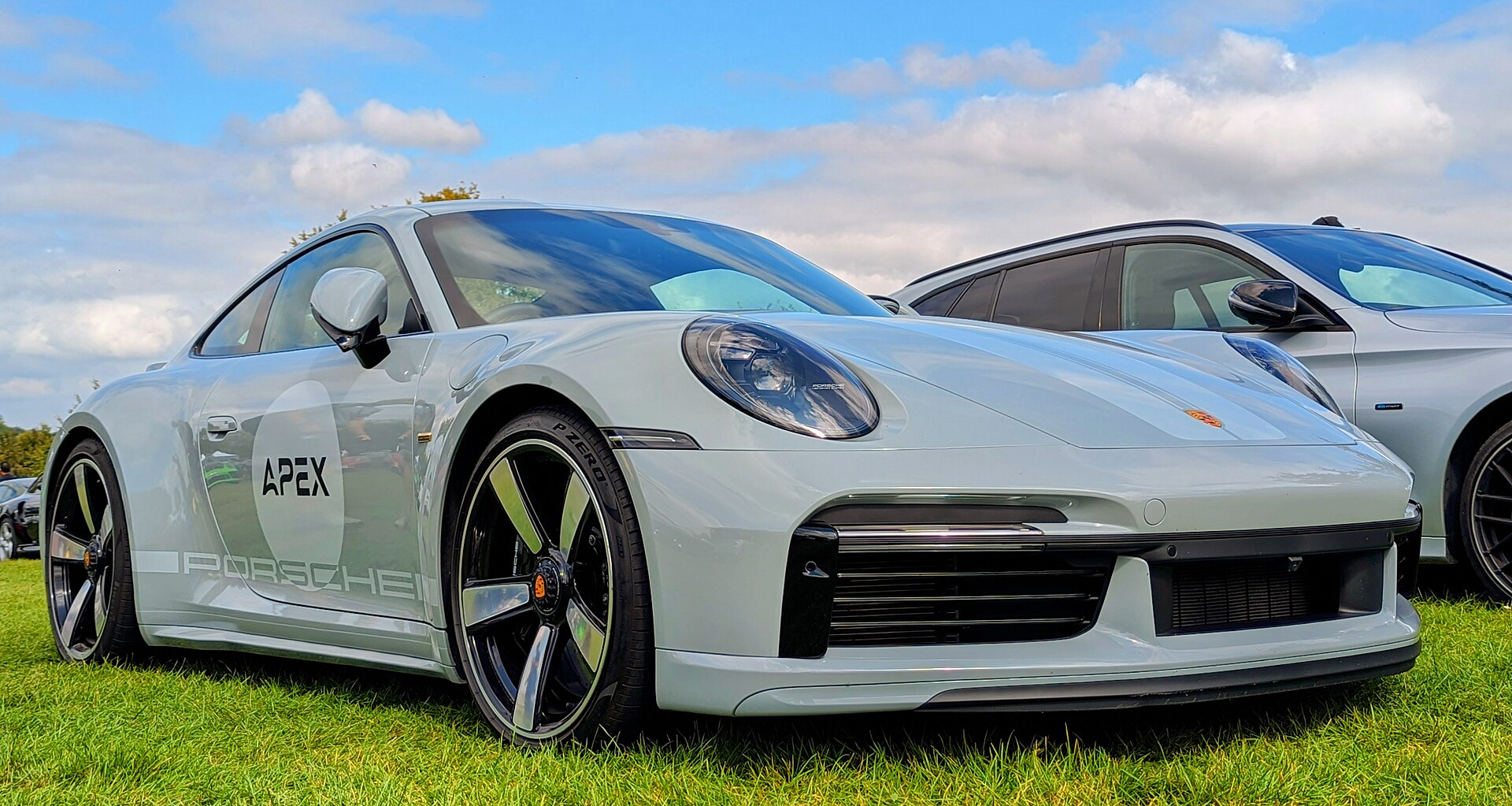
The Porsche 911 Sport Classic and Lamborghini Countach LPI 800-4 both look backward to move a modern marque's story forward. Porsche's 2022 announcement limits the 992-generation Sport Classic to 1,250 units and describes a Turbo-derived, rear-wheel-drive 911 with a seven-speed manual. Lamborghini's Countach LPI 800-4 model record gives 112 units and an 814 CV combined V12/electric system. Both fall comfortably within Rarity Rides' 7,500-unit maximum for new selections. Their similarities end well before their engineering begins.
This is an editorial comparison of design purpose, documented run and ownership questions, not a claim that the cars compete on price or performance. Porsche built a new Sport Classic within a continuous 911 family. Lamborghini revived the Countach name for a few-off hybrid V12 tribute. A collector can appreciate each without forcing a winner. The full Sport Classic profile and Countach LPI 800-4 profile contain the deeper model histories.
The numbers are clear, but their meaning differs
Porsche's 1,250 figure is a stated total for this specific 992-generation Sport Classic. Lamborghini's 112 figure applies to the modern LPI 800-4. These are edition counts, not the lifetime totals for 911s or original Countachs. A car advertised as a Sport Classic or LPI 800-4 needs a factory record and identifying information to establish that it belongs to the corresponding run. A similar ducktail or wedge-shaped body is a visual clue, not authentication.
A production count also does not answer how many cars are currently road-registered, in original specification or offered for sale. A 112-unit edition may appear infrequently in listings, but a listing frequency is not a survivor census. A 1,250-unit edition has a larger denominator, yet condition, provenance, configuration and geography can change what a particular buyer sees. We use the maker's counts to define scope, then keep individual-car history separate.
The 7,500 ceiling is an editorial selection limit. It does not imply the 112-car Lamborghini is automatically “better” or that the Porsche is insufficiently special. A reader should be able to explain why each edition exists after reading the article. The run size makes the promise concrete; the engineering and design choices reveal its identity.
Porsche's heritage formula: a familiar shape with an unusual drivetrain
Porsche's factory release calls the Sport Classic the second of four Heritage Design models and describes visual links to earlier 911 eras. The ducktail, broad body, Sport Grey Metallic launch appearance and Pepita/semi-aniline interior form a deliberate historical vocabulary. Yet this is a contemporary car, not a reconstruction of one earlier 911. The design borrows cues selectively and combines them with modern components.
The mechanical choice is unusually specific. Porsche describes the Sport Classic as using the 911 Turbo-derived 3.7-litre twin-turbo flat-six with 543 hp and 442 lb-ft in its US announcement, paired with a seven-speed manual and rear-wheel drive. A 911 Turbo's broad body and engine family do not automatically mean the same drivetrain. That difference is central to the Sport Classic's character, and it should be stated with the region and units of the cited release.
Porsche also lists PCCB, PDCC, PASM lowered by 10 mm, rear-axle steering and Sport Chrono among the equipment. The profile can name these as Porsche-announced features without treating an individual listing as confirmation that every component remains fitted and functioning today. In a current car, inspection, service history and build documentation still matter. A complete model-level fact sheet and a used-car condition report answer different questions.
CFRP elements in the hood, roof and rear spoiler contribute to the composition. Smooth rear flanks without the Turbo's air intakes are an important design distinction. It is easy for a superficial article to list retro stripes and stop there; the construction and broad-body execution explain how Porsche made the edition recognizable from more than one angle. See the Sport Classic's documented details for the source-by-source specification.
Lamborghini's formula: the Countach name in a new technical era
Lamborghini presents the LPI 800-4 as an interpretation of the Countach legacy, not a continuation of the original production run. The 2021 launch account describes the design relationship and a contemporary all-wheel-drive chassis with rear-wheel steering and active systems. The current model page identifies a 780 CV combustion-engine contribution plus 34 CV electric assistance, with 814 CV stated as combined maximum output.
Adding 780 and 34 arithmetically is not a substitute for the maker's combined-output definition; the manufacturer states the result. The hybrid system uses a supercapacitor, a technical choice that belongs to this new model rather than to the historical Countach. A collector article should distinguish homage in silhouette and naming from mechanical continuity. The LPI 800-4 belongs to a modern technological programme even when its exterior evokes a landmark.
Lamborghini's design language references Countach proportions and details while omitting the idea that a tribute must be a replica. The question is how the modern car identifies the original without pretending it was built in the same era. The few-off production run reinforces that this is a particular anniversary-era statement, not simply a trim level of a volume car. Its 112-unit count is the figure the maker gives for this edition.
A historical reference should be verified as carefully as a technical claim. Lamborghini's Countach history material provides marque context. Do not assign original Countach production totals or engine specifications to the LPI 800-4. The connection is a design and legacy relationship, explicitly framed by the manufacturer.
Manual engagement versus hybrid spectacle
A meaningful comparison begins with what the two manufacturers actually chose. Porsche joined a powerful twin-turbo flat-six to rear-wheel drive and a manual gearbox inside a heritage-designed 911. Lamborghini paired a naturally aspirated V12 with supercapacitor-assisted electric power in an all-wheel-drive Countach revival. These choices suggest different experiences, but a writer should not describe steering feel, gearshift quality or ride comfort as firsthand test findings unless the car was driven and the conditions documented.
The Porsche emphasizes a particular interaction between driver and drivetrain. The Lamborghini emphasizes the continued theatre of a V12 while using a newer hybrid architecture. Both statements are interpretations of the source-backed hardware and manufacturer positioning. Neither proves one car is more authentic to its history. “Authenticity” depends on which part of the past a maker intended to carry forward: a tactile configuration, a visual identity, a flagship engine or an overall sense of occasion.
Their stated power outputs also use different units and markets. Porsche's US release uses hp and lb-ft; Lamborghini's material uses CV and kW. An editorial table should not mix the figures in one column without labels and context or suggest that a slightly larger number decides the comparison. Output, drivetrain, mass, gearing and intended use are different dimensions. We can compare the manufacturers' stated configurations without manufacturing a head-to-head road test.
Retro details that must be labelled precisely
A ducktail is a recognizable Porsche cue, but not every ducktail 911 is a 992 Sport Classic. Its factory build record, numbered plaque and model designation matter. Likewise, a Countach-inspired wedge is not the same as a 2021 LPI 800-4. Photos used in an article should show the actual edition if captioned as that edition. Reproductions, restorations and modified cars can preserve some cues while changing their original specification.
Porsche's interior mix of Pepita and semi-aniline leather, the exterior finish and the rear bodywork are part of the announced concept. Lamborghini's exterior uses a different historical vocabulary and an extensively modernized cabin and drivetrain. The reader benefits from a close look at the details that distinguish each edition from its regular family, rather than a generic statement that both are “retro supercars.”
For a particular vehicle, colour and options should be checked against its build documentation. A current wrap or repaint could alter how it appears; a wheel or exhaust change could further distance it from delivery specification. A model-level article explains the factory idea, while a listing or inspection must identify the vehicle as it exists now. Keeping those layers separate protects the comparison from turning into an accidental authentication service.
Heritage is more than a styling package
The strongest case for the Sport Classic lies in the combination of limited 992 production, a Turbo-derived engine with manual and rear drive, and a coherent design programme. Remove the drivetrain choice and the story becomes a less accurate account of the edition. The strongest case for the LPI 800-4 lies in the deliberate Countach reinterpretation, V12 hybrid architecture and clearly bounded 112-unit run. Remove the technical story and the name becomes an empty nostalgia label.
This distinction helps readers evaluate future anniversary and legacy editions too. Ask whether a manufacturer made a meaningful configuration choice, a distinctive body, a historic connection grounded in its own archive, or a documented production commitment. A limited edition can have several of these attributes; a decal and an unverified “rare” claim are insufficient. The Rarity Rides guide to limited-production evidence sets out the method.
Neither car's edition count establishes current value or future appreciation. The number is stable historical information if the maker's record is clear; prices fluctuate and individual transactions have their own conditions. We do not use asking prices or social-media excitement as a substitute for production evidence. A collector may reasonably value the Porsche's manual interaction or the Lamborghini's dramatic V12 tribute differently.
Questions for a prospective collector
For the Porsche, obtain the VIN-specific build information and compare it with the physical car. Check service and maintenance history, paint and bodywork, original equipment and any modifications. Confirm the edition identification through documents rather than a badge alone. Porsche's later Carrera GT technical-service material illustrates why even landmark models can have ongoing factory support stories, but it is about another car and should not be used as Sport Classic specification.
For the Lamborghini, establish the LPI 800-4 identity, delivery configuration, service record and current condition of both combustion and hybrid-related systems. A present inspection is not superseded by the factory's 2021 launch description. Ask whether an image or a promotional specification refers to the exact offered car, a prototype, or the edition generally. Keep documentary provenance and mechanical evaluation in separate parts of the dossier.
For either vehicle, a detailed, dated chain of ownership and work is more persuasive than a vague superlative. An untouched appearance does not establish all components are original. A sympathetic repair or factory-supported change can be documented honestly. The objective is to understand what the maker built and what the particular example has become.
Why these two belong in the same conversation
The 911 and Countach have very different histories, but their modern limited editions pose the same editorial question: how can a manufacturer use a familiar name without merely repeating an old product? Porsche's answer is a carefully chosen combination of body, cabin and drivetrain in the ongoing 911 lineage. Lamborghini's answer is a visually recognizable Countach concept interpreted through a contemporary V12 hybrid platform. Comparing them on this axis gives readers a reason to examine both beyond the difference between 1,250 and 112.
A comparison needs a consistent unit of analysis. We compare each modern edition with the maker's own stated purpose and the components that distinguish it from the contemporary family. We do not compare an original 1970s Countach's raw dimensions with a 992 Sport Classic's modern equipment and call the result a performance verdict. We also avoid claiming that a historic styling cue existed only on one prior car if the maker's description is broader. Heritage is an interpretation by the current manufacturer, not a transparent copy of an earlier spec sheet.
Authenticating the visual story
The Sport Classic's ducktail and the LPI 800-4's Countach-inspired silhouette make strong photographs. They also make image selection consequential. A generic 911 Turbo with a modified spoiler would misrepresent the Porsche edition, and an original Countach would misrepresent the Lamborghini's hybrid drivetrain. The image record should identify the exact vehicle; the caption should not go further than that evidence. Photographer and licence credit establish reuse rights, while a model-identification record establishes subject accuracy.
In a collector listing, compare the apparent factory features with the original build record. A Sport Classic's wheels, paint or interior can be changed, and a Lamborghini can be wrapped or modified. A restoration or bespoke option may still be authentic to that car if documented, but no photo alone can explain its chronology. Separating as-delivered, later modified and currently fitted details makes an apparently simple “original specification” claim much more useful.
A better way to compare technical figures
Porsche publishes 543 hp and 442 lb-ft in the US Sport Classic announcement; Lamborghini states 814 CV combined power for the Countach LPI 800-4. Those figures are not directly comparable without conversion, drivetrain context and test conditions. Power may be a headline, but neither figure explains the manual-versus-hybrid difference. A reader looking for ownership insight benefits more from understanding configuration and service documentation than from a table that crowns the larger number.
The same restraint applies to maximum speed and acceleration. If we use a maker's published claim, label it as such and specify the model. We have not performed a controlled head-to-head test. A current example's performance can differ after maintenance or modifications, and actual measurements depend on conditions. The best comparison stays honest about what the manufacturers measured, what they claimed and what this article has not independently tested.
The role of the wider collection
These two profiles connect to other limited Rarity Rides machines without implying they share the same reason for existing. The Porsche Carrera GT illustrates a distinct engineering programme in Porsche history, not a Sport Classic predecessor in direct mechanical lineage. The Ferrari F40 is a different anniversary-era story whose exact total remains unverified in our cited Ferrari materials. These connections provide comparative context, not a fabricated family tree.
A reader exploring modern heritage can then ask a sharper question: Is the limited model reviving a name, a design language, a mechanical interaction or an entire historical idea? The Sport Classic and Countach LPI 800-4 give two well-documented answers. Their numbers make the runs finite; their specific choices make the articles worth reading.
Frequently asked questions
How many 992 Sport Classics were built?
Porsche states a limited run of 1,250 for this generation's Sport Classic. The figure does not include every historically named Sport Classic or other 911 variants. Its official announcement defines the 2022 edition.
How many modern Countach LPI 800-4 cars were planned?
Lamborghini identifies 112 units of the LPI 800-4. The figure is for the modern tribute, not the original Countach family. Check an individual car's factory record to establish membership in the edition.
Is the Sport Classic simply a 911 Turbo with retro trim?
No. Porsche describes a Turbo-derived powertrain paired with rear-wheel drive and a seven-speed manual, along with distinctive body and interior elements. Its drivetrain configuration is one of the reasons the edition warrants its own profile.
Is the LPI 800-4 mechanically the original Countach?
No. Lamborghini presents a modern V12 with electric assistance, all-wheel drive and active systems. The historical connection is in naming and design interpretation. The contemporary technical architecture should be described on its own terms.
Which is rarer?
By the makers' stated edition totals, 112 is fewer than 1,250. That is a numerical comparison, not a judgment about condition, significance, value or personal appeal. The two editions tell very different stories.
Sources, links and image credit
Primary sources include Porsche's Sport Classic announcement, Lamborghini's LPI 800-4 page, model page and launch story. The direct profile links above provide more model-specific sourcing.
