
“Only 500 made” is a useful beginning, but it is not a complete explanation of a car, motorcycle or boat. Which version was counted? Was that number a planned allocation or completed production? Is the pictured machine really a member of the edition? Did the manufacturer describe a numbered series, a homologation programme, an anniversary tribute, or a long-running model that later became hard to find? These questions determine whether a rarity claim tells readers something true.
Rarity Rides focuses its new vehicle selections on machines with a documented production run of no more than 7,500, including limited, anniversary and legacy editions. The threshold is an editorial scope, not a scientific definition of desirability or a prediction of value. A credible article must still explain the maker's purpose, identify the exact variant and distinguish production from deliveries, sales, surviving examples and an individual hull or chassis number. Our Porsche 911 Sport Classic profile and Riva Aquarama Super profile show why precise variant names matter.
Start with the exact population being counted
A model family, an edition and a single market allocation can each have a different number. Porsche's 2022 Sport Classic announcement describes 1,250 units of the 992-generation Sport Classic. That number belongs to this edition, not to every 911 or every car carrying a ducktail. Lamborghini's Countach LPI 800-4 description identifies 112 units for its modern reinterpretation. Neither figure tells us how many of those vehicles are currently registered or in original condition.
On the water, Ferretti Group's Aquarama Super account identifies 203 Supers within a wider Aquarama family of more than 750. Riva Classiche's Ferrari 32 account celebrates the collaboration, while a Ferretti Group preowned listing says nine Special versions were built. Nine is not established as the total for every Ferrari 32. These are practical examples of why a number should always travel with its variant label.
A useful editorial record has four fields: maker's exact designation, figure, what the figure counts, and a direct source. If one is missing, the headline should not pretend to certainty. “Production count unverified in the cited manufacturer material” is more useful than a number copied from advertisements. It leaves a clear path for a future factory archive to improve the page.
Planned, numbered, built, sold and surviving are different
A manufacturer can announce a limit before a production run is complete. An individually numbered plate identifies a car within a series, but its denominator may represent an intended edition size. A later factory release may confirm completion. An archive can count completed examples; a sales report counts transactions or deliveries. None automatically gives a survivor census decades later.
Honda's 75-year history says 4,885 VFR750R/RC30 motorcycles were sold worldwide. That is a meaningful maker-published figure, but it must not be relabelled as a production total without another source. The Honda RC30 profile keeps the wording intact. A machine can fit the subject of a rare-vehicle history even while an exact production denominator is under investigation; an article should disclose that distinction rather than smoothing it away.
Likewise, a “one of nine” Riva Ferrari 32 Special claim needs two proofs. The manufacturer-group listing supports a nine-unit Special series; documents for the particular boat must show it is actually a Special. A restored stern or a badge in a photograph cannot replace the build record. Production data establishes the size of a set; provenance establishes membership in it.
Limited editions can have different reasons to exist
A fixed run is a production decision, not a single engineering category. The Porsche 911 Sport Classic uses historical design cues and a particular Turbo-derived, rear-drive, manual-transmission configuration. The Lamborghini Countach LPI 800-4 reinterprets a landmark name with V12 and supercapacitor hybrid technology. Both are limited modern tributes, but their mechanical and design stories are not interchangeable.
A homologation motorcycle has another logic. Honda describes the RC30 as an RVF750-derived road machine intended to make racing technology available to privateers, and its UK legacy page discusses World Superbike success. A numbered, track-focused model such as the BMW HP4 Race has a different stated purpose: BMW's release documents a 750-unit run and specialized construction. “Limited motorcycle” captures their scale, but racing homologation and factory track exclusivity deserve separate explanations.
A wooden runabout may be historically significant without a modern numbered badge. Riva says 1,012 Aristons were made over 26 years. That is within our selection ceiling, yet its importance lies in its 1950 launch and long place in Riva's wooden tradition, not in a one-year scarcity campaign. See the Riva Ariston profile for the production-era context.
A count does not rank desirability
A 112-unit edition is numerically smaller than a 1,250-unit edition. That statement needs no speculation. It does not prove the first is more valuable, influential or enjoyable to drive. Condition, provenance, engineering, historical timing, documentation and individual preference matter. Those factors do not collapse into a single “rarity score” whose exact meaning nobody can inspect.
The editorial ceiling of 7,500 is deliberately generous enough to include historically meaningful editions whose production runs number in the thousands. It is not a promise that every qualifying model belongs on the site. The article must answer a reader's question about what distinguishes the machine. A mass-market model with a decorative badge and no documented edition boundary would require more evidence, even if a seller claims a small allocation.
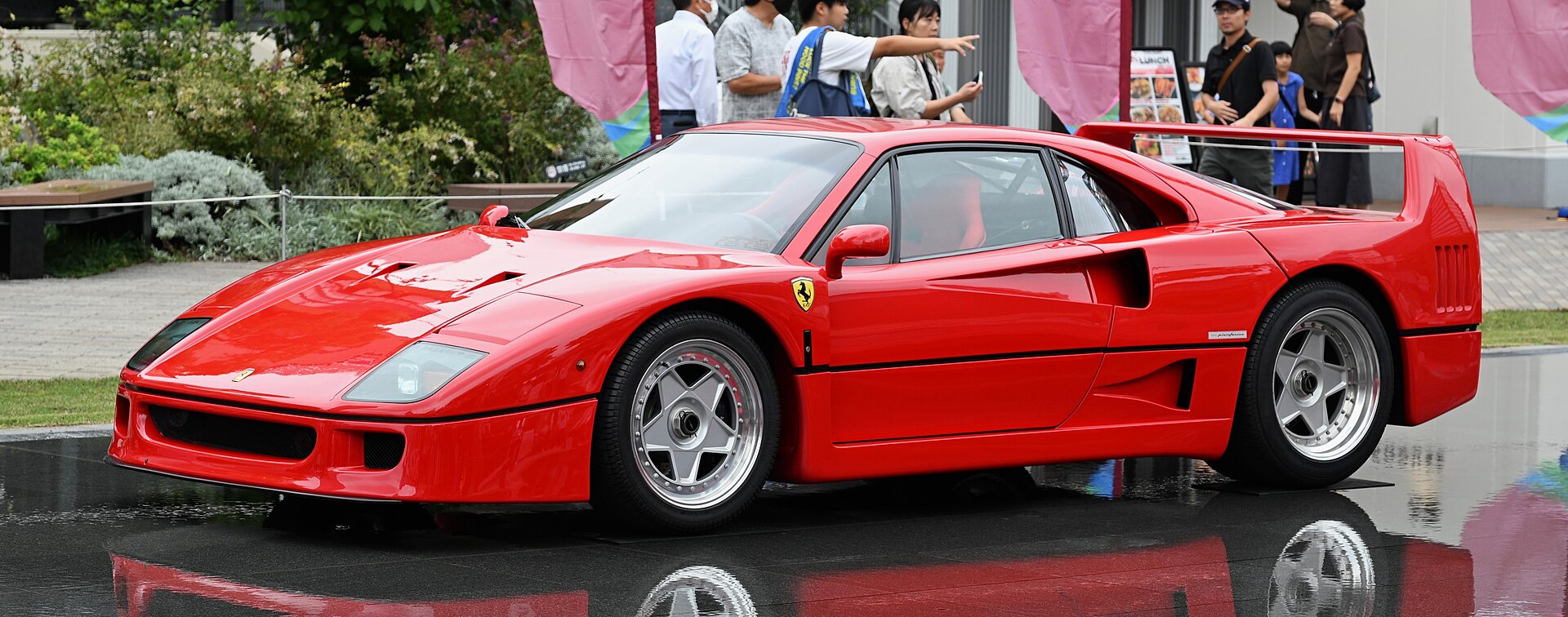
Some machines will have a clear maker count but a complicated technical history. Others will have rich primary-source histories and an unresolved count. We should preserve that uncertainty. The Ferrari F40 profile uses Ferrari's historical and technical records while leaving an exact production total unverified in the cited material. Its significance is not strengthened by silently inserting a widely repeated number we cannot trace to the source we actually cite.
Verify the edition before writing the headline
First locate a direct maker announcement, archive page, period brochure or production record. Read the exact sentence around the number. Does it say “limited to,” “built,” “sold,” “delivered” or “allocated”? Does it refer to a concept, a model year, a national market or the complete worldwide run? Capture the date and URL, and note if the statement was made before production ended.
Second, compare the maker's model designation with the proposed article title. “Aquarama Super” should not be shortened to “Aquarama” in a production field. “Ferrari 32 Special” should not become the entire Ferrari 32. A Porsche 911 generation and a later similarly named edition should be distinguished. Search snippets may omit the qualifier that changes everything, so use the full source page.
Third, keep a second record for the photographed or listed vehicle. Chassis, frame or hull identification, delivery records, factory options and ownership trail can tie it to the edition. A licensed photograph proves permission to use the image under its terms; it does not prove the photographed subject's original engine or build number. Do not infer edition membership from paint, decals or a restoration alone.
Fourth, review the article when better evidence appears. A newly digitized factory ledger might refine a model total or settle a variant boundary. A correction should name what changed and why. An old article that admits uncertainty is easier to improve than one whose unsupported number has been copied into several SEO fields and image captions.
Three comparative examples
1,250 Porsche 911 Sport Classics versus 112 Countach LPI 800-4s. These figures describe two specific modern editions. Porsche's seven-speed manual, rear-wheel-drive interpretation of a Turbo-derived powertrain and Lamborghini's V12 hybrid revival invite a useful comparison of the different ways makers revisit heritage. The numbers indicate run sizes; the engineering and design explain the machines.
500 Ducati 1199 Superleggeras versus 750 BMW HP4 Races. Ducati's heritage record documents 500 numbered examples of the 1199. BMW's official release identifies 750 HP4 Race machines. Their material choices and intended use differ, so the smaller number alone cannot be a verdict. The Ducati 1199 and BMW HP4 Race profiles retain the maker's own technical context.
203 Aquarama Supers versus 1,012 Aristons. The Super is a subset of the Aquarama family; the Ariston is a separate Riva model launched earlier. The two figures are comparable as manufacturer-published variant/model totals only when we state those boundaries. Neither is a current tally of seaworthy, original or restored boats.
A practical hierarchy of evidence
A directly accessible manufacturer statement that defines a run is the strongest public starting point. A period brochure can give technical specifications, but a pre-production brochure may describe an intention rather than completed production. A factory archive can resolve final totals and individual identities. An official company-group publication may be useful, though its context matters: a restored-boat feature can document one hull while a heritage timeline can document the model. Treat a manufacturer-group used listing as evidence of what the seller says about its particular boat, and be careful when generalizing.
A manufacturer release should be read in full. A headline or search snippet may omit “Special,” “for Japan,” or “sold,” and that omitted word can change the claim. Record the sentence, publication date, URL, model name and the status of the number. If a source says “up to 500,” do not write “exactly 500 built.” If it says “500 numbered,” describe a numbered series without inventing a global delivery count. If a later maker record gives a final figure, update the article and retain a note explaining the earlier announcement.
Third-party reports can direct research, but this series bases its production statements on the makers and their corporate archives. Auction catalogues may contain excellent provenance for a specific car, yet a sale lot is not necessarily a factory census. A registry may be valuable if its inclusion rules and date are explicit. We would label such material by its actual authority and avoid blending it with the maker's count. The source type belongs beside the figure, not hidden in a footnote no reader sees.
Production ceilings and variant boundaries
A 7,500-unit editorial maximum does not mean every subvariant of a high-volume vehicle automatically qualifies. We look for a manufacturer-defined edition, a dated run or another coherent production boundary. A paint colour offered across multiple years might be numerically uncommon, but “only 800 in this colour” is not equivalent to a factory 800-car edition unless the maker defines it that way. Similarly, a market allocation of 300 cars is not a 300-car worldwide run.
When a model has nested editions, the full hierarchy should be stated. “Aquarama” is the family, “Super” is a variant with Ferretti's 203 figure, and “Special” is another named variant in Riva's history. “Ferrari 32” is the broad collaborative model; “Ferrari 32 Special” is the nine-unit evolution in the cited listing. The page slug, heading, production field and structured data must all refer to the same level. A technically correct paragraph buried below a misleading SEO title does not cure the mismatch.
A later continuation or revival should have its own entry if the maker treats it as a distinct programme. The modern Countach LPI 800-4's 112 units cannot be added to an original Countach number to create an invented combined “edition.” The 992 Sport Classic should be identified by generation. Ducati's 1199 Superleggera and Superleggera V4 are separately documented 500-unit series, not one 1,000-unit machine.
What to do when manufacturer pages conflict
Sometimes a launch statement describes planned production, while a later museum page describes completed production. Sometimes regional press releases use different power units or model-year naming. We should reproduce the scope of each source and decide whether they genuinely conflict. A CV versus hp difference may reflect units; a planned 500 versus an eventual delivery figure may reflect time. A disagreement should be explained in the article if it changes the reader's understanding.
Do not resolve conflicting numbers by taking an average, choosing the smaller figure because it sounds rarer, or using a secondary page that repeats one figure without explaining it. Capture the source date and quoted noun: “cars,” “chassis,” “kits,” “examples” or “deliveries.” A factory statement that explicitly reconciles the run should take precedence. If the conflict remains, the count can stay labelled disputed until better records appear.
For an individual machine, a title or registration database may use a slightly different description from a factory record. That difference deserves investigation, especially for a re-bodied, re-engined or restored example. A model article can explain the general version boundary; a sale claim must demonstrate how the specific vehicle crosses it. Image credit, registration, build record and condition survey are complementary evidence, not interchangeable proof.
Internal links that actually help
A related-profile link should answer a natural follow-up question. A reader puzzled by edition versus family can move from this guide to the Aquarama Super and Ferrari 32 examples. Someone comparing heritage reinterpretations can read the Sport Classic and Countach LPI 800-4 profiles or the modern heritage comparison. A motorcycle reader can compare the separate 1199 and V4 pages through the limited-run motorcycles guide.
These links should remain useful if a reader never thinks about search engines. They also give the article a clear place in a small, coherent library instead of creating an isolated page for a phrase. A profile should link back to a guide only when the guide adds a comparison or verification method not already explained in the profile. The aim is to make research easier, with descriptive link text and a reason to click.
Frequently asked questions
Does “one of 7,500” count as rare here?
It can be within Rarity Rides' editorial scope if the 7,500-or-fewer run is documented for the exact edition or model being featured. The number is a ceiling for new selections, not an automatic endorsement of every machine below it. We also examine why the run existed and what makes it historically or technically distinctive.
Does a numbered badge prove the edition total?
A badge is evidence about an individual vehicle and a claimed series. It may display a planned denominator. Confirm the maker's wording and the particular vehicle's identity, especially if badges can be replaced. A build certificate or manufacturer record is stronger than a photographed plaque alone.
Is “sold worldwide” the same as “built worldwide”?
No. Honda's RC30 statement uses “sold worldwide,” and our profile retains that language. A different factory record would be needed to publish it as a production total. Delivery, registration and survival figures answer still other questions.
What if there is no official production count online?
We can describe a machine's documented history while marking the total unverified, but we should not present it as a numerically qualified new selection without sufficient evidence. A manufacturer archive, factory correspondence or a well-defined primary record may resolve the gap later.
Is a low production number enough to make a good article?
No. Readers need the maker's purpose, mechanical or design distinction, timeline and an honest account of what the sources support. Production count is an entry point into the story, not the whole story.
Our sourcing and image standard
The examples here link to the makers or their company groups: Porsche, Lamborghini, Ducati, BMW, Honda and Riva/Ferretti Group. A link supports only the nearby claim within its actual scope. Individual profile pages provide the deeper technical and provenance discussion.
