
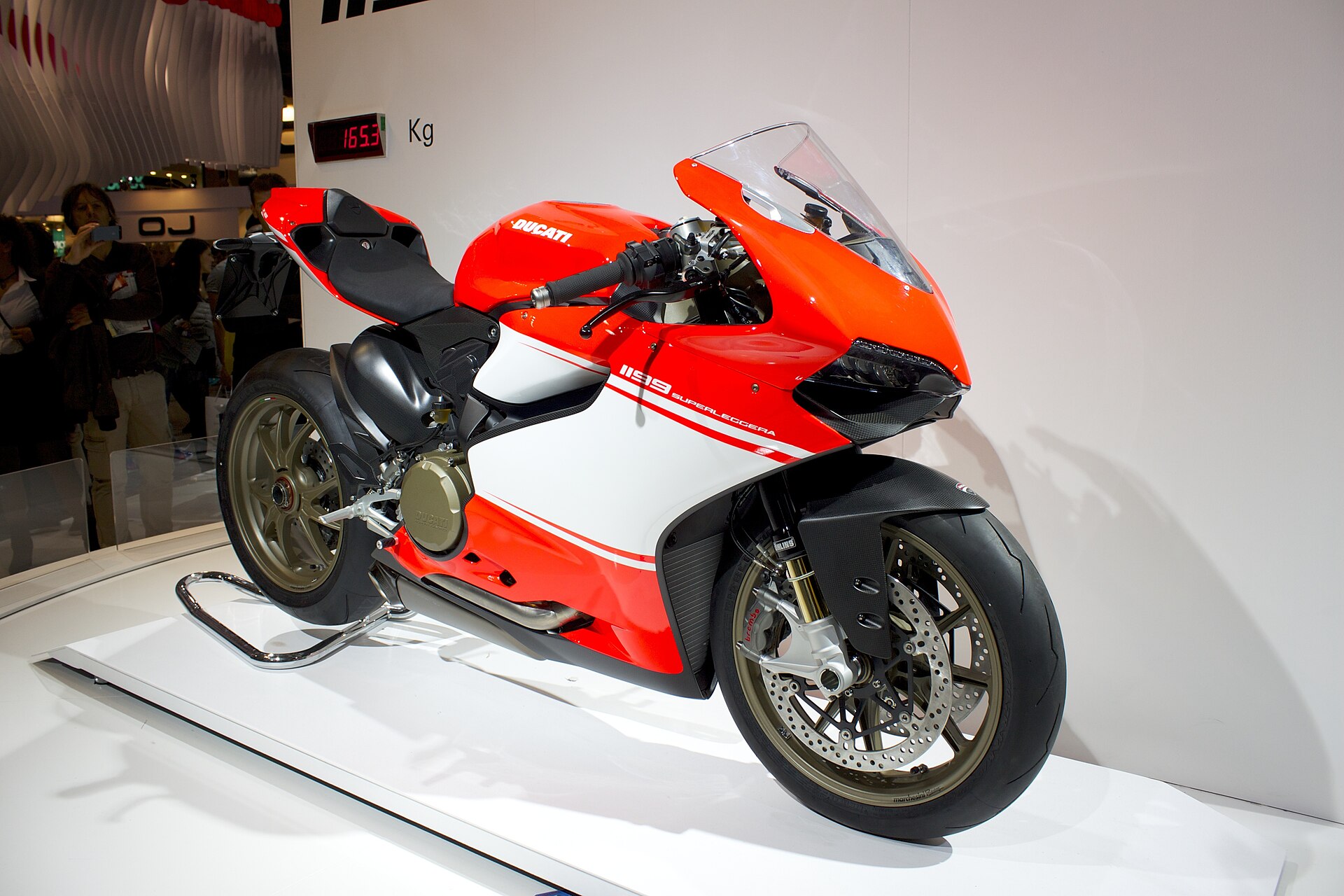
A limited-run motorcycle can be a homologation tool, an engineering showcase or a numbered collector project. These motives overlap, but they should not be flattened into one “rare superbike” label. Ducati's 1199 Superleggera heritage entry identifies 500 numbered examples and highlights a 155 kg dry weight and more than 200 hp. Ducati's Superleggera V4 production story describes a separate 500-unit series. BMW's HP4 Race announcement states 750 machines. These are manufacturer-defined runs, each below Rarity Rides' 7,500 ceiling.
Honda's RC30 history gives a different kind of number: 4,885 sold worldwide. It describes a road-going RVF750 close replica intended to make racing technology available to privateers. We retain “sold” rather than converting it into “built.” The RC30 profile explains that evidence boundary. Comparing these four machines reveals why purpose and record type matter as much as a small number on a plaque.
The comparison at a glance
The 1199 Superleggera belongs to Ducati's 2013 lightweight programme with extensive magnesium-alloy construction. The Superleggera V4 is a later carbon-intensive generation. The BMW HP4 Race is a 750-unit factory track machine whose official release describes carbon frame and wheels, race equipment and non-road-use purpose. The Honda RC30 sits in an earlier road-and-race homologation context. Similar production scale does not make these machines equivalent in legality, engineering or provenance.
An honest comparison therefore uses several columns: exact model and year, stated purpose, maker's count and count verb, material or mechanical signature, and what must be checked on a surviving example. “The rarest” based on a single denominator is a poor substitute. Ducati's two 500-unit series have the same stated numerical limit, yet they belong to different technical periods. BMW's 750 HP4 Races are a defined production run. Honda's 4,885 worldwide sales reflect a different measure.
All four are relevant to a collector of limited or historically significant motorcycles. The RC30's position is not contingent on pretending Honda supplied a production count in the source cited. It is more useful to explain its racing purpose and the exact wording of Honda's figure than to silently transform sales into builds for a tidy comparison table.
Ducati 1199 Superleggera: the first chapter
Ducati's official heritage page dates the 1199 Superleggera to 2013 and calls out 500 numbered examples. Its named dry weight and output convey the programme's extreme lightweight focus. Later Ducati retrospective material describes magnesium-alloy frame, swingarm and wheels for the 1199. These facts distinguish it from a regular production Panigale without importing specifications from a V4 that arrived years later.
The Italian term “Superleggera” evokes lightness, but each generation's technical solution must be described separately. A 2013 frame material should not be replaced in an article by the carbon-frame story of a newer bike simply because both share the badge. Date the source and match it to the exact generation. This is particularly important in search snippets and social captions, where the word “Superleggera” can appear without its engine designation.
For an individual 1199, establish numbered identity, original equipment, engine/frame identifiers and service history. A race exhaust, removed equipment or later cosmetic change can alter the current machine. The factory's 500-unit limit defines the edition, while the particular motorcycle's provenance defines confidence in the example being examined. A plate photographed without the rest of the file is only one piece of that record.
Ducati Superleggera V4: another 500, another architecture
Ducati's production release and model page describe the later Superleggera V4 as a 500-unit, individually numbered programme built around extensive carbon-fibre construction. The V4 engine and the material strategy make this a new technical project, not simply a second run of the 1199. The V4 profile gives the model-specific details and source links.
The identical 500-unit denominator invites comparison, but it does not imply equivalent rarity in a regional market, equivalent current survival or equivalent mechanical character. It tells us Ducati specified the same-sized limited run for two different machines. A comparison should then ask what evolved: engine architecture, frame and wheel materials, aero design and the intended experience of the owner. Only maker-supported features belong in a factual specification list.
A current V4 may have accessories or track equipment installed or removed. Some promotional material describes configurations with racing kits; do not mix a closed-course kit figure with road-legal homologated specification without labelling the configuration. A used-bike listing needs evidence of what is included, what was originally supplied and whether the machine has been modified. The model's dramatic factory story does not answer those owner-specific questions.
BMW HP4 Race: a defined track project
BMW's official HP4 Race release identifies a 750-unit limit and focuses on the carbon frame, carbon wheels and racing equipment. Its purpose is closer to a factory track platform than a general road superbike. Calling it merely a limited S 1000 RR misses why BMW separated the HP4 Race as a distinct project. The HP4 Race profile follows the announcement in more detail.
The “race” name has practical consequences. A collector must understand where and how an individual example can be used and serviced, based on its documentation and applicable rules. Do not infer road registration from an appearance similar to a street bike. Conversely, do not use a competition team's modified machine as a universal specification for every factory HP4 Race. A 750-unit maker count is one claim; current use and configuration are different facts.
Carbon construction is an identifiable engineering choice, but a material label is not a condition report. Inspect repairs, component provenance, service history and any replacement parts with appropriate specialists. A factory feature can remain historically significant even if a component has been changed, provided the present machine is described honestly. The documentary trail is especially important for a specialized machine with race-oriented parts.
Honda RC30: homologation and privateer access
Honda describes the VFR750R/RC30 as an RVF750-derived production machine created for private riders, with Pro-Arm and lightweight materials in the company history. The Honda UK legacy account links the RC30 to early World Superbike success. This is a different historical purpose from the later Ducati and BMW numbered engineering exercises.
The figure Honda provides in its history is 4,885 sold worldwide, including a described Japanese allocation process. Sales are meaningful, but the difference between sold and built should be carried into every comparison table. We should not declare that 4,885 is an exact worldwide production total. The RC30's distinctive context does not require that editorial shortcut. Its race connection and specific Honda historical narrative are substantial without it.
Honda's later RC30 parts-support history describes a programme to reproduce or refresh parts. That is relevant to long-term ownership but not a guarantee that every part for every example is available today. A current owner should check actual parts supply, condition and documentation. Factory heritage support and individual-bike completeness are separate matters.
Four numbers that should not be ranked blindly
The 1199 and Superleggera V4 are each described by Ducati as 500-unit series. BMW says 750 HP4 Races. Honda says 4,885 RC30s sold worldwide. A simple ascending list suggests precision but conceals the different verbs and production purposes. If a graphic is used, its heading should say “manufacturer-stated edition size or worldwide sales,” with the RC30 clearly labelled. Better still, put the count type in its own column.
A small run does not prove low survivor numbers. Race use, storage, accident history, restoration and parts changes can alter the population of original-condition examples, but the cited maker releases are not a dated survivor registry. A “one of 500 remaining” claim is unjustified unless an independent, defined survey supports it. The safer wording is “one of a 500-unit factory series,” subject to authenticating the particular machine.
Production size also does not rank historical significance. A 750-unit track programme can be technologically important; an earlier homologation bike can be influential through racing; two 500-unit Ducatis can represent different materials eras. Readers should come away understanding the maker's aim rather than memorizing a scarcity chart.
What a buyer should verify
For any numbered motorcycle, match its frame and engine identifiers to factory documents. Ask for the original delivery packet and edition certificate if applicable. Compare as-built equipment to what is fitted now, including exhaust, wheels, bodywork, electronics and race kit. Record replacement components, even factory-supplied ones, because the current specification may differ from the promotional photograph.
For a track-focused machine, review the maintenance regime and operating history with a specialist. Hours, rebuild records and consumable components matter. For a homologation road bike, check the documentation relevant to registration and the bike's original configuration. Neither a low-number plaque nor a glossy restoration substitutes for a structural and mechanical inspection.
An article about the model is a starting map, not a valuation or authenticity certificate. Present the primary documents that establish its history, and label individual-bike claims separately. Avoid investment promises: asking prices and auction headlines are not the same as completed comparable sales, and future values cannot be derived from the denominator alone.
Homologation is a purpose, not a synonym for scarcity
A homologation motorcycle is made to connect a road model to racing eligibility under a set of rules. Honda's historical account places the RC30 in that context and describes the privateer rationale. The term should not be used for every expensive limited-run sports bike. BMW's HP4 Race is a specialized track project described by the factory; Ducati's Superleggeras are numbered lightweight showcases. They may share racing technology, but a claim that all four were built for the same championship regulation would need specific maker and rulebook evidence that is not supplied here.
A buyer who hears “homologation special” should ask which rule, period and model is meant. A marketing phrase may reflect race inspiration without the legal or technical history of actual homologation. The RC30's relationship to the RVF750 and early World Superbike narrative is documented by Honda. For the others, use each maker's declared purpose instead of borrowing the RC30's historical category.
Lightweight engineering across different eras
Ducati's 1199 used magnesium-alloy components; its later V4 model emphasizes carbon fibre. BMW's HP4 Race also uses carbon frame and wheels. These broad materials observations come from the manufacturers, but they do not reduce engineering to “magnesium versus carbon.” Structural design, manufacturing method, service expectations and the rest of the motorcycle all matter. A material alone does not predict lap time, reliability or suitability for a particular owner.
When a source reports a dry weight, check what “dry” excludes and whether a racing kit changes the configuration. Avoid putting dry, wet and track-kit weights in one column without labels. A period manufacturer's declared figure is valuable historical information, yet a current motorcycle with fluids, accessories and replacement parts will be a different measured object. Good technical writing keeps units and configurations attached to their numbers.
The importance of factory support and parts
A rare motorcycle can be difficult to maintain if specific components are scarce, but scarcity cannot be inferred solely from a run of 500 or 750. Honda's official history of renewed RC30 parts support is a concrete example of a manufacturer revisiting an older model. It does not mean every component is indefinitely available. BMW and Ducati owners should seek current manufacturer and specialist information for their exact machine rather than assuming all limited-series parts are interchangeable with a regular production bike.
Preserving replaced original components and recording serials can make a later restoration easier to understand. A non-original part may be a sensible safety or maintenance choice; it should still be documented. Buyers can then judge condition and authenticity separately. A race-used HP4 Race and a carefully stored example might share the same factory edition count but present radically different inspection questions.
Building a fair editorial comparison table
The row for each motorcycle should include maker, exact edition, source year, count wording, intended use and one documented engineering distinction. Ducati 1199: 500 numbered, 2013 heritage record, magnesium-alloy lightweight programme. Ducati V4: 500-unit later series, carbon-focused V4 architecture. BMW HP4 Race: 750 factory units, track-focused carbon construction. Honda RC30: 4,885 sold worldwide, homologation/privateer context, with production total labelled separately as unverified in the cited passage.
That table would let a reader see why two “500” figures are not the same project and why Honda's number is not the same type of figure. A cross-model ranking that ignores those distinctions is weaker than a precise map of what the manufacturers actually say. More data does not necessarily mean more understanding; the labels do much of the work.
Where the stories meet
The link among these motorcycles is the manufacturer's decision to make a defined, technically distinctive machine for a smaller audience. Their differences are the point of the guide. Honda's RC30 begins with a racing eligibility and privateer narrative; BMW's HP4 Race shows a later dedicated track proposition; Ducati's two Superleggeras show how a marque revisited lightweight design across generations. A good comparison should help a reader move among those histories without collapsing them into a single supposed specification.
This is also why Rarity Rides links each discussion to its full vehicle profile. A visitor interested in materials can compare the 1199 and V4; a visitor interested in race purpose can follow the RC30 and HP4 Race. The production evidence guide explains why those count labels remain separate. The links form a route through genuine questions rather than a row of unrelated keywords.
Frequently asked questions
Were both Ducati Superleggeras limited to 500?
Ducati's maker material identifies 500 numbered 1199 Superleggeras and a separate 500-unit Superleggera V4 series. They are different machines and years. Do not combine their specifications or imply one 1,000-unit model.
Was the BMW HP4 Race road-legal?
BMW positions the HP4 Race as a racing-oriented machine in its official release. Do not assume street registration from its appearance. Check the documentation and local rules for a particular example before making a use claim.
How many RC30s were built?
The Honda history cited here says 4,885 sold worldwide. It does not provide a production total in that passage. We retain the maker's wording and invite a separate factory production record if an exact built figure is needed.
Does a smaller run make one bike more collectible?
It makes the edition numerically smaller. Collectability also depends on historical role, configuration, provenance, condition and individual preference. These factors should be explained rather than bundled into an unsupported ranking.
How do I authenticate a numbered example?
Start with factory identification and delivery documentation, then match serials and installed equipment to the actual bike. Check restoration and replacement history. A badge can support a record, but it should not be the entire record.
Sources and image note
The central records are Ducati's 1199 heritage page and V4 production announcement, BMW's HP4 Race release, and Honda's historical account. Links to the four Rarity Rides profiles above provide additional model-specific context. Counts are attributed according to the maker's exact wording.
