Alfa Romeo Giulia GTA
The modern Giulia GTA is the road-oriented member of a combined 500-car GTA/GTAm programme.
A modern GTA with its own identity
Alfa Romeo announced the modern Giulia GTA in March 2020, alongside the more extreme GTAm. The factory defined 500 numbered cars across both versions. This entry concerns the GTA itself, while retaining the shared programme as the production bound. It does not assign all 500 cars to the GTA or imply that the GTAm represents an additional run beyond that figure. Read the cited reference for its documented context.
The road-oriented version
The factory’s end-of-series account identifies the production GTA as a five-seat car, with the rear bench retained. That later production description takes precedence over the four-seat wording in the early announcement. This is a useful example of why conceptions at launch and final specifications should be distinguished. A collector record benefits from stating which document and development stage supports an equipment claim.
A dedicated technical reference
The factory technical sheet records a 2891 cc V6, rear-wheel drive and an eight-speed automatic transmission for GTA. It lists 540 CV, explicitly defining the sheet’s HP label as CV. Those details establish a specific mechanical reference rather than borrowing every field from an ordinary Quadrifoglio. The sheet is linked so numerical conventions remain traceable and later modifications can be compared with the proper original specification.
Design with a practical purpose
The factory describes Sauber involvement in the aerodynamic development, centre-lock wheels and a central titanium Akrapovič exhaust. These details give the sporting visual treatment an engineering context. For a collector, inspection should connect the installed parts with the delivery specification and subsequent service history. A bold silhouette may be immediately recognisable, but the originality and condition of its specialised components require closer documentation.
How to record the shared limit
The individual GTA total remains blank because the reviewed factory sources give the combined GTA/GTAm total without a verified split. The parent programme’s 500-car limit is retained as a separate reference. This allows the archive to express a documented rarity bound without inventing the variant distribution. The end-of-series factory page also describes the programme as sold out; that statement does not supply the missing breakdown.
The credited Goodwood example
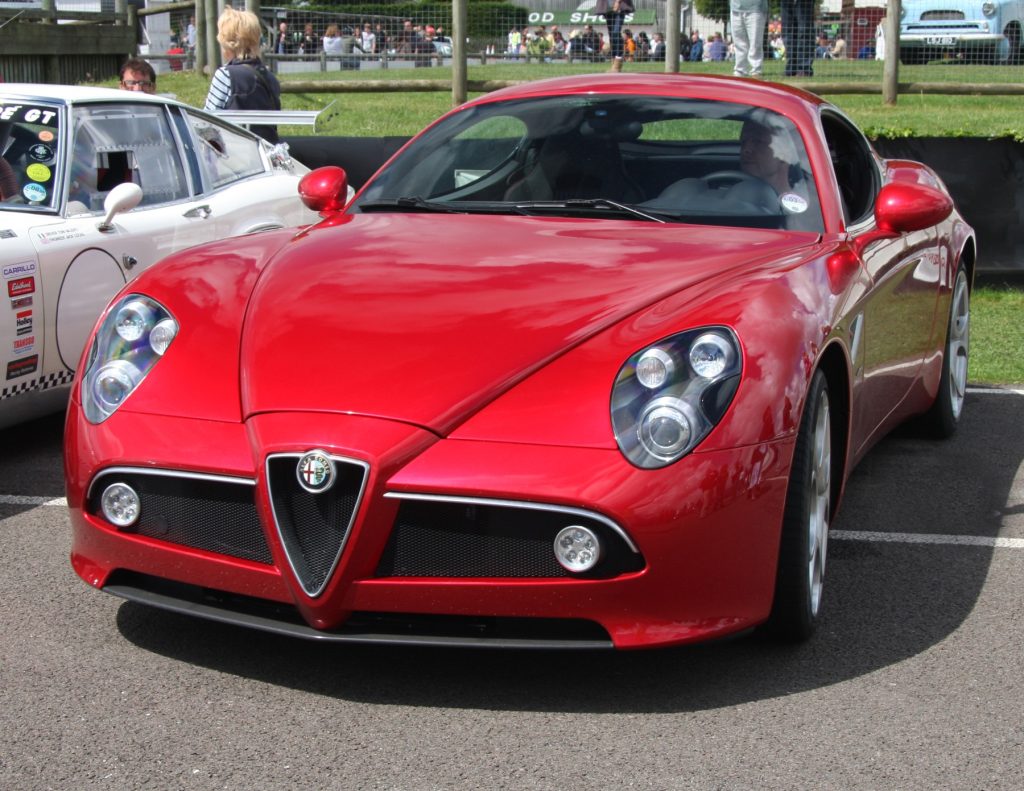
MrWalkr’s July 2021 Goodwood photograph is identified as Giulia GTA. It illustrates the road-oriented version in a contemporary public display setting. The caption does not assign a production number or claim an individual ownership history. Keeping the visual source with the variant-specific factory references helps a reviewer distinguish the GTA from its GTAm companion while preserving the shared programme relationship in the surrounding text.
Building a useful collector record
A collector record should begin with the chassis stamping, factory delivery evidence and the body identity. Record the engine number separately from its installed specification: an original block can contain later components, while a replacement engine may still represent the correct period configuration. Compare the present interior, wheels and glazing with dated photographs and documents. Write down alterations as part of the car’s history instead of quietly treating a restored appearance as proof that every detail is original.
Condition, restoration and historical use
For an individual car, ask for a dated sequence of ownership, registration and restoration. Inspection photographs taken before paint and trim were fitted can explain repairs that a finished surface conceals. Separate period competition entries from recent historic-event participation; both matter, but they answer different questions. When a specification changed during the model’s life, identify the version represented today and the evidence supporting it. A clear account makes the car’s appeal understandable without depending on an impressive badge or an unsupported production claim.
Frequently asked questions
Were 500 GTAs built separately?
The factory limit is 500 GTA and GTAm cars combined.
How many seats does the production GTA have?
The later factory account specifies five.
Is the exact GTA split entered?
No. It remains unconfirmed.
Which drive layout does the technical sheet give?
Rear-wheel drive.
Related vehicle profiles
- Alfa Romeo Giulia Quadrifoglio NRING
- Alfa Romeo Giulia GTA heritage-livery commissions
- Alfa Romeo Giulia GTAm
Sources and further reading
- Alfa Romeo: March 2020 introduction and combined 500-car programme
- Alfa Romeo: production GTA five-seat identity and sold-out programme
- Alfa Romeo: variant-specific technical sheet
Photo and credit
Giulia GTA at Goodwood Festival of Speed, July 2021; variant illustration, with no individual production-number claim. Photo: MrWalkr / Wikimedia Commons · CC BY-SA 4.0. Resized and JPEG-compressed for web display; no content retouching. Website layouts may crop the image.
Why this machine matters
Alfa Romeo announced the modern Giulia GTA in March 2020, alongside the more extreme GTAm. The factory defined 500 numbered cars across both versions. This entry concerns the GTA itself, while retaining the shared programme as the production bound. It does not assign all 500 cars to the GTA or imply that the GTAm represents an additional run beyond that figure.
Built in limited numbers
Part of 500 combined GTA/GTAm cars; individual GTA split unconfirmed
Gallery
Specifications
Factory specifications may vary by model year, market and configuration.
Identity & production
- Official model
- Alfa Romeo Giulia GTA
- Country of manufacture
- Italy
Powertrain & performance
- Engine
- 2891 cc biturbo V6, 540 CV; factory sheet defines HP as CV
- Transmission
- Eight-speed automatic
- Drivetrain
- Rear-wheel drive