Alfa Romeo 75 Turbo Evoluzione
The 1987 road homologation special: 500 red 75 Turbo Evoluzione cars, distinct from works racers.
The road Turbo Evoluzione
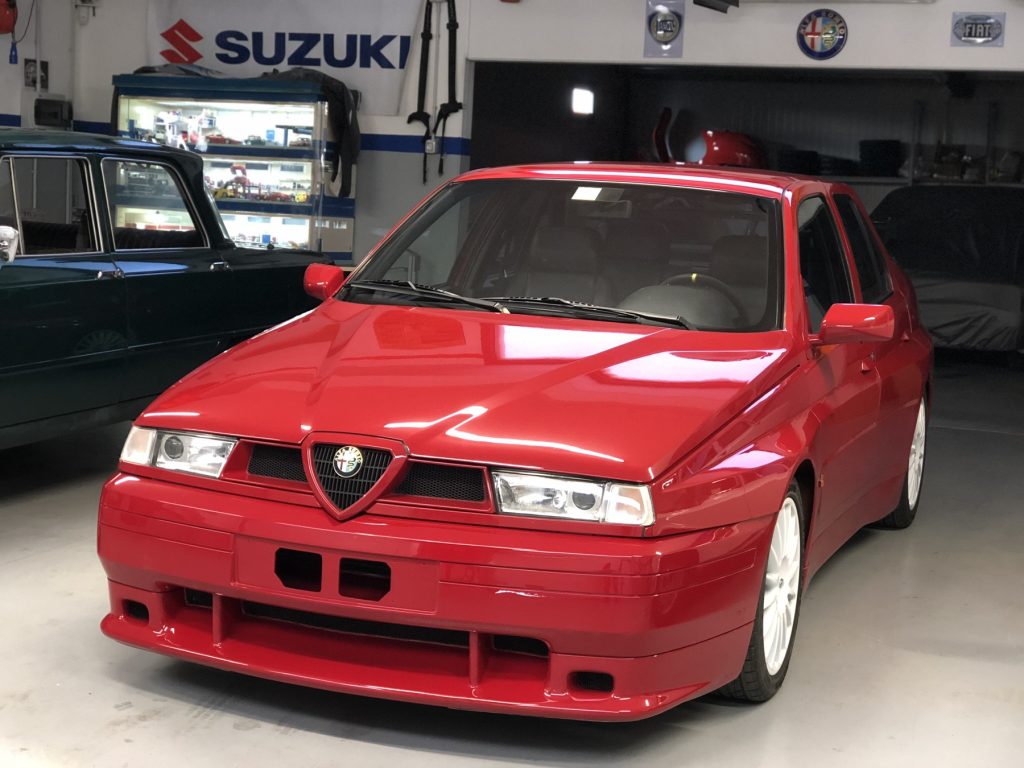
The Alfa Romeo 75 Turbo Evoluzione is the road homologation special introduced in 1987. Stellantis Heritage records 500 examples, all with red paint and distinctive aerodynamic body additions. This is the limited road series, separate from the racing cars developed around the 75 name. The inventory’s 1985 reference belongs to the wider model’s introduction and is corrected for this particular variant. Read the cited reference for its documented context.
A precise displacement matters
The Evoluzione uses a 1762 cc turbocharged inline-four, with factory Heritage material reporting 155 CV for the road specification. Its smaller displacement distinguishes it from the ordinary 1779 cc 75 Turbo. Copying the parent model’s engine field would obscure an important homologation detail. The same caution applies to racing outputs: a competition development is not the correct engine specification for a surviving road car.
The 75 chassis context
The broader 75 family used Alfa Romeo’s front-engine, rear-transaxle arrangement, with the clutch, gearbox and differential grouped at the rear. Heritage also describes front torsion bars and a rear De Dion axle with Watt linkage. These features explain the platform context of the Evoluzione. An individual car’s present mechanical condition still needs inspection, especially where later performance modifications may have altered its original road specification.
Five hundred in the defined series
The verified count of 500 applies to the red road Turbo Evoluzione series. It is not a count of every turbocharged 75, every Group A entrant or every IMSA car. A database can link related competition developments while keeping their totals separate. This avoids turning road homologation production and subsequent race preparation into one apparently larger manufacturing run.
Authenticity beyond the body kit
The external treatment makes the Evoluzione recognisable, but a collector file should confirm the original model through factory and chassis documentation. Photographs of the engine bay, stamping and interior can help record what is present today. Replacement panels or restored paint should be described plainly. A visually convincing car and a documented member of the original series are different levels of evidence.
The credited road-car image
Axis of Oversteer photographed the source-identified Turbo Evoluzione in June 2010. Its attribution licence permits reuse with the linked author and source notice. This modern image illustrates the road variant rather than a contemporary race entry. The article therefore keeps racing results and individual chassis provenance outside the caption unless independent records establish them, preserving the distinction between model illustration and ownership history.
Building a useful collector record
A collector record should begin with the chassis stamping, factory delivery evidence and the body identity. Record the engine number separately from its installed specification: an original block can contain later components, while a replacement engine may still represent the correct period configuration. Compare the present interior, wheels and glazing with dated photographs and documents. Write down alterations as part of the car’s history instead of quietly treating a restored appearance as proof that every detail is original.
Condition, restoration and historical use
For an individual car, ask for a dated sequence of ownership, registration and restoration. Inspection photographs taken before paint and trim were fitted can explain repairs that a finished surface conceals. Separate period competition entries from recent historic-event participation; both matter, but they answer different questions. When a specification changed during the model’s life, identify the version represented today and the evidence supporting it. A clear account makes the car’s appeal understandable without depending on an impressive badge or an unsupported production claim.
Frequently asked questions
What year is used for this variant?
1987, rather than the wider 75 model’s 1985 introduction.
How many road Evoluzione cars are documented?
500.
What displacement distinguishes the model?
1762 cc, rather than the ordinary Turbo’s 1779 cc.
Are works race cars included in the road count?
No. The 500 figure covers the defined road series.
Related vehicle profiles
- Alfa Romeo Giulia GTA 1300 Junior Corsa
- Alfa Romeo Alfasud Sprint 6C prototype
- Alfa Romeo 155 GTA Stradale prototype
Sources and further reading
- Stellantis Heritage: 1987 Turbo Evoluzione and 500-car scope
- FCA Heritage: 1762 cc, 155 CV and road-car specification
Photo and credit
Alfa Romeo 75 Turbo Evoluzione photographed in June 2010; road homologation model, introduced in 1987. Photo: Axis of Oversteer / Wikimedia Commons · CC BY 2.0. Resized and JPEG-compressed for web display; no content retouching. Website layouts may crop the image.
Why this machine matters
The Alfa Romeo 75 Turbo Evoluzione is the road homologation special introduced in 1987. Stellantis Heritage records 500 examples, all with red paint and distinctive aerodynamic body additions. This is the limited road series, separate from the racing cars developed around the 75 name. The inventory’s 1985 reference belongs to the wider model’s introduction and is corrected for this particular variant.
Built in limited numbers
500; 1987 road Turbo Evoluzione series
Gallery
Specifications
Factory specifications may vary by model year, market and configuration.
Identity & production
- Official model
- Alfa Romeo 75 Turbo Evoluzione
- Country of manufacture
- Italy
Powertrain & performance
- Engine
- 1762 cc turbocharged inline-four; road specification
- Drivetrain
- Rear-wheel drive