2000 Mitsubishi Lancer Evolution VI Tommi Mäkinen Edition RS (Japan)
Explore Lancer Evolution VI Tommi Mäkinen Edition RS: history, specifications, rarity evidence and credited photos.
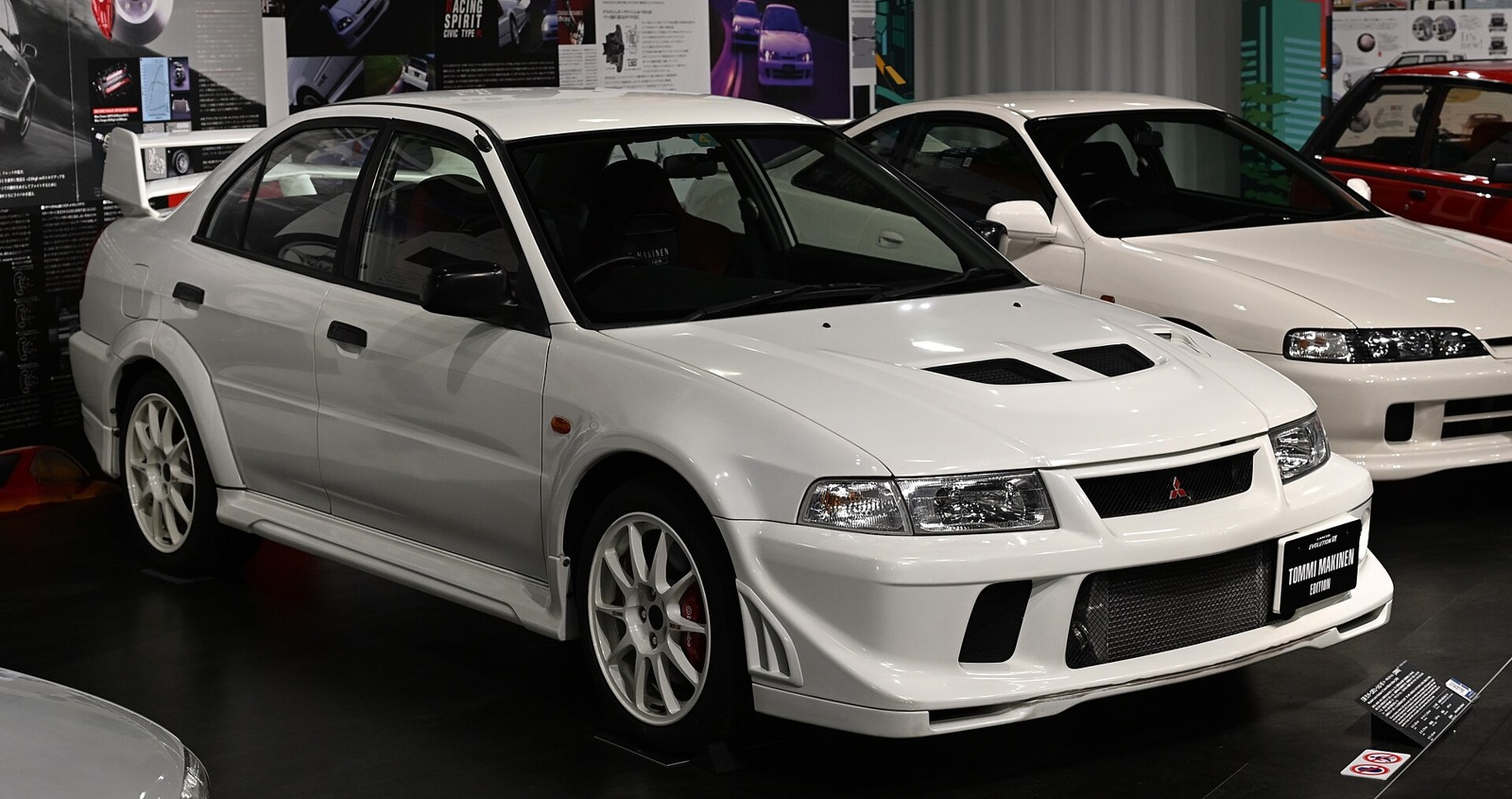
Mitsubishi Lancer Evolution VI Tommi Mäkinen Edition RS is documented here as a Japanese factory grade, with its own equipment reference and a carefully scoped rarity record. The Tommi Mäkinen Edition RS is the competition-oriented grade within the commemorative programme. It should be distinguished both from the TME GSR and from the ordinary Evolution VI RS. The three identities share family characteristics, but the names are not interchangeable. A complete record keeps the edition, grade and individual car’s preparation history visible together.
Where this grade fits
The Tommi Mäkinen Edition commemorated Mitsubishi’s champion driver and gave the Evolution VI a distinct factory identity. Mitsubishi’s motorsport history places the special specification’s release in January 2000. The relevant comparison is therefore with both the ordinary Evolution VI and the other TME grade. The familiar red livery is only one presentation within the programme and should not stand in for the complete edition definition.
Mitsubishi original Japanese VI Tommi Mäkinen Edition factory brochure (digitised original)
Engine, transmission and equipment
The original Japanese TME brochure distinguishes GSR and RS versions of the turbocharged, four-wheel-drive, five-speed-manual sedan. Its specifications and equipment columns should be read together with the model code. Mechanical assemblies can migrate between ordinary VI and TME cars over decades of use. The most convincing identification combines original documents, the factory model specification and a record of changes made to the particular vehicle.
Mitsubishi original Japanese VI Tommi Mäkinen Edition factory brochure (digitised original)
Design and identification
The edition-specific front treatment and commemorative presentation make the TME visually memorable. Yet red paint and rally-style graphics are insufficient authentication, and other original colours remain part of the story. Check the applicable colour and equipment record rather than insisting that every authentic TME resemble the best-known publicity image. A restored car may faithfully reproduce its appearance while still containing replacement panels, seats or mechanical components.
How many are recorded?
218 Japanese-market RS records in the cited ASA/CAPS-derived dataset. This is a catalogue record count, not an independently audited completed-production total, a manufacturer-announced cap or a worldwide survivor census. The grade is kept separate from other specifications within the same generation. Do not add a market record count to a previously quoted generation total without reconciling their coverage. The original workbook figure is preserved in the evidence register, with any difference explained rather than silently substituted.
JDM Catalogues: independently compiled ASA/CAPS-derived Japanese record counts
Documentation for an individual car
Begin with the full chassis and model information, then match it to the relevant dated Japanese brochure. Retain original documents and a chronological account of major changes. A short chassis prefix can be shared by multiple grades or generations, so it should not stand alone as proof. For a competition-prepared car, add the preparation and event history as a separate layer of provenance. A competition logbook records a use history; it does not automatically authenticate every claim about the original road specification.
Understanding originality and modifications
For a useful comparison, separate three questions: what the factory offered, what this particular vehicle was originally built as, and what survives on it now. The brochure answers the first. Original model information and contemporary records help answer the second. Inspection and recent photographs answer the third. Disagreements between those sources can reveal modifications or repairs, but they need to be documented rather than resolved by choosing the most attractive specification.
Specification and identity reference
| Reference year | 2000 |
|---|---|
| Generation / chassis | VI Tommi Mäkinen Edition / CP9A |
| Factory grade | RS; Japanese market |
| Engine | 4G63, 2.0-litre intercooled turbo four-cylinder |
| Period output reference | 280 PS |
| Transmission reference | 5-speed manual |
| Drive | Four-wheel drive |
| Catalogue grade code | SNDF |
| Japanese records | 218; EPC-derived dataset only |
Rarity and production scope
218 Japanese-market RS records in the cited ASA/CAPS-derived dataset. This is a catalogue record count, not an independently audited completed-production total, a manufacturer-announced cap or a worldwide survivor census.
Comparisons and related profiles
Continue through these connected Mitsubishi records, each with its own factory identity and production scope.
- Mitsubishi Lancer Evolution VI Tommi Mäkinen Edition GSR (Japan)
- Mitsubishi Lancer Evolution VI RS (Japan)
Frequently asked questions
Is the rarity figure a worldwide production total?
218 Japanese-market RS records in the cited ASA/CAPS-derived dataset. This is a catalogue record count, not an independently audited completed-production total, a manufacturer-announced cap or a worldwide survivor census.
How should an individual example be authenticated?
Match the complete original model information to the appropriate dated documentation, then record the present condition and modifications separately. A badge, colour scheme or stripped interior alone is insufficient evidence of a factory grade.
Sources and further reading
- Mitsubishi original Japanese VI Tommi Mäkinen Edition factory brochure (digitised original)
- JDM Catalogues: independently compiled ASA/CAPS-derived Japanese record counts
- Mitsubishi Motors: 2000 rally history and January TME release context
Research checked 15 October 2026. Factory literature, independent EPC-derived records and photographic evidence are identified separately. Design readings and documentation guidance are editorial interpretation.
Built in limited numbers
218 Japanese-market RS records in the cited ASA/CAPS-derived dataset. This is a catalogue record count, not an independently audited completed-production total, a manufacturer-announced cap or a worldwide survivor census.
Gallery
Specifications
Factory specifications may vary by model year, market and configuration.
Identity & production
- Official model
- Mitsubishi Lancer Evolution VI Tommi Mäkinen Edition RS (Japan)
Sources and verification
Source citations are being prepared for this profile.