1994 Mitsubishi Lancer Evolution II RS (Japan)
Explore Lancer Evolution II RS (Japan): factory identity, history, specifications, rarity evidence, identification notes and credited photos.
Mitsubishi Lancer Evolution II RS is documented here as a Japanese factory grade, with its own equipment reference and a carefully scoped rarity record. The second-generation RS is a particularly useful collector subject because model identity and later competition preparation can become entangled. A rally car built from an RS has an additional competition history, while a road-used RS still represents the factory grade. Neither history should be invented from decals, a roll cage or a seller’s abbreviated description.
Where this grade fits
Evolution II is the second development of the original compact Lancer formula. It belongs to the same broad early-Evolution period as the first car, yet its CE9A identity matters when comparing records. Treating every narrow-body Evolution as interchangeable obscures the sequence of factory changes. For an encyclopedia, the useful question is which generation and grade a particular vehicle represents, followed by how faithfully it retains that specification.
Mitsubishi original Japanese II factory brochure (digitised original)
Engine, transmission and equipment
The original Japanese brochure lists the 4G63 intercooled turbo engine at 260 PS and retains a five-speed manual transmission with four-wheel drive. Its grade illustrations distinguish the GSR from the RS. These are factory specification references, not measurements taken from a present-day example. Modified boost control, replacement engine internals and aftermarket suspension can change a survivor’s behaviour without changing the identity recorded on its original paperwork.
Mitsubishi original Japanese II factory brochure (digitised original)
Design and identification
Evolution II sits between the relatively restrained first Evolution and the more elaborate aerodynamic treatment of Evolution III. Period catalogue illustrations are especially helpful for checking the relationship between bumper openings, side treatment and rear spoiler. A replica can assemble the visible parts, while an authentic car can lose them. Body identification therefore needs both photographs and documentary evidence, with the physical shell examined where possible.
How many are recorded?
1,093 Japanese-market RS records in the cited ASA/CAPS-derived dataset. This is a catalogue record count, not an independently audited completed-production total, a manufacturer-announced cap or a worldwide survivor census. The grade is kept separate from other specifications within the same generation. Do not add a market record count to a previously quoted generation total without reconciling their coverage. The original workbook figure is preserved in the evidence register, with any difference explained rather than silently substituted.
JDM Catalogues: independently compiled ASA/CAPS-derived Japanese record counts
Documentation for an individual car
Begin with the full chassis and model information, then match it to the relevant dated Japanese brochure. Retain original documents and a chronological account of major changes. A short chassis prefix can be shared by multiple grades or generations, so it should not stand alone as proof. For a competition-prepared car, add the preparation and event history as a separate layer of provenance. A competition logbook records a use history; it does not automatically authenticate every claim about the original road specification.
Understanding originality and modifications
For a useful comparison, separate three questions: what the factory offered, what this particular vehicle was originally built as, and what survives on it now. The brochure answers the first. Original model information and contemporary records help answer the second. Inspection and recent photographs answer the third. Disagreements between those sources can reveal modifications or repairs, but they need to be documented rather than resolved by choosing the most attractive specification.
Specification and identity reference
| Reference year | 1994 |
|---|---|
| Generation / chassis | II / CE9A |
| Factory grade | RS; Japanese market |
| Engine | 4G63, 2.0-litre intercooled turbo four-cylinder |
| Period output reference | 260 PS |
| Transmission reference | 5-speed manual |
| Drive | Four-wheel drive |
| Catalogue grade code | SNDF |
| Japanese records | 1,093; EPC-derived dataset only |
Rarity and production scope
1,093 Japanese-market RS records in the cited ASA/CAPS-derived dataset. This is a catalogue record count, not an independently audited completed-production total, a manufacturer-announced cap or a worldwide survivor census.
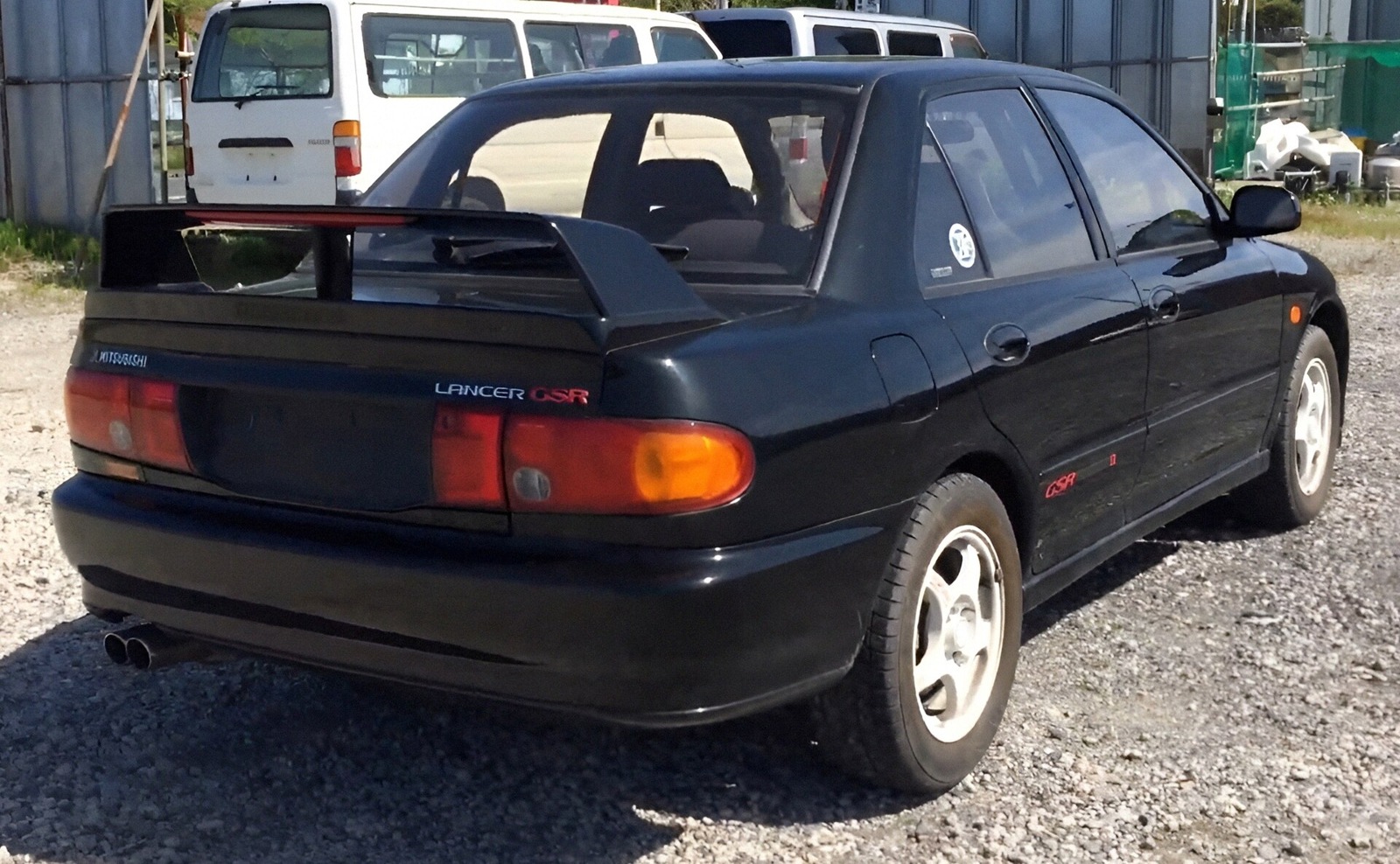
What the photograph represents
Evolution II shown as a generation reference; RS identity and equipment are not established by this photograph.
Comparisons and related profiles
Continue through these connected Mitsubishi records, each with its own factory identity and production scope.
Frequently asked questions
Is the rarity figure a worldwide production total?
1,093 Japanese-market RS records in the cited ASA/CAPS-derived dataset. This is a catalogue record count, not an independently audited completed-production total, a manufacturer-announced cap or a worldwide survivor census.
How should an individual example be authenticated?
Match the complete original model information to the appropriate dated documentation, then record the present condition and modifications separately. A badge, colour scheme or stripped interior alone is insufficient evidence of a factory grade.
Sources and further reading
- Mitsubishi original Japanese II factory brochure (digitised original)
- JDM Catalogues: independently compiled ASA/CAPS-derived Japanese record counts
Research checked 15 October 2026. Factory literature, independent EPC-derived records and photographic evidence are identified separately. Design readings and documentation guidance are editorial interpretation.
Built in limited numbers
1,093 Japanese-market RS records in the cited ASA/CAPS-derived dataset. This is a catalogue record count, not an independently audited completed-production total, a manufacturer-announced cap or a worldwide survivor census.
Gallery
Specifications
Factory specifications may vary by model year, market and configuration.
Identity & production
- Official model
- Mitsubishi Lancer Evolution II RS (Japan)
Sources and verification
Source citations are being prepared for this profile.