Alfa Romeo Tipo B P3
Vittorio Jano’s single-seat Grand Prix landmark.
Why the Tipo B P3 matters
The Alfa Romeo Tipo B P3 is a landmark in the transition to purpose-built single-seat Grand Prix cars. Its narrow cockpit and exposed wheels give the racing machine a very different identity from an 8C road spider. “Tipo B” and “P3” refer to the same celebrated model lineage, although a car’s season and mechanical specification remain essential parts of a precise description.
A winning debut at Monza
The Alfa Romeo museum identifies Vittorio Jano as the designer and records the Tipo B’s arrival at Monza in 1932 with victory in the Italian Grand Prix. That debut makes 1932 the appropriate starting point for this profile. Later developments were substantial: the museum’s separate 1934 aerodynamic example is a reconstruction from drawings, rather than an untouched original aerodynamic survivor.
The museum-listed 2654 cc configuration
The factory museum gives the early configuration a supercharged 2654 cc inline-eight, twin overhead camshafts and two superchargers. It lists 215 hp at 5600 rpm, rear-wheel drive and four forward speeds. The unusual V arrangement of the drive shafts is a particularly informative feature to examine when comparing the Tipo B with another pre-war Alfa racing chassis.
Six cars: a count with a defined scope
The museum specification lists six cars. Here, that number is attached to the early configuration documented on its GP Tipo B page. It should not be expanded into a universal count of every later Tipo B development, reconstruction or modern historic-racing car. The word P3 on a programme or an auction catalogue does not by itself determine which production group is being described.
How the development story changes the specifications
The 1934 aerodynamic version used a larger 2905 cc engine and different bodywork, according to the museum’s exhibition account. This illustrates why one set of performance numbers cannot describe the entire P3 story. A profile of the first version can remain useful while pointing readers towards the subsequent evolution; it need not blend all versions into an imaginary specification.
Identification and collector significance
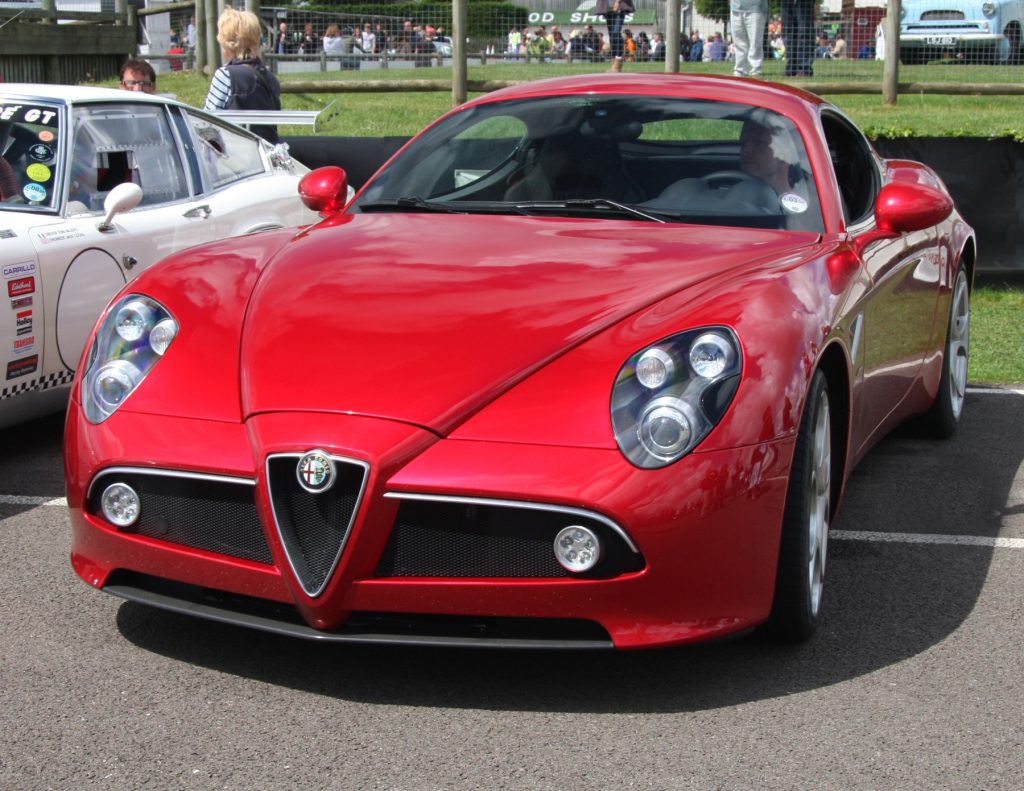
A meaningful Tipo B file should identify the chassis, the engine installed at each important date and the body configuration represented by its restoration. Match period photographs to visible details such as suspension, cockpit shape and exhaust layout. Record the evidence behind a works-team attribution separately from later ownership and historic-racing appearances. The photographed car is shown at the 2018 Goodwood Revival, a modern event rather than the 1932 debut.
Frequently asked questions
Is P3 a different model from Tipo B?
The names are used for the same model lineage. Individual seasons and mechanical developments still need to be identified.
Was it the first single-seat racing car ever built?
This profile calls it a single-seat Grand Prix landmark. It does not make a worldwide first claim that the cited records do not establish.
Can the museum’s six-car count be applied to all P3s?
It is retained only for the early museum-listed configuration; later developments need their own accounting.
Related vehicle profiles
Primary references
Photo and credit
Alfa Romeo Tipo B P3 at the 2018 Goodwood Revival; modern historic-racing photograph of the type introduced in 1932. Photo: Dave Hamster / Wikimedia Commons · CC BY 2.0. Resized and JPEG-compressed for web display; no content retouching. Website layouts may crop the image.
Why this machine matters
The Alfa Romeo Tipo B P3 is a landmark in the transition to purpose-built single-seat Grand Prix cars. Its narrow cockpit and exposed wheels give the racing machine a very different identity from an 8C road spider. “Tipo B” and “P3” refer to the same celebrated model lineage, although a car’s season and mechanical specification remain essential parts of a precise description.
Built in limited numbers
Six is the museum-listed early GP Tipo B configuration count. Do not treat it as a universal all-development P3 total. Museum dimension field appears internally inconsistent (wheelbase equals length); dimensions omitted.
Gallery
Specifications
Factory specifications may vary by model year, market and configuration.
Identity & production
- Official model
- Alfa Romeo Tipo B P3
- Country of manufacture
- Italy
Powertrain & performance
- Engine
- 2654 cc twin-supercharged inline-eight
- Horsepower
- 215
- Drivetrain
- Rear-wheel drive