2000 Lotus Elise Sport 160 Series 1
Explore the 2000 Lotus Elise Sport 160 Series 1: programme history, design, verified rarity scope, specifications and credited photography.
The Lotus Elise Sport 160 Series 1 develops the early roadster through a named performance programme with distinct approval batches. Its factory introduction is February 2000, correcting the workbook’s earlier year while preserving that original label for duplicate checking.
History and verified programme identity
Factory service history identifies the Sport 160 in February 2000, describing an initial 50-car SVA group followed by WVTA cars. Fifty therefore describes an initial subset, not the complete programme. A custodial seller account reports 337 Sport 160s; this remains an attributed reference rather than an independently audited output tally. The original inventory’s 1999 label is retained as an alias so the corrected introduction does not create a second profile. The supplied photograph identifies a 2000 Sport 160, but it does not show evidence establishing its approval batch. That distinction is especially relevant when descriptions treat the model name as proof of one universal delivered configuration.
Engineering and design
The service notes describe a fixed-valve-timing 160 PS programme and explain the configuration needed for full output on WVTA cars. The PS unit is retained rather than silently rewritten as 160 bhp. Programme documents establish the intended mechanical identity; an exterior photograph cannot certify an installed airbox, exhaust or current calibration. The pictured first-series body places the model visually beside the Sport 135, with performance differences requiring a technical record. An individual specification should identify approval history and subsequent component changes together. That makes the Sport 160 a useful example of why a memorable model name needs a dated mechanical scope.
The physical car in the supplied photograph
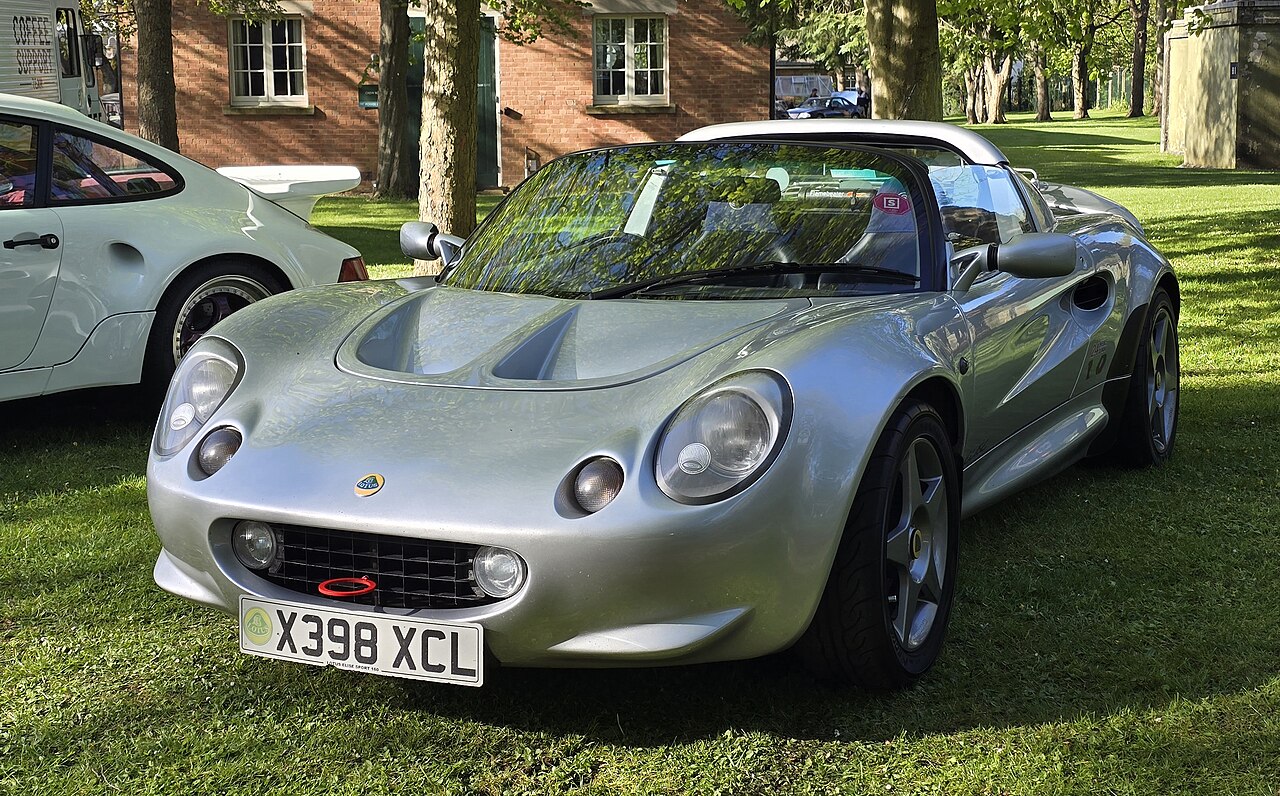
Calreyn88’s photograph shows a silver, source-titled 2000 Lotus Elise Sport 160 parked outdoors from the front quarter. The first-series body and roof are visible in an image taken in 2024. Neither the image nor this caption certifies an SVA allocation or the car’s present full-output configuration.
A closer look at the design
The supplied image lets the Sport 160 be recognized as a first-series Elise while the source history explains the less visible differences. Its silver body, dark roof and compact enclosure make a clear comparison with the Sport 135 image, but similar surfaces do not establish identical powertrain settings. The approval-batch distinction is particularly easy to lose in short advertisements. Retaining it here gives a reader a reason to seek original records before accepting a claim of initial-group allocation or full-output equipment. The corrected programme year serves the same purpose: it clarifies chronology without discarding the original inventory label. Together these details make the record useful for identification, research and careful catalogue maintenance.
Collecting and chassis evidence
Begin a Sport 160 collecting record with chassis, original approval specification and delivery evidence. The first 50 reference should not be applied indiscriminately to every example, and a custodial wider-programme estimate should retain its attribution. Original equipment and later performance work can explain how a car reached its present configuration. Record that chronology rather than using a fitted exhaust or a current power claim as a manufacturing certificate. The corrected 2000 introduction also helps prevent duplicate entries when a catalogue uses the earlier workbook year. Rarity context, approval batch and present mechanical condition are related pieces of the story, each requiring its own evidence.
Related Lotus designs and meaningful comparisons
The Sport 135 provides an earlier factory performance comparison, and the 340R takes the Elise-derived lightweight theme into a visibly different body. Their separate profiles show why engine-programme development and radical body design should not be flattened into one general Elise record.
Reading the sources
The programme sources and the photograph answer different questions. Manufacturer and custodial records establish the original model, Type, category and published production scope. The creator’s file establishes the pictured subject, setting and image permission. An individual chassis history can then add ownership, competition entries and dated repairs without changing the scope of the original programme. Build references are not survivor counts, and a later specification does not automatically become an additional newly manufactured vehicle. Where primary evidence does not establish a complete fabrication census, that field remains unassigned.
Specifications and rarity evidence
| Programme reference year | 2000 |
|---|---|
| Model / Type | Elise Sport 160 Series 1 — Elise S1 / Type 111 |
| Body / competition role | Factory performance roadster with distinct approval batches |
| Corrected factory introduction | February 2000 |
| Initial approval group | 50 SVA cars, not whole programme |
| Continuing approval scope | WVTA cars |
| Power unit convention | 160 PS programme, not automatically 160 bhp |
| Photo example | Source-titled 2000 Sport 160 |
| Published build / register reference | 337, custodial report |
| Independently audited completed tally | Not assigned |
| Count scope | Factory service notes identify first 50 SVA cars and continuing WVTA cars. A custodial listing reports 337 for the wider Sport 160 programme; this is retained as a reported reference, not an audited completed count. Photo does not certify SVA allocation or full-power configuration. Survivor census unassigned. |
| Original inventory status | LOT-119 — Verified |
Frequently asked questions
Does the initial 50-car reference cover every Sport 160?
No. Factory notes distinguish the first SVA group from continuing WVTA cars. The wider custodial 337 reference remains qualified, and the photographed car’s approval allocation is unassigned.
How is Elise Sport 160 Series 1 classified?
This is a named original Lotus road-car programme. Its qualified source references fall below the 7,500 screening threshold. Completed production, announced allocations and survivor counts remain distinct, with any unresolved differences explained in the article.
Which technical details are established for the programme?
The primary record supports corrected factory introduction: February 2000; initial approval group: 50 SVA cars, not whole programme; continuing approval scope: WVTA cars. These are programme or explicitly attributed photo references. A particular surviving car’s engine, chassis repairs and competition preparation require its own dated documentation.
Does the photographed appearance establish factory originality?
The caption records a real creator-identified Elise Sport 160 Series 1 subject and its documented setting. It establishes the illustration’s scope, while original components, restoration work and individual race provenance require chassis-specific evidence. A competition number, current paint or museum display is not used as an originality certificate.
What rarity or archive scope is verified?
Factory service notes identify first 50 SVA cars and continuing WVTA cars. A custodial listing reports 337 for the wider Sport 160 programme; this is retained as a reported reference, not an audited completed count. Photo does not certify SVA allocation or full-power configuration. Survivor census unassigned.
Who photographed the supplied image?
Calreyn88 via Wikimedia Commons, under CC BY-SA 4.0. The original file and licence are linked with the image. Retain the creator, source and licence when uploading, exporting or reusing it; local retouching and synthetic enlargement have not been performed.
Related Lotus profiles
Sources and photo credits
Photograph: Calreyn88 via Wikimedia Commons original source, CC BY-SA 4.0. Source-provided thumbnail supplied without local cropping, retouching or synthetic enlargement.
Built in limited numbers
Factory service notes identify first 50 SVA cars and continuing WVTA cars. A custodial listing reports 337 for the wider Sport 160 programme; this is retained as a reported reference, not an audited completed count. Photo does not certify SVA allocation or full-power configuration. Survivor census unassigned.
Gallery
Specifications
Factory specifications may vary by model year, market and configuration.
Identity & production
- Official model
- Elise Sport 160 Series 1