1970 Lotus Type 69 Formula Two
Explore the 1970 Lotus Type 69 Formula Two: programme history, design, verified rarity scope, specifications and credited photography.
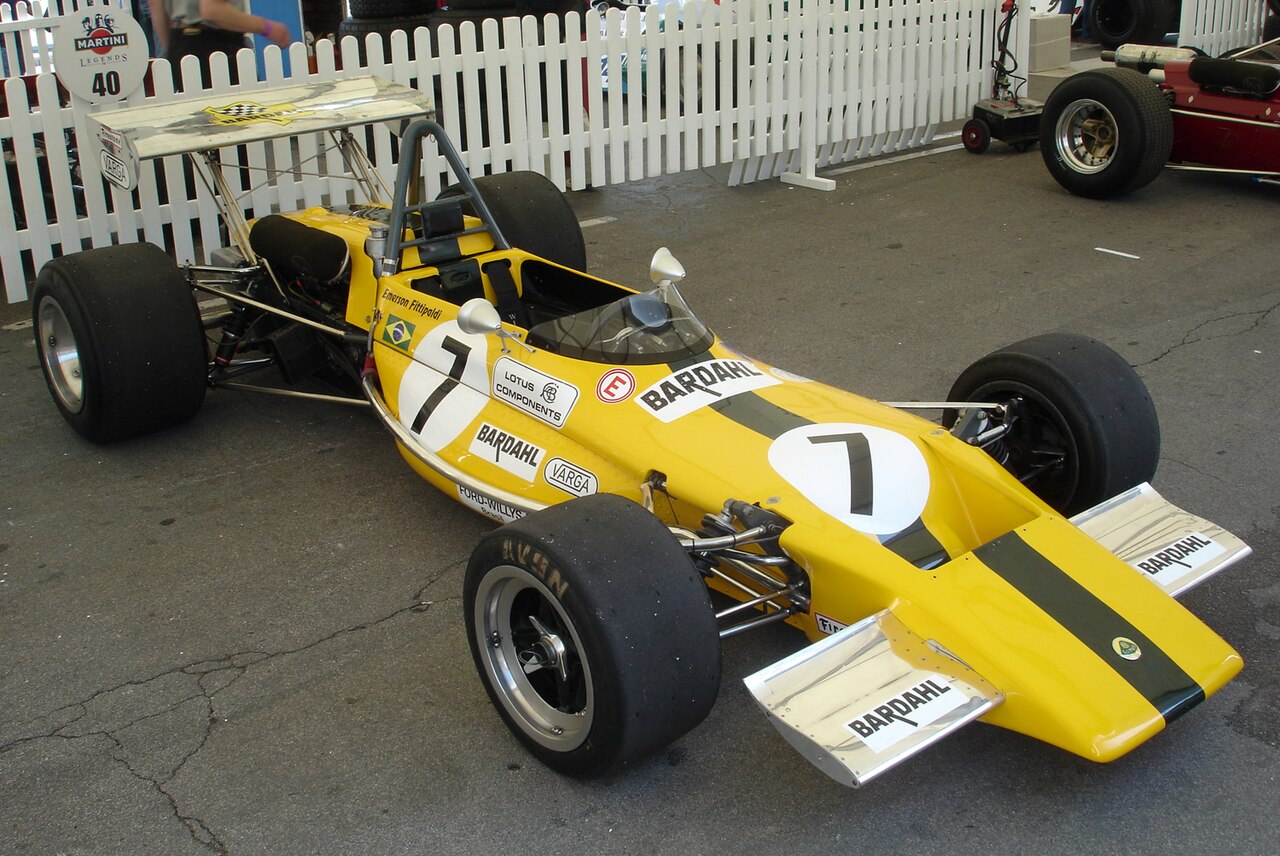
The Lotus Type 69 belongs to the customer single-seater world around the start of the 1970s. The Formula Two archive is illustrated with a creator-identified Emerson Fittipaldi car, preserving its identity separately from Formula Ford versions of the same broad Type family.
History and verified programme identity
Classic Team Lotus places the Type 69 in Formula Two and Formula Three during 1970–1971. That short primary description establishes the programme and its category breadth, but does not supply a complete fabrication tally. The photograph’s source identifies the exhibited car with Emerson Fittipaldi. Its October 2007 appearance at Martini Legends is a later display, rather than a photograph of its original race season. Keeping that distinction matters because Type 69 photographs also exist for Formula Ford cars; a shared Type name cannot make all of their engines, frames and category specifications identical.
Engineering and design
A Formula-car family needs to be read through the requirements of its particular class. Engine rules and the associated packaging can produce related cars with visibly similar narrow bodies but different technical identities. The Type 69’s exposed wheels and central cockpit provide a clear single-seater outline; the exhibited car also carries front and rear aerofoils. Those visible surfaces help explain why the pictured Formula Two subject should not be captioned as a wingless Formula Ford. Exact engine dimensions, output and transmission ratios are deliberately left to a chassis-specific period record rather than borrowed from another category.
The physical car in the supplied photograph
Mutari’s photograph shows a yellow Type 69 identified with Emerson Fittipaldi at the 2007 Martini Legends display. The white number-seven panels, narrow cockpit and aerofoils are visible within a temporary fenced exhibition. The creator’s worldwide public-domain release is retained with the image; it is not described as a CC0 dedication.
A closer look at the design
The photograph invites a closer look at how an early-1970s single-seater was presented. Its thin nose sits between the front tyres, while the aerofoils occupy their own space outside the central body. That makes the contrast between body packaging and aerodynamic devices legible even with the engine covered. The bright paint and exhibition barriers belong to the particular display, so neither is treated as evidence of a new factory edition. A reader comparing customer Formula cars should begin with the category label, then inspect the engine and chassis record. In that order the Type 69 can be understood without importing a specification merely because another surviving car carries the same number. The source’s concise register description is useful precisely because it leaves room for those individual histories to remain distinct.
Collecting and chassis evidence
For an individual Type 69, the most useful first document is a chassis identity tied to its original category and delivery. Period entry lists can then show changes in engine or preparation. A driver-associated display caption is helpful context but does not, alone, prove an uninterrupted chain of original components. Competition use may require repairs that deserve their own dates and descriptions. The programme remains verified without converting an exhibit, a list of race appearances or the number of available photographs into a production census.
Related Lotus designs and meaningful comparisons
The Type 77 is a later Formula One comparison, and the Type 78 makes the subsequent ground-effect development easy to see. Their wider aerodynamic bodies contrast with the Type 69’s compact customer-formula appearance. The connection is historical and visual: these are separate programmes with separate chassis evidence, rather than stages to add together in one combined model tally.
Reading the sources
The programme sources and the photograph answer different questions. Manufacturer and custodial records establish the original model, Type, category and published production scope. The creator’s file establishes the pictured subject, setting and image permission. An individual chassis history can then add ownership, competition entries and dated repairs without changing the scope of the original programme. Build references are not survivor counts, and a later specification does not automatically become an additional newly manufactured vehicle. Where primary evidence does not establish a complete fabrication census, that field remains unassigned.
Specifications and rarity evidence
| Programme reference year | 1970 |
|---|---|
| Model / Type | Type 69 Formula Two — Type 69 |
| Body / competition role | Single-seater Formula Two / Three family |
| Custodial programme period | 1970–1971 |
| Categories in primary record | Formula Two / Formula Three |
| Photo attribution | Emerson Fittipaldi-associated exhibit |
| Photo setting | Martini Legends, October 2007 |
| Published build / register reference | No complete tally assigned |
| Independently audited completed tally | Not assigned |
| Count scope | Verified physical competition programme. Complete fabrication census unassigned; works register, later configurations and repaired structures are not automatically separate manufactured cars. |
| Original inventory status | LOT-065 — Verified |
Frequently asked questions
Is every Lotus Type 69 photograph a Formula Two car?
No. Other Type 69 category configurations exist. This image is the creator-identified Fittipaldi display subject; Formula Ford images are not used as interchangeable Formula Two illustrations.
How is Type 69 Formula Two classified?
This is a Team Lotus competition Type archive. It remains separate from Lotus road-car production. Customer cars, works entries and converted chassis need a reconciled scope before any complete fabrication tally is assigned.
Which technical details are established for the programme?
The primary record supports custodial programme period: 1970–1971; categories in primary record: Formula Two / Formula Three; photo attribution: Emerson Fittipaldi-associated exhibit. These are programme or explicitly attributed photo references. A particular surviving car’s engine, chassis repairs and competition preparation require its own dated documentation.
Does the photographed appearance establish factory originality?
The caption records a real creator-identified Type 69 Formula Two subject and its later setting. It establishes the illustration’s scope, while original components, restoration work and individual race provenance require chassis-specific evidence. A competition number, current paint or museum display is not used as an originality certificate.
What rarity or archive scope is verified?
Verified physical competition programme. Complete fabrication census unassigned; works register, later configurations and repaired structures are not automatically separate manufactured cars.
Who photographed the supplied image?
Mutari via Wikimedia Commons, under Public domain. The original file and licence are linked with the image. Retain the creator, source and licence when uploading, exporting or reusing it; local retouching and synthetic enlargement have not been performed.
Related Lotus profiles
Sources and photo credits
Photograph: Mutari via Wikimedia Commons original source, Public domain. Source-provided thumbnail supplied without local cropping, retouching or synthetic enlargement.
Built in limited numbers
Verified physical competition programme. Complete fabrication census unassigned; works register, later configurations and repaired structures are not automatically separate manufactured cars.
Gallery
Specifications
Factory specifications may vary by model year, market and configuration.
Identity & production
- Official model
- Type 69 Formula Two