1967 Ford Cortina Lotus Mk II
Explore the 1967 Ford Cortina Lotus Mk II: programme history, design, verified rarity scope, specifications and credited photography.
The Ford Cortina Lotus Mk II is a joint-manufacturer collector programme built by Ford, rather than another Lotus-assembled Mk I. This profile retains Ford as the historical marque and uses the supported 1967 introduction.
History and verified programme identity
The auction custodian dates the Mk II introduction to March 1967 and reports that approximately 4,032 are thought to have left Dagenham by 1970. Lotus’s own heritage page confirms the move to Ford assembly and states that the second generation did not receive a Lotus Type number. The workbook’s 1966 year and Type 28-lineage wording are preserved as aliases, without applying the Mk I’s Type number as an official Mk II designation. This programme is distinct from FRD-064, the Mk I already included in the Ford batch.
Engineering and design
The Mk II combines a conventional sports-saloon body with Lotus twin-cam power. The custodian describes a 1,558 cc engine and a revised production approach aimed at improving build consistency. Those are programme-level references; the auction car’s particular restoration and engine modifications are not transferred to the separate photographed example. The source also distinguishes the wider range of available colours from the Mk I’s familiar white-and-green presentation. A colour scheme is therefore an incomplete authenticity test for the later car, and a normal Cortina fitted with badges would require its own provenance.
The physical car in the supplied photograph
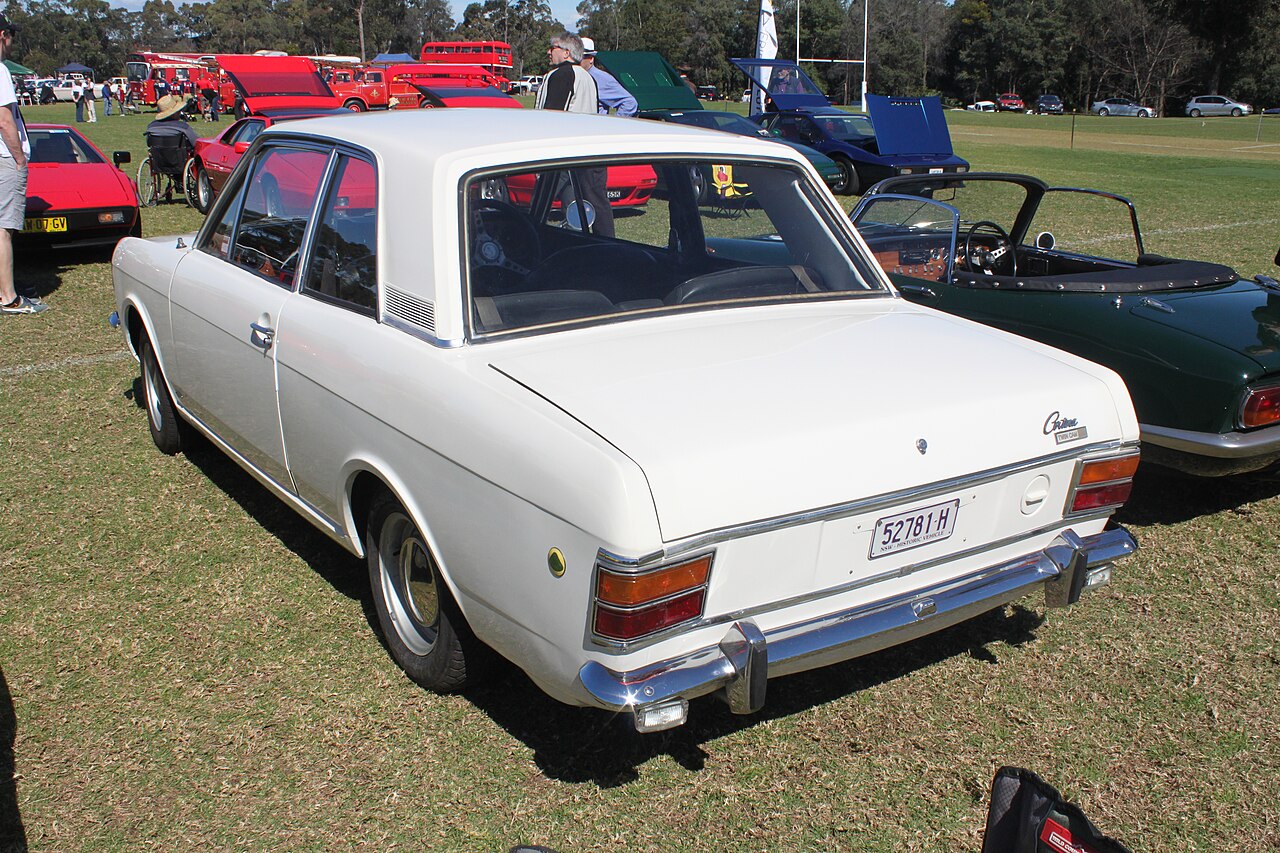
The supplied photograph shows a creator-identified 1969 Ford Lotus Cortina Mk2 at All British Day in North Parramatta, Australia, in August 2015. Jeremy’s rear-quarter view shows its white saloon body, rectangular rear lamps and steel wheels. The example year is kept separate from the 1967 programme introduction.
A closer look at the programme
The photographed saloon has a very different relationship between cabin, wheels and body from an Elan. That conventional appearance is part of the model’s appeal, but it also makes provenance important: badges and paint are easier to imitate than a continuous build history. The manufacturer and custodian records identify the Ford-built programme, while the image documents one later example. The title preserves that original maker rather than renaming the car solely to match the workbook’s brand folder. This keeps search, specifications and future duplicate checks aligned with the actual generation. The rear-quarter view emphasizes the saloon’s upright passenger compartment, boot and steel wheels. Those details contrast with the low glass-fibre Lotus sports cars linked elsewhere in the article. The photograph’s Australian event setting is useful as a later appearance of one Mk II, while the assembly history remains Ford’s British programme. The original maker identity is therefore retained even though the car uses the Lotus name in its model description. This keeps the collaboration understandable without turning a familiar paint scheme or badge into the only evidence of authenticity.
Collecting and chassis evidence
A genuine Mk II file should connect Ford chassis identity, original delivery and later repair or engine work. The approximate 4,032 source statement is not a survivor count, an announced allocation or an independently audited completed tally. The Mk I already imported remains a different generation. Retaining Ford as maker and the original Lotus-inventory reference keeps the corporate collaboration accurate while preventing another broad Cortina title from creating a duplicate.
Related Lotus designs and meaningful comparisons
The Elan +2 offers a contemporary Lotus-powered road-car comparison, while the two-seat Elan fixed-head coupe gives another cabin and body arrangement. These connections explain the shared twin-cam context without assigning Lotus-built sports-car structures or production totals to the Ford saloon.
Reading the sources
The programme sources and the photograph answer different questions. Manufacturer and custodial records establish the original model, Type, category and published production scope. The creator’s file establishes the pictured subject, setting and image permission. An individual chassis history can then add ownership, competition entries and dated repairs without changing the scope of the original programme. Build references are not survivor counts, and a later specification does not automatically become an additional newly manufactured vehicle. Where primary evidence does not establish a complete fabrication census, that field remains unassigned.
Specifications and rarity evidence
| Programme reference year | 1967 |
|---|---|
| Model / Type | Cortina Lotus Mk II — Ford Cortina Mk II |
| Body / competition role | Ford-built twin-cam sports saloon |
| Supported introduction | March 1967 |
| Historical maker | Ford |
| Assembly | Dagenham |
| Engine reference | 1,558 cc Lotus twin-cam |
| Official Lotus Type number | None assigned to Mk II |
| Photo example | 1969 car, Australia, 2015 |
| Published build / register reference | Approximately 4,032 |
| Independently audited completed tally | Not assigned |
| Count scope | Published source reference: Approximately 4,032. Scope follows the named programme or register; independently audited completed output and survivor census remain unassigned. |
| Original inventory status | LOT-049 — Verified |
Frequently asked questions
Was the Mk II assembled by Lotus and officially designated Type 28?
Lotus’s heritage account states that Ford assembled the Mk II and it was not allocated a Lotus Type number. Type 28 belongs to the earlier Lotus Cortina programme.
How is Cortina Lotus Mk II classified?
This is a Ford-built joint collector programme. Its qualified source estimate is below the 7,500 screening threshold and is not an audited completion tally or survivor census.
Which technical details are established for the programme?
The primary record supports supported introduction: March 1967; historical maker: Ford; assembly: Dagenham. These are programme or explicitly attributed photo references. A particular surviving car’s engine, chassis repairs and competition preparation require its own dated documentation.
Does the photographed appearance establish factory originality?
The caption records a real creator-identified Cortina Lotus Mk II subject and its later setting. It establishes the illustration’s scope, while original components, restoration work and individual race provenance require chassis-specific evidence. A competition number, current paint or museum display is not used as an originality certificate.
What rarity or archive scope is verified?
Published source reference: Approximately 4,032. Scope follows the named programme or register; independently audited completed output and survivor census remain unassigned.
Who photographed the supplied image?
Jeremy from Sydney, Australia via Wikimedia Commons, under CC BY 2.0. The original file and licence are linked with the image. Retain the creator, source and licence when uploading, exporting or reusing it; local retouching and synthetic enlargement have not been performed.
Related Lotus profiles
Sources and photo credits
- Primary manufacturer or custodial programme record
- Lotus manufacturer record: Mk II Ford assembly and Type-number boundary
Photograph: Jeremy from Sydney, Australia via Wikimedia Commons original source, CC BY 2.0. Source-provided thumbnail supplied without local cropping, retouching or synthetic enlargement.
Built in limited numbers
Published source reference: Approximately 4,032. Scope follows the named programme or register; independently audited completed output and survivor census remain unassigned.
Gallery
Specifications
Factory specifications may vary by model year, market and configuration.
Identity & production
- Official model
- Cortina Lotus Mk II