1966 Lotus Europa S1
Explore the 1966 Lotus Europa S1: programme history, design, verified rarity scope, specifications and credited photography.
The Lotus Europa S1 carries the backbone road-car approach into a mid-engined coupe. Its original Type 46 series has a defined small production reference, with later twin-cam models and racing derivatives kept separate.
History and verified programme identity
Lotus’s heritage statistics date the Europa Series 1 to 1966–1968 and report approximately 644 cars. The manufacturer lists a 1,470 cc four-cylinder engine and four-speed transmission, while describing the backbone as cradling the engine behind the passenger compartment. These are original road-series references. The intended early allocation to France is not treated as a completed regional tally, and Type 47 racing cars are not added to the S1 production figure. The pictured individual is identified separately by its serial number and later registration.
Engineering and design
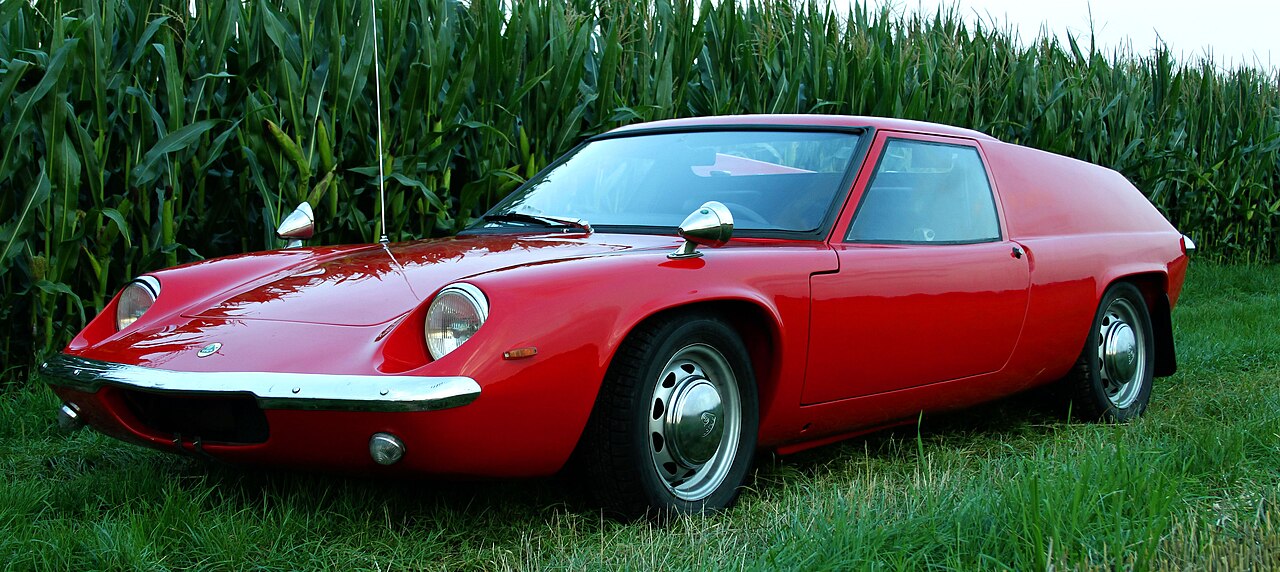
Moving the engine behind the cabin changes the relationship between the occupants, rear body and powertrain. The S1’s low nose and high rear shoulders make that arrangement visible in the photograph. A backbone chassis under a composite body remains structurally different from the Elite’s monocoque or a Formula-car tub. The manufacturer also records fixed seats with adjustable pedals, an example of how the passenger environment was organized around the compact package. An individual car’s modifications and present mechanical condition still require its own record; the programme table is not an inspection of the illustrated example.
The physical car in the supplied photograph
The supplied photograph shows a red Europa S1 identified as Type 46 serial 46-0149, with an August 1967 registration in the creator record. Its low front and distinctive rear body are visible in an outdoor setting. The creator name is recorded as Owner, exactly as supplied by the source.
A closer look at the programme
The photograph’s low front-quarter view makes the Europa’s passenger and rear-body proportions particularly clear. The small cabin sits ahead of the engine area rather than behind a long conventional engine bay. That visible relationship helps explain the original design decision without supplying an unseen mechanical specification. Its serial and registration details then locate the illustrated example within the broader series. Keeping those details separate from an intended regional allocation avoids turning one car’s history into a claim about where every S1 was completed or delivered. The S1 image makes the rear shoulders and low front body visible together. The passenger compartment sits between them as a small glazed volume, which helps explain the engine-behind-cabin arrangement without a cutaway. The creator supplies a serial and registration reference, while the maker supplies the series period. Those two dates need not be identical to be useful. The individual registration is a locating detail, not proof that the whole series was completed or delivered in the same year. The red finish likewise remains an example colour rather than a numbered edition.
Collecting and chassis evidence
A Type 46 file should retain original chassis and body identities, component changes and the distinction between manufacture and registration. The approximate 644 reference belongs to the original S1 series, not every car using the Europa name. Later road versions and a racing conversion need separate programme scopes. The photo’s serial number is a source-attributed individual identifier rather than an authentication of every remaining part.
Related Lotus designs and meaningful comparisons
The Type 47 provides the factory racing comparison, while the Elan +2 shows a contemporary front-engined family-oriented Lotus road car. Their different cabin and engine arrangements make the Europa’s role clearer without borrowing their production figures or performance data.
Reading the sources
The programme sources and the photograph answer different questions. Manufacturer and custodial records establish the original model, Type, category and published production scope. The creator’s file establishes the pictured subject, setting and image permission. An individual chassis history can then add ownership, competition entries and dated repairs without changing the scope of the original programme. Build references are not survivor counts, and a later specification does not automatically become an additional newly manufactured vehicle. Where primary evidence does not establish a complete fabrication census, that field remains unassigned.
Specifications and rarity evidence
| Programme reference year | 1966 |
|---|---|
| Model / Type | Europa S1 — Type 46 |
| Body / competition role | Renault-powered mid-engined road coupe |
| Manufacturer period | 1966–1968 |
| Engine reference | 1,470 cc four-cylinder |
| Transmission reference | Four-speed |
| Structure | Backbone with engine behind cabin |
| Photo serial reference | 46-0149, creator description |
| Published build / register reference | Approximately 644 |
| Independently audited completed tally | Not assigned |
| Count scope | Published source reference: Approximately 644. Scope follows the named programme or register; independently audited completed output and survivor census remain unassigned. |
| Original inventory status | LOT-045 — Verified |
Frequently asked questions
Does the approximately 644 reference cover all Europas?
No. Lotus gives it for the Type 46 Series 1 programme. Later Series 2, twin-cam models and competition derivatives are separate scopes.
How is Europa S1 classified?
This is a named original Lotus road-car production programme. Its source-reported series reference is below the 7,500 screening threshold; it is not a surviving-car estimate or an announced numbered allocation.
Which technical details are established for the programme?
The primary record supports manufacturer period: 1966–1968; engine reference: 1,470 cc four-cylinder; transmission reference: Four-speed. These are programme or explicitly attributed photo references. A particular surviving car’s engine, chassis repairs and competition preparation require its own dated documentation.
Does the photographed appearance establish factory originality?
The caption records a real creator-identified Europa S1 subject and its later setting. It establishes the illustration’s scope, while original components, restoration work and individual race provenance require chassis-specific evidence. A competition number, current paint or museum display is not used as an originality certificate.
What rarity or archive scope is verified?
Published source reference: Approximately 644. Scope follows the named programme or register; independently audited completed output and survivor census remain unassigned.
Who photographed the supplied image?
Owner via Wikimedia Commons, under CC BY-SA 3.0. The original file and licence are linked with the image. Retain the creator, source and licence when uploading, exporting or reusing it; local retouching and synthetic enlargement have not been performed.
Related Lotus profiles
Sources and photo credits
Photograph: Owner via Wikimedia Commons original source, CC BY-SA 3.0. Source-provided thumbnail supplied without local cropping, retouching or synthetic enlargement.
Built in limited numbers
Published source reference: Approximately 644. Scope follows the named programme or register; independently audited completed output and survivor census remain unassigned.
Gallery
Specifications
Factory specifications may vary by model year, market and configuration.
Identity & production
- Official model
- Europa S1