1962 Lotus Type 23 Sports Racer
Explore the 1962 Lotus Type 23 Sports Racer: programme history, design, verified rarity scope, specifications and credited photography.
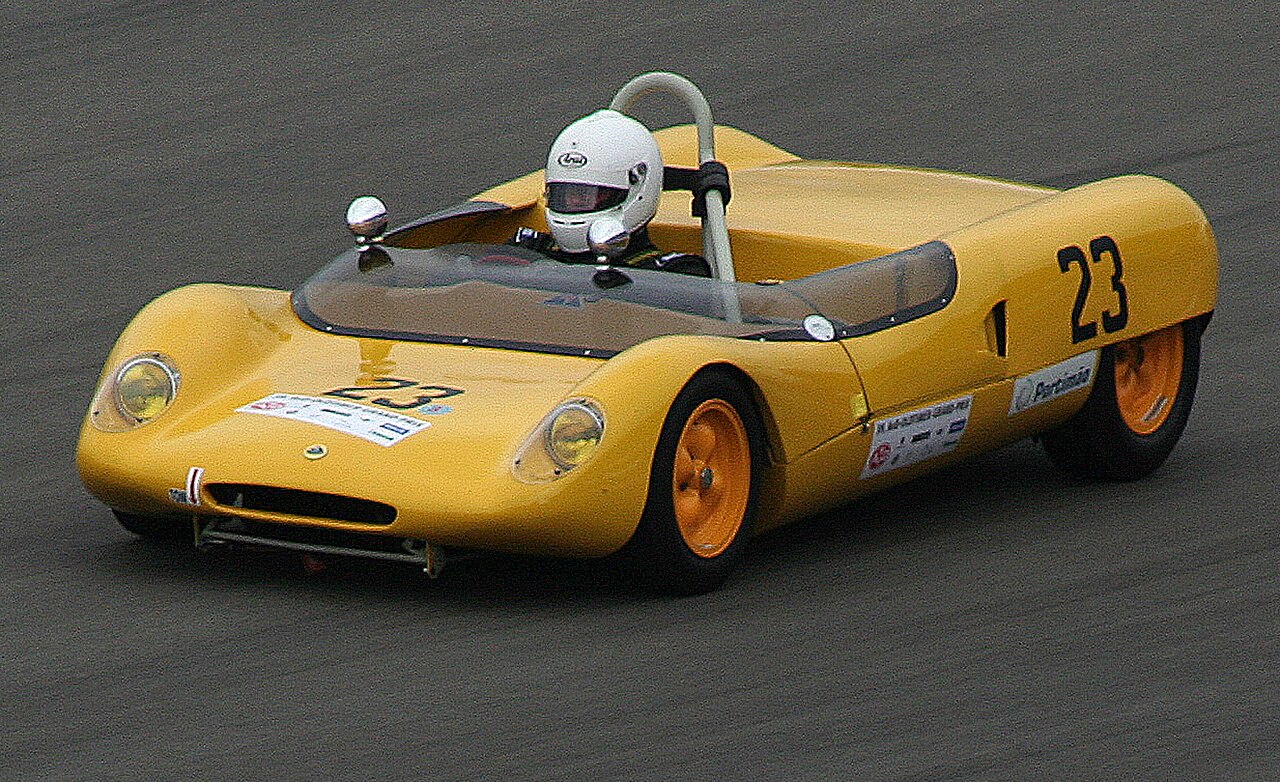
The Lotus Type 23 brings the compact rear-engined chassis into a covered-wheel sports racer. Its original family includes later series, so a photograph of a 23B is captioned as that variant rather than relabelled as an unchanged first-series car.
History and verified programme identity
Classic Team Lotus describes the Type 23 as a rear-engined sports racer based on the Type 22 and states that three series were produced. Lotus’s manufacturer timeline places the programme in the 1962 development sequence. The primary custodial page does not give a complete fabrication tally, so the profile leaves that field unassigned. The supplied photograph is explicitly identified as a 23B, a variant within the broader family. Its 1962 description comes from the creator record and is retained with that attribution, rather than becoming a claim that every 23B or 23C shared the same first build date or engine.
Engineering and design
The Type 23’s connection to the Type 22 is useful because it shows how a related chassis idea can serve a different body and competition role. Covering the wheels changes the outer surface, cooling opportunities and the space around the occupant, while the rear-engine arrangement remains part of the package. The supplied side view makes the low front, cockpit opening and rear body visible together. It can illustrate those relationships without supplying an unseen engine specification. A compact sports racer also has to satisfy the regulations of its particular category and season; a later historic-racing appearance does not establish every original eligibility or preparation detail.
The physical car in the supplied photograph
The supplied photograph shows a yellow Lotus 23B at the AvD Oldtimer Grand Prix on the Nürburgring in 2011. Lothar Spurzem’s caption identifies it as a 1962 example, with number 23 visible on the body. The low windscreen, covered wheels and open cockpit are clear in the side view. The specific B-variant caption is retained rather than describing the image as a first-series Type 23 or a Type 23C.
A variant caption can support a family profile
The yellow 23B photograph is a good example of a narrower image subject within a broader model record. Its creator identifies the B variant and the event, while Classic Team Lotus describes the Type 23 family as having three series. The profile can use that image accurately if the caption retains the narrower identity. It would become misleading if the B were silently renamed as the original series or if the visible car’s equipment were assigned to every variant. The family relationship is still useful: it lets the reader connect the body and chassis idea across development stages. A future individual file would add the chassis and dated changes. The present catalogue therefore gains a real photograph without erasing the variation that the original competition programme is known to contain.
Collecting and chassis evidence
A Type 23 file should identify the series and original chassis before recording engines, competition entries or later body changes. The three-series custodial description makes that especially important. A series update or a restored B-style body cannot by itself prove that an additional original chassis was manufactured. Period build and entry records would clarify the individual sequence. The model family is documented here through a primary programme page and a licensed variant photograph, with no combined series output invented. The record can be expanded as reconciled primary evidence becomes available without having to undo a falsely precise manufacturing total.
Related Lotus designs and meaningful comparisons
The Type 22 is the direct single-seater design reference named by the custodian, while the Type 19 offers another rear-engined Lotus sports-racing comparison. Their body and competition roles remain separate even where they share an engineering approach. The Type 23’s series wording also makes a useful contrast with a single-year edition: this is an evolving competition family, not a numbered road-car allocation. Keeping the variant in the caption allows one real photograph to illustrate the broader family accurately without erasing its narrower subject identity.
Reading the sources
The programme sources and the photograph answer different questions. Manufacturer and custodial records establish the original model, Type, category and published production scope. The creator’s file establishes the pictured subject, setting and image permission. An individual chassis history can then add ownership, competition entries and dated repairs without changing the scope of the original programme. Build references are not survivor counts, and a later specification does not automatically become an additional newly manufactured vehicle. Where primary evidence does not establish a complete fabrication census, that field remains unassigned.
Specifications and rarity evidence
| Programme reference year | 1962 |
|---|---|
| Model / Type | Type 23 Sports Racer — Type 23 |
| Body / competition role | Rear-engined compact sports-racing family |
| Programme reference year | 1962 |
| Design basis | Type 22 |
| Engine location | Rear / behind the driver |
| Custodial series scope | Three series |
| Photo variant | 23B, creator-identified 1962 example |
| Photo event | AvD Oldtimer Grand Prix, Nürburgring, 2011 |
| Published build / register reference | No complete tally assigned |
| Independently audited completed tally | Not assigned |
| Count scope | Documented physical Team Lotus competition Type archive. Complete fabrication census unassigned; works, customer and later converted cars are not added into an invented total. |
| Original inventory status | LOT-025 — Verified |
Frequently asked questions
Does the supplied 23B photo stand for every Type 23 variant?
It illustrates a B-variant within the Type 23 family and is labelled accordingly. The profile does not transfer its appearance or engine specification to the original series or the 23C.
How is Type 23 Sports Racer classified?
This is a Team Lotus competition Type archive. It remains separate from Lotus road-car production. Customer cars, works entries and converted chassis need a reconciled scope before any complete fabrication tally is assigned.
Which technical details are established for the programme?
The primary record supports programme reference year: 1962; design basis: Type 22; engine location: Rear / behind the driver. These are programme or explicitly attributed photo references. A particular surviving car’s engine, chassis repairs and competition preparation require its own dated documentation.
Does the photographed appearance establish factory originality?
The caption records a real creator-identified Type 23 Sports Racer subject and its later setting. It establishes the illustration’s scope, while original components, restoration work and individual race provenance require chassis-specific evidence. A competition number, current paint or museum display is not used as an originality certificate.
What rarity or archive scope is verified?
Documented physical Team Lotus competition Type archive. Complete fabrication census unassigned; works, customer and later converted cars are not added into an invented total.
Who photographed the supplied image?
Lothar Spurzem via Wikimedia Commons, under CC BY-SA 2.0 de. The original file and licence are linked with the image. Retain the creator, source and licence when uploading, exporting or reusing it; local retouching and synthetic enlargement have not been performed.
Related Lotus profiles
Sources and photo credits
Photograph: Lothar Spurzem via Wikimedia Commons original source, CC BY-SA 2.0 de. Source-provided thumbnail supplied without local cropping, retouching or synthetic enlargement.
Built in limited numbers
Documented physical Team Lotus competition Type archive. Complete fabrication census unassigned; works, customer and later converted cars are not added into an invented total.
Gallery
Specifications
Factory specifications may vary by model year, market and configuration.
Identity & production
- Official model
- Type 23 Sports Racer