1939 Lincoln Model K Sunshine Special
Explore 1939 Lincoln Model K Sunshine Special: sourced history, rarity, design and credited photography.
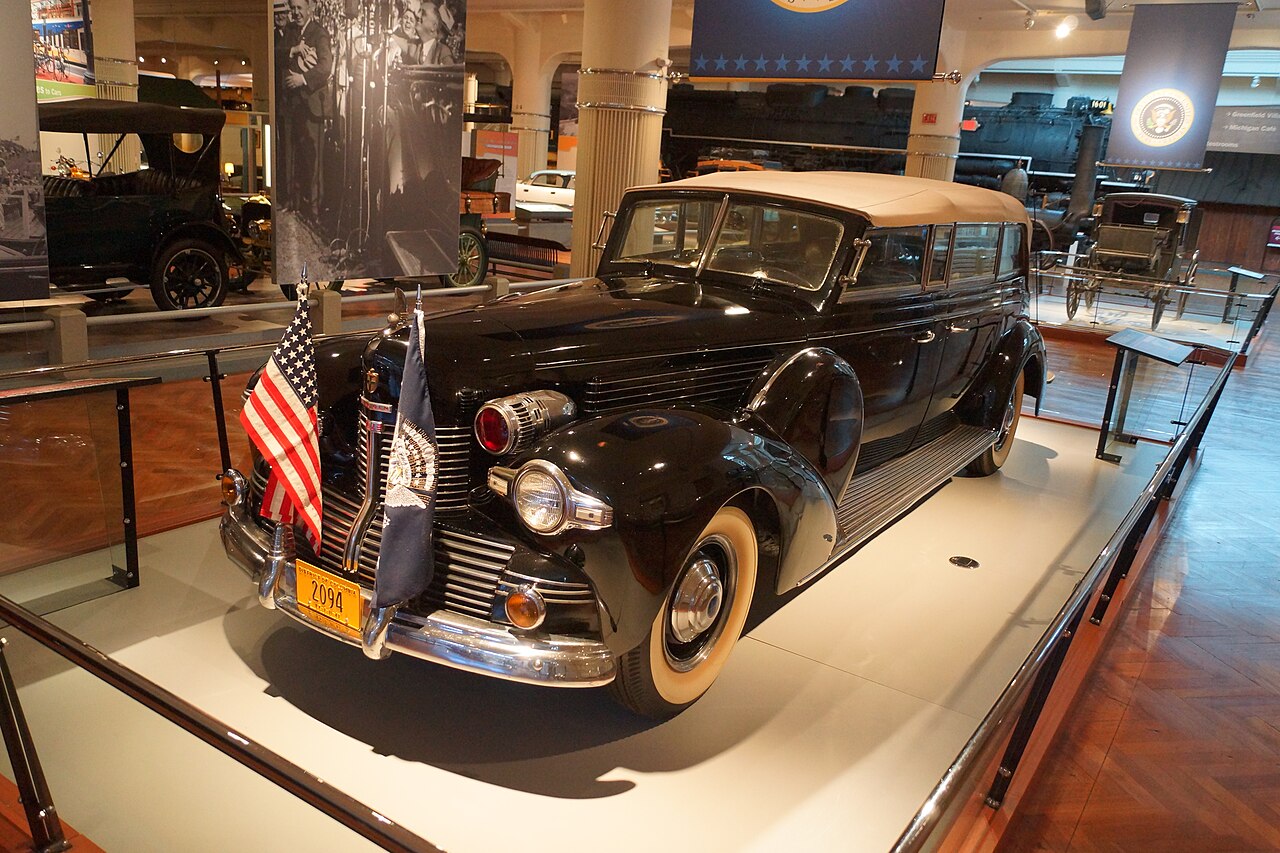
The Sunshine Special is an individual presidential Lincoln with a service history, rather than a limited trim package. Its coachwork, later security modifications and museum identity are all part of the same documented vehicle.
History and verified identity
The Henry Ford identifies the Lincoln chassis and Brunn body, with work in Detroit and Buffalo, and records object 50.11.1. Franklin Roosevelt used the open presidential car; after Pearl Harbor it received additional protective equipment. The museum dates its service through retirement in 1950. The displayed car consequently carries later changes, which must not be generalized as the specification of an ordinary 1939 Model K.
Reading the credited photograph
Greg Gjerdingen photographed the Sunshine Special at The Henry Ford. The black body, raised roof, prominent front lamps and small ceremonial flags make its public-service role visible. A long rear compartment separates it from a standard passenger sedan. The museum setting documents a later appearance of the historical car, not its original delivery configuration.
Why this Lincoln belongs in the archive
A presidential vehicle has to serve more than transportation. Visibility, passenger access and official ceremony can influence the body as strongly as mechanical packaging. Its later protective changes show how those priorities can be revised over time. For a collection catalogue, the most useful approach is to retain the identity of the chassis while dating each configuration. An early open photograph and a later museum view can both be accurate records of the same car without describing the same equipment.
A car with more than one configuration
Model K Sunshine Special should be understood as a sequence of dated configurations attached to an individual vehicle. Body changes can be historically important evidence, rather than a defect to hide in a catalogue. The useful questions concern when a roof, protective feature or trim arrangement was introduced, which institution records the change, and which form appears in the photograph. Those questions preserve the vehicle’s service history while avoiding a single specification assembled from incompatible dates.
For Model K Sunshine Special, compare an original service-period view with the supplied later appearance before writing a description of the roof or body. The reference year identifies the vehicle’s foundation; a caption identifies a photographed moment. Both can be retained in the same dossier. If a component was replaced during official use, record that event alongside the institutional account. A museum object number provides a stable link between those different views and the individual car they document.
Why the identity matters
The collecting significance of Model K Sunshine Special is tied to documented use and custodial evidence. Its place in a public collection can support a history that an ordinary model brochure could never establish. Conversely, a service history for this car cannot be transferred to another limousine merely because the grille or body shape resembles it. The record becomes more valuable when its individual identity, makers, modification sequence and credited images remain connected.
A useful comparison for this vehicle
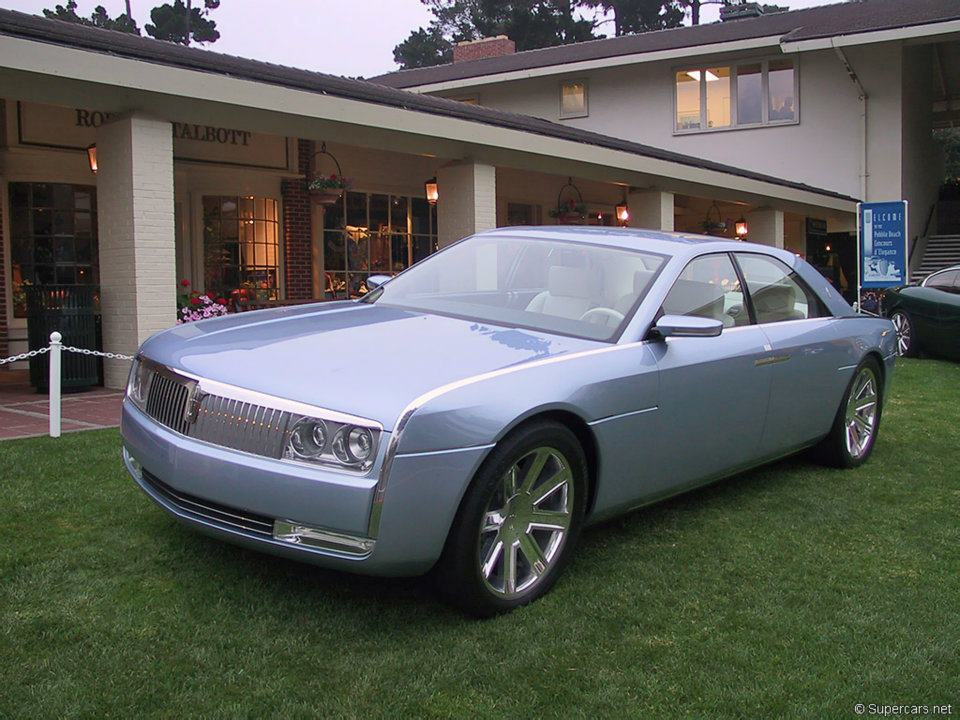
Compare the Sunshine Special with the X-100 by asking what a public-service vehicle has to communicate. A passenger compartment needs to function as a workplace, but a parade car also presents its occupants to people outside it. Roof position, window openings and the relationship of the cabin to the body are therefore central to its visual record. Protective alterations can change those relationships over time. A comparison should keep the two individual cars and their respective service histories separate, using institutional object numbers rather than a generic presidential-Lincoln label. The result is a clearer account of how two bodies served related public roles while retaining different origins, makers and configuration histories. Their significance is richer than a simple claim that each is rare.
Reading the evidence for this profile
The original source links below identify the programme and the historical statements used in this article. The photograph has its own creator and licence record, separate from the manufacturer’s vehicle history. Keep both when transferring this profile into a collection catalogue. A manufacturing tally describes how many cars belong to a defined original programme; it does not measure how many survive, how many are publicly visible, or how many retain all their original components. Those individual questions require dated chassis and restoration evidence. The reference year likewise describes the programme’s introduction or named historic configuration, while the supplied caption states the photographed setting and any established individual identity. This lets future research expand the car’s history without blurring the scope of the record already assembled here.
Specifications and verified rarity
| Reference year | 1939 |
|---|---|
| Model / programme | Model K Sunshine Special |
| Body / role | Presidential parade limousine by Brunn |
| Coachbuilder | Brunn & Company |
| Museum object | 50.11.1 |
| Record scope | Individual presidential chassis and dated configurations |
| Exact manufacturing tally | Not established |
| Rarity evidence | Documented physical archive scope; fabrication census unassigned |
| Rarity scope | Documented physical Model K Sunshine Special archive programme. Complete fabrication census unassigned; a photographed example is not proof of a one-car programme. |
| Inventory reference | LNC-026 — Verified |
Frequently asked questions
Are the museum car’s protective features original to every 1939 Lincoln?
No. The source records later security modifications to this individual presidential car.
What does the reference year identify?
1939 is the documented programme or archival reference used for this profile. The original workbook year is retained separately when corrected.
Does the photograph authenticate every mechanical component?
It documents the visible named subject. Hidden hardware and individual originality require a build or inspection record.
Is the number of surviving examples established?
No survivor census is assigned. Original programme references, fabrication output and surviving-car counts are kept separate.
What rarity or archive scope is verified?
Documented physical Model K Sunshine Special archive programme. Complete fabrication census unassigned; a photographed example is not proof of a one-car programme.
Who took the supplied photograph?
Greg Gjerdingen from Willmar, USA via Wikimedia Commons, under CC BY 2.0. The original file and licence links accompany the image. Retain that credit when the photograph is uploaded, exported or reused.
Related Lincoln profiles
Sources and photo credits
Photograph: Greg Gjerdingen from Willmar, USA via Wikimedia Commons source, CC BY 2.0. Source-provided photograph supplied without local cropping, retouching or text removal. A source thumbnail is used where available. Greg Gjerdingen photographed the Sunshine Special at The Henry Ford.
Built in limited numbers
Documented physical Model K Sunshine Special archive programme. Complete fabrication census unassigned; a photographed example is not proof of a one-car programme.
Gallery
Specifications
Factory specifications may vary by model year, market and configuration.
Identity & production
- Official model
- Model K Sunshine Special