2006 Ford Reflex Concept
Explore 2006 Ford Reflex Concept: history, specifications, rarity evidence and credited photography.
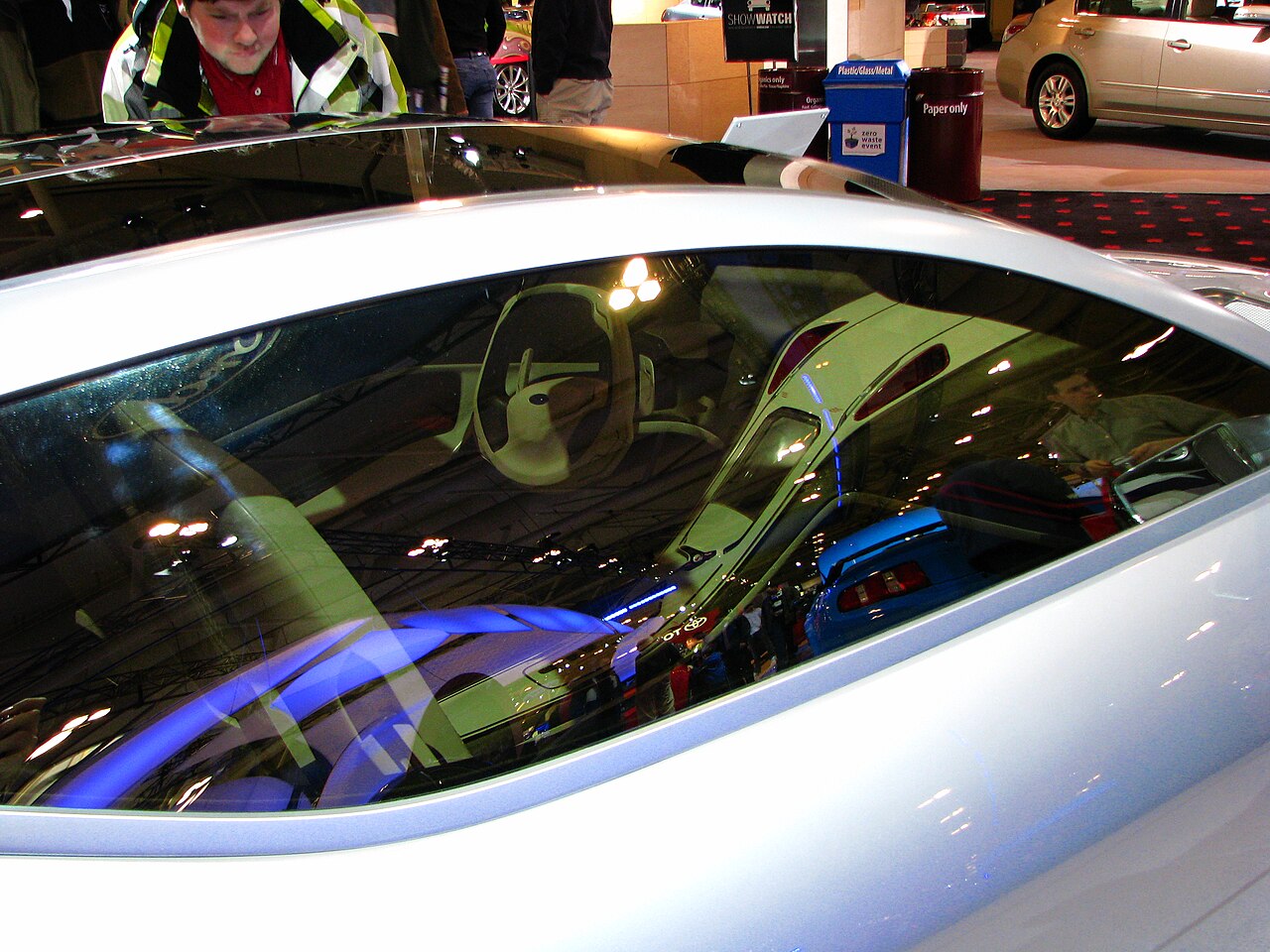
The Ford Reflex Concept used a compact sports-coupe form to explore efficiency, packaging and material choices in 2006.
History and purpose
The Ford Reflex Concept used a compact sports-coupe form to explore efficiency, packaging and material choices in 2006. The manufacturer’s original concept description, preserved as a company press release, set out a diesel-hybrid proposal with a lithium-ion battery and solar-related energy features. Those details belong to the concept’s intended engineering, not to a certified retail range or emissions result. The physical show car also proposed a 2+1 seating arrangement. This profile records that concept identity and leaves the complete fabrication tally unknown. It does not convert an impressive show specification into a claim that a customer production series was built.
Design and engineering
The supplied photograph looks through the Reflex’s glass and body opening into its unusually arranged passenger space. That is a useful view because the programme’s most interesting questions concern occupation and packaging, not simply its exterior outline. The light-coloured body and contrasting cabin make the relationship between enclosure and occupants easier to see. The original concept description connects this small-car format with hybrid technology and selected materials. A display image cannot establish battery capacity in service or the effectiveness of a proposed solar feature. It can, however, document that the seating and body design were represented by a real physical vehicle.
Identifying the original configuration
Always attach Concept to Reflex in the heading. The name alone can appear in general discussions of Ford’s future-car ideas and should not imply a production model. Keep the 2006 introduction separate from the later show photograph. An archive can record a proposed powertrain, a visible cabin feature and a dated operating demonstration as different evidence types. That matters especially for hybrid concepts, where public descriptions may discuss intended systems without supplying independent test results. The supplied image source identifies the physical Reflex, while the original manufacturer text supplies the engineering proposal used in this article.
Collector context and preservation
For a collection, Reflex adds a smaller-scale counterpart to Ford’s larger utility concepts. It shows how limited passenger space can be treated as a deliberate design problem rather than merely as reduced vehicle size. Preserve views of the seating arrangement, doors and controls together so readers can understand how the occupants fit. A material or technology exhibit can then connect each claim to the original proposal. Later research should add measurements and component histories only when those records become available. That keeps the concept’s significance clear while avoiding an invented customer programme, a survival count or a performance guarantee.
Reading the evidence for this profile
The original source links below identify the programme and the historical statements used in this article. The photograph has its own creator and licence record, separate from the manufacturer’s vehicle history. Keep both when transferring this profile into a collection catalogue. A manufacturing tally describes how many cars belong to a defined original programme; it does not measure how many survive, how many are publicly visible, or how many retain all their original components. Those individual questions require dated chassis and restoration evidence. The reference year likewise describes the programme’s introduction or named historic configuration, while the supplied caption states the photographed setting and any established individual identity. This lets future research expand the car’s history without blurring the scope of the record already assembled here.
Specifications and verified rarity
| Reference year | 2006 |
|---|---|
| Model / programme | Reflex Concept |
| Body / role | Compact 2+1-seat concept coupe |
| Documented engine | Diesel-hybrid powertrain proposal with lithium-ion battery |
| Architecture / transmission | Compact 2+1 seating layout; concept electric-drive integration |
| Exact manufacturing tally | Not established |
| Eligibility bound | Physical concept archive scope; tally unknown |
| Rarity scope | Physical 2006 Ford Reflex concept archive. Complete fabrication tally unknown. Proposed diesel-hybrid and solar-assisted features are concept claims, not certified retail performance or range. |
| Inventory reference | FRD-286 — Verified |
Frequently asked questions
What is the Ford Reflex Concept?
A physical Ford compact-coupe concept introduced in 2006 with a diesel-hybrid proposal and 2+1 passenger arrangement; fabrication tally and certified performance remain unset.
What engineering defines this Ford?
Diesel-hybrid powertrain proposal with lithium-ion battery. Compact 2+1 seating layout; concept electric-drive integration. These are the documented programme or preserved-concept specifications. Connect an individual vehicle’s installed components to its own dated records before assigning a factory configuration to that particular example.
Why is 2006 the reference year?
It identifies the introduction or original historical configuration described in this article. The photograph can show a later example or a later display of the original subject. The source inventory’s original heading remains an identity alias wherever the date or model name has been corrected.
How should an individual Reflex Concept be documented?
Start with the chassis identity and connect it to dated construction, registration or custodial records. Keep exterior, interior, engine and underbody photographs together. Record changes to finish, equipment and mechanical specification as separate events, so the physical car’s history can grow without changing the definition of the original programme.
What rarity or archive scope is verified?
Physical 2006 Ford Reflex concept archive. Complete fabrication tally unknown. Proposed diesel-hybrid and solar-assisted features are concept claims, not certified retail performance or range.
Who took the supplied photograph?
Michael Gil from Calgary, AB, Canada via Wikimedia Commons, under CC BY 2.0. The original file and licence links accompany the image. Retain that credit when the photograph is uploaded, exported or reused.
Related Ford profiles
Sources and photo credits
Photograph: Michael Gil from Calgary, AB, Canada via Wikimedia Commons original file, CC BY 2.0. Source-provided photograph supplied without local cropping, retouching or text removal. A source thumbnail is used where available. Ford Reflex concept photographed on display, with the passenger compartment visible; no retail production or certified range claim attached.
Built in limited numbers
Physical 2006 Ford Reflex concept archive. Complete fabrication tally unknown. Proposed diesel-hybrid and solar-assisted features are concept claims, not certified retail performance or range.
Gallery
Specifications
Factory specifications may vary by model year, market and configuration.
Identity & production
- Official model
- Reflex Concept