1995 Ford Mustang SVT Cobra R
Explore 1995 Ford Mustang SVT Cobra R: sourced history, design, specifications, rarity evidence and a real photograph with creator credits.
The 1995 Ford Mustang SVT Cobra R carried the competition-focused R idea into the SN-95 body generation with a larger V8.
History and purpose
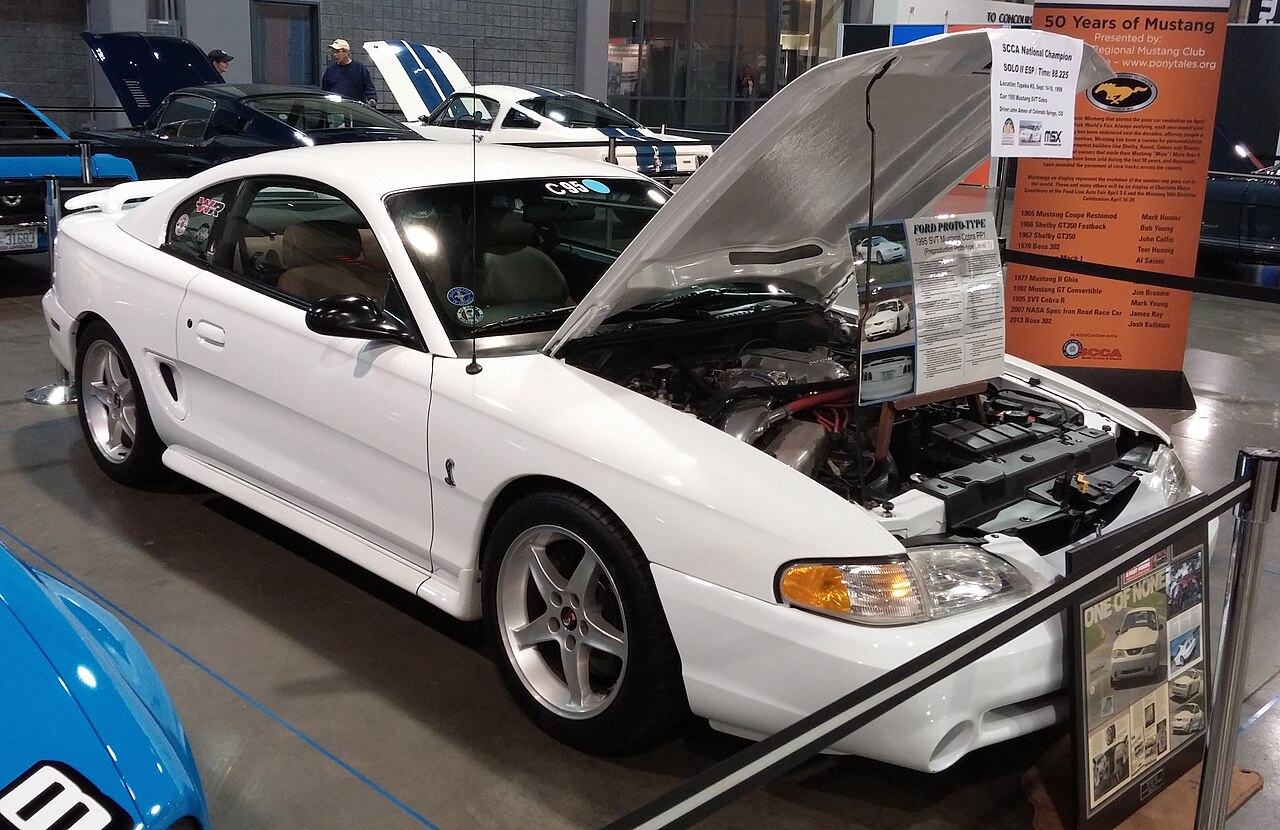
The 1995 Ford Mustang SVT Cobra R carried the competition-focused R idea into the SN-95 body generation with a larger V8. RM Sotheby’s original custodial description records 250 cars and a hand-assembled 351-cubic-inch engine rated at 280 horsepower with a heavy-duty five-speed manual transmission. The article covers that complete original factory specification, keeping it distinct from regular Cobras and from the earlier Fox-body R. The photographed white example appears in a later club and motorsport display. Its specific build number is not inferred from the auction record. Programme identity and specimen identity remain connected but separate levels of the vehicle archive.
Design and engineering
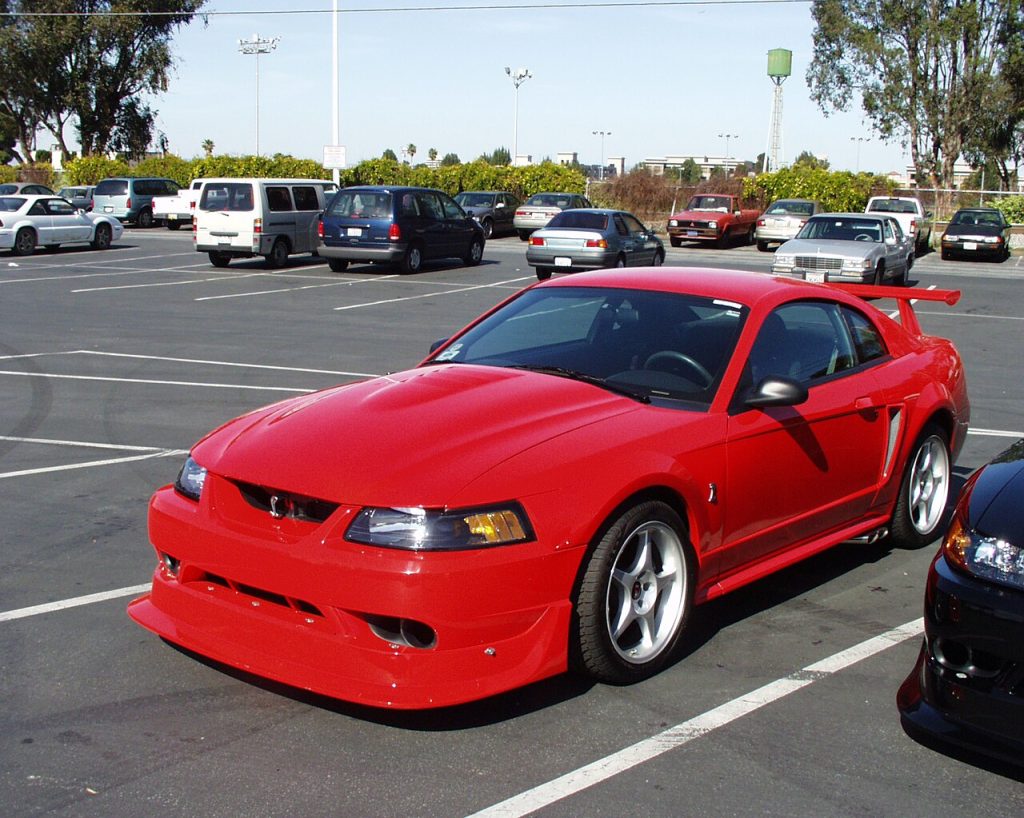
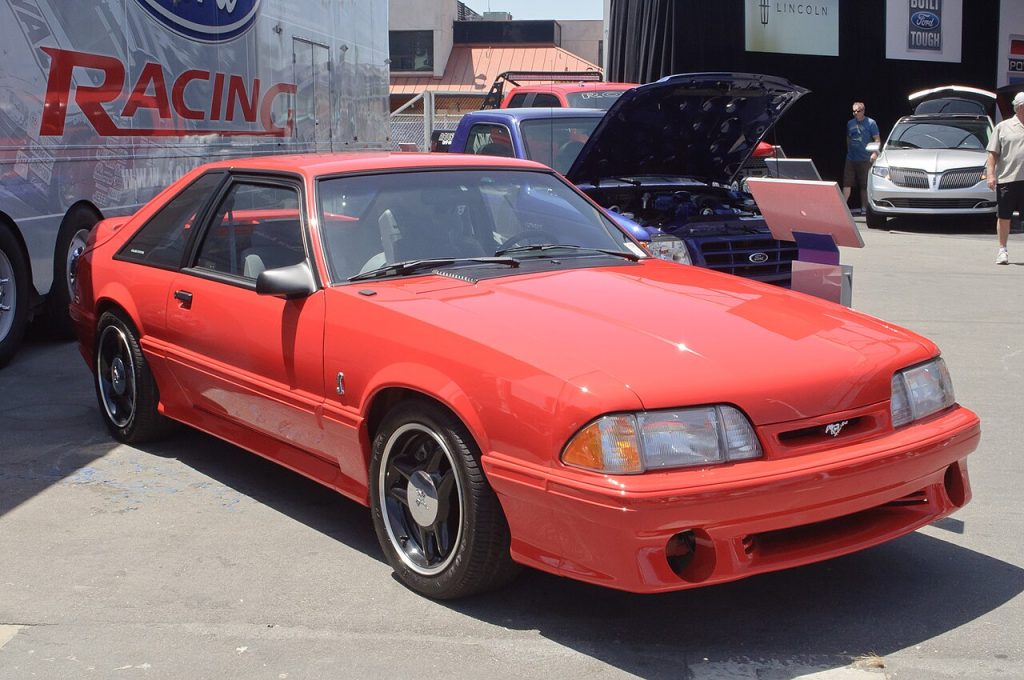
The white coupé combines rounded SN-95 body surfaces with a raised bonnet profile, dark mirrors and a restrained rear spoiler. In the photograph the bonnet is open, letting the engine compartment contribute to the visual explanation. The larger V8 is the documented mechanical distinction, but the photo does not certify an engine number or every installed component’s provenance. Compared with the 1993 R, the body reads as smoother and more sculpted. Compared with the 2000 R, it remains less dominated by external aerodynamic devices. These visible relationships make the three-profile comparison valuable without requiring unsupported statements about lap times or current mechanical condition.
Identifying the original configuration
Use 1995 SVT Cobra R as the complete programme name. A white SN-95 Mustang can share some visible cues without belonging to the original 250-car factory series. The source photograph identifies the displayed car as a 1995 Cobra R, and the custodial record supplies the original programme’s count and mechanical architecture. An individual file should add chassis identity, factory certificate or equivalent build evidence, and any subsequent competition or restoration history. The linked auction example’s number 46, mileage and ownership are not transferred to the photograph. This prevents a model-level source from accidentally becoming a fabricated biography of another car.
Collector context and preservation
The 1995 Cobra R is especially useful in a collection because its engineering change can be explained through a recognisable body evolution. Put the three R images in chronological order, then show how the engine and gearbox packages differ. Preserve the bonnet shape, cabin, wheels and engine-bay layout through dated photography. Where a car has been prepared for competition, record those modifications separately from its factory R specification. The 250-car figure belongs to the whole original named programme, not a claim about surviving unmodified examples. That clear scope lets the profile remain stable while individual cars accumulate new restoration, event and custodial chapters.
Reading the evidence for this profile
The original source links below identify the programme and the historical statements used in this article. The photograph has its own creator and licence record, separate from the manufacturer’s vehicle history. Keep both when transferring this profile into a collection catalogue. A manufacturing tally describes how many cars belong to a defined original programme; it does not measure how many survive, how many are publicly visible, or how many retain all their original components. Those individual questions require dated chassis and restoration evidence. The reference year likewise describes the programme’s introduction or named historic configuration, while the supplied caption states the photographed setting and any established individual identity. This lets future research expand the car’s history without blurring the scope of the record already assembled here.
Specifications and verified rarity
| Reference year | 1995 |
|---|---|
| Model / programme | Mustang SVT Cobra R |
| Body / role | SN-95 competition-focused factory coupé |
| Documented engine | 351 cu in 5.8-litre V8, rated 280 hp in the custodial specification |
| Architecture / transmission | Front engine; rear-wheel drive; heavy-duty five-speed manual |
| Exact manufacturing tally | 250 |
| Eligibility bound | 250 for the documented scope or parent programme |
| Rarity scope | Complete original 1995 SVT Cobra R programme: 250 cars. Distinct factory R specification with 5.8-litre power; not a colour subset of regular Cobras or a regional allocation. Separate from the 1993 and 2000 R programmes. |
| Inventory reference | FRD-243 — Verified |
Frequently asked questions
What is the Ford Mustang SVT Cobra R?
The complete 250-car original 1995 SVT Cobra R programme, combining the SN-95 coupé with 5.8-litre V8 power.
What engineering defines this Ford?
351 cu in 5.8-litre V8, rated 280 hp in the custodial specification. Front engine; rear-wheel drive; heavy-duty five-speed manual. These are the documented programme or preserved-concept specifications. Connect an individual vehicle’s installed components to its own dated records before assigning a factory configuration to that particular example.
Why is 1995 the reference year?
It identifies the introduction or original historical configuration described in this article. The photograph can show a later example or a later display of the original subject. The source inventory’s original heading remains an identity alias wherever the date or model name has been corrected.
How should an individual Mustang SVT Cobra R be documented?
Start with the chassis identity and connect it to dated construction, registration or custodial records. Keep exterior, interior, engine and underbody photographs together. Record changes to finish, equipment and mechanical specification as separate events, so the physical car’s history can grow without changing the definition of the original programme.
What rarity or archive scope is verified?
Complete original 1995 SVT Cobra R programme: 250 cars. Distinct factory R specification with 5.8-litre power; not a colour subset of regular Cobras or a regional allocation. Separate from the 1993 and 2000 R programmes.
Who took the supplied photograph?
Trailers of the East Coast via Wikimedia Commons, under CC BY 2.0. The original file and licence links accompany the image. Retain that credit when the photograph is uploaded, exported or reused.
Related Ford profiles
Sources and photo credits
Photograph: Trailers of the East Coast via Wikimedia Commons original file, CC BY 2.0. Source-provided crop of the photographer’s larger display image; supplied without further local editing. 1995 SVT Cobra R in a later SCCA motorsport display; source-provided crop centred on the white car, with no individual build number assigned.
Built in limited numbers
Complete original 1995 SVT Cobra R programme: 250 cars. Distinct factory R specification with 5.8-litre power; not a colour subset of regular Cobras or a regional allocation. Separate from the 1993 and 2000 R programmes.
Gallery
Specifications
Factory specifications may vary by model year, market and configuration.
Identity & production
- Official model
- Mustang SVT Cobra R