2004 Fiat Trepiùno Concept
Meet the 2004 Fiat Trepiùno concept: compact 3+1 packaging, physical show-car identity, design history and a named public-domain photograph.
The Fiat Trepiùno Concept explored how a very small car could combine familiar visual cues with an adaptable passenger compartment.
History and purpose
The Fiat Trepiùno Concept explored how a very small car could combine familiar visual cues with an adaptable passenger compartment. Fiat presented the concept in 2004, describing a 3.3-metre package and a seating idea expressed by its name: three plus one. The programme belongs to the concept archive rather than to an ordinary showroom trim catalogue. Its physical identity is supported by the original announcement and a documentary motor-show photograph. An exact fabrication tally is left unset, because the available record establishes a presented concept vehicle without providing a complete accounting of every development or display article associated with the project.
Design and engineering
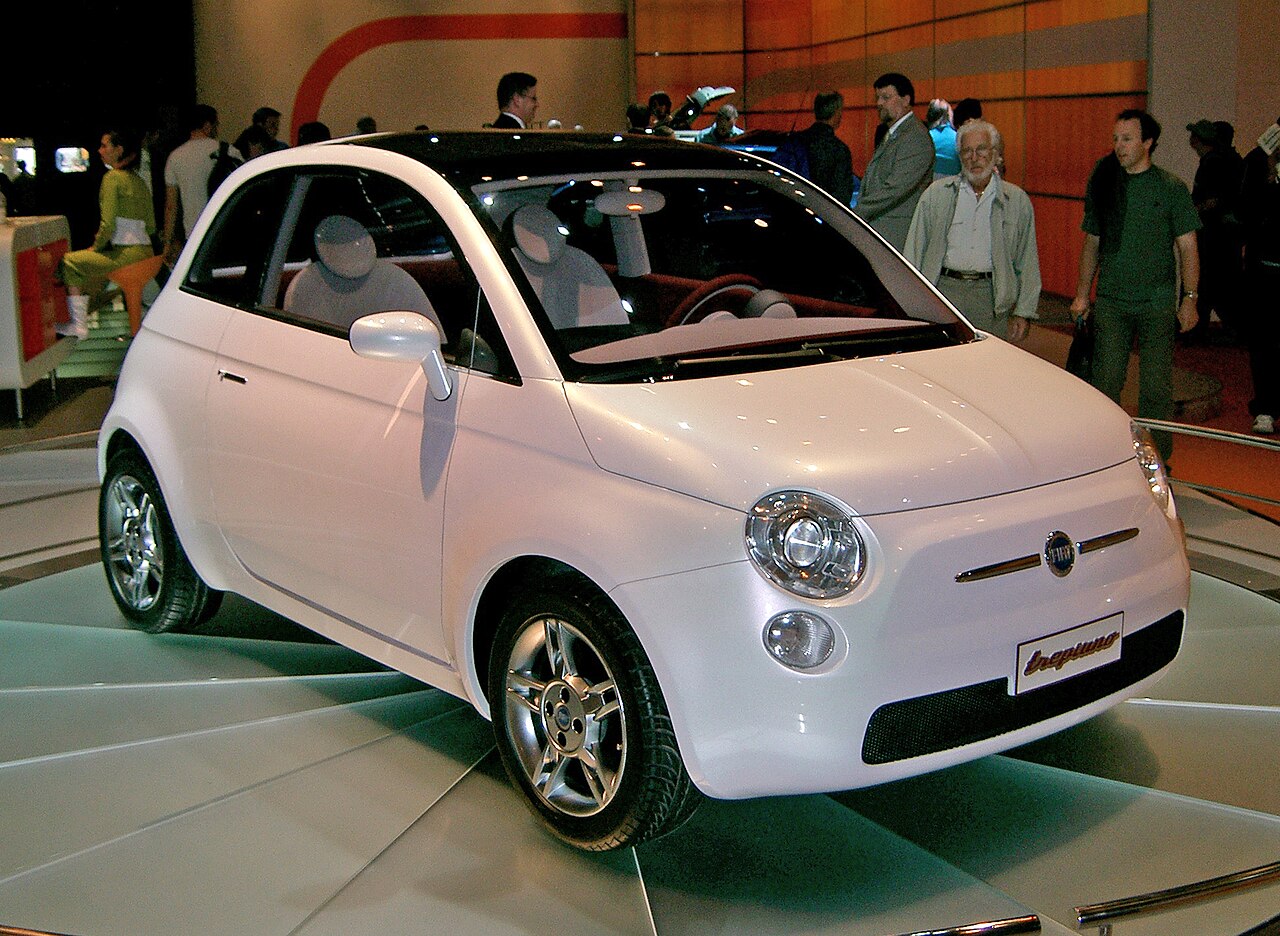
The photograph shows a compact pale body with a rounded nose and a small cabin placed within a tightly gathered outline. The proportions make the package feel approachable, while the concept’s published interior arrangement gives that exterior a specific purpose. The interesting engineering question is how the passenger space could be reorganised within such a short overall length. Fiat’s presentation describes moving and reconfiguring the passenger area, making the concept more than a styling exercise. The supplied exterior view records the physical show subject; it does not reveal every seat movement or establish a production-certified powertrain.
Identifying the original configuration
Trepiùno should retain its accent and original 2004 concept identity wherever the publishing system supports them. It must be distinguished from later production Fiat 500 models and from the much later New 500 3+1 body. Similar seating language does not make those programmes the same vehicle. The photograph records the Trepiùno at the 2004 British International Motor Show in Birmingham, while the original announcement supplies the concept chronology. The manufacturing-total fields remain unset and the profile type is Concept / Archive. This keeps a physically verified show car accessible without labelling the concept as a completed limited-edition production run.
Collector context and preservation
For a collection centred on design development, the Trepiùno is useful because its name, silhouette and cabin idea can be studied together. Preserve show photographs and original presentation material as separate dated evidence, then add interior images when they can be sourced and identified properly. Comparison with the 2011 500 Coupé Zagato reveals a different approach to a compact passenger package, while the 2009 Barbie one-off shows how a production-based shape could become a cultural commission. The Trepiùno’s significance does not require a speculative build count or an invented engine specification. Its documented physical form and clear packaging proposition already support a substantial archive profile.
Reading the evidence for this profile
The original source links below identify the programme and the historical statements used in this article. The photograph has its own creator and licence record, separate from the manufacturer’s vehicle history. Keep both when transferring this profile into a collection catalogue. A manufacturing tally describes how many cars belong to a defined original programme; it does not measure how many survive, how many are publicly visible, or how many retain all their original components. Those individual questions require dated chassis and restoration evidence. The reference year likewise describes the programme’s introduction or named historic configuration, while the supplied caption states the photographed setting and any established individual identity. This lets future research expand the car’s history without blurring the scope of the record already assembled here.
Specifications and verified rarity
| Reference year | 2004 |
|---|---|
| Model / programme | Trepiùno Concept |
| Body / role | Physical compact 3+1-seat concept |
| Documented engineering | Compact concept packaging; 3+1 seating arrangement |
| Architecture / transmission reference | 3.3-metre concept package; individual engine and transmission not certified in this profile |
| Exact manufacturing tally | Not established |
| Eligibility bound | Physical concept archive scope; tally unknown |
| Rarity scope | Documented physical 2004 Fiat Trepiùno show concept, included as an archive subject. Exact fabrication tally is unknown; no serial-production limit or completed manufacturing count is asserted. |
| Inventory reference | FIA-098 — Verified |
Frequently asked questions
What is the Fiat Trepiùno Concept?
Fiat’s physical 2004 compact concept with an adaptable three-plus-one passenger arrangement. Exact fabrication tally remains unknown.
What engineering details are documented?
Compact concept packaging; 3+1 seating arrangement. 3.3-metre concept package; individual engine and transmission not certified in this profile. The specification table identifies the documented model, concept package or explicitly named donor architecture. It does not certify an unseen engine number, individual component condition or a restoration specification from the exterior photograph.
Why is 2004 used in the profile title?
This is the reference year for the original configuration, introduction or public presentation explained in the history section. A photographed example can be younger. Where the supplied inventory used a different date, its original title remains an identity alias so that the same programme is not uploaded twice.
What belongs in an individual vehicle file?
Connect the chassis identity with original configuration records, dated photographs, custodial history and restoration paperwork. Record changes to paint, trim, mechanical components and bodywork as dated events. This profile establishes the named subject and its rarity or physical archive scope; the individual file supplies the history of the particular example.
What rarity or archive scope is verified?
Documented physical 2004 Fiat Trepiùno show concept, included as an archive subject. Exact fabrication tally is unknown; no serial-production limit or completed manufacturing count is asserted.
Who took the supplied photograph?
Shkermaker at English Wikipedia via Wikimedia Commons, under Public domain. The original file and licence links accompany the image. Retain that credit when the photograph is uploaded, exported or reused.
Related Fiat profiles
Sources and photo credits
Photograph: Shkermaker at English Wikipedia via Wikimedia Commons original file, Public domain. Source-provided photograph supplied without local cropping, retouching or text removal. A source thumbnail is used where available. Fiat Trepiùno concept at the 2004 British International Motor Show, Birmingham. Photographer Shkermaker released this image into the public domain.
Built in limited numbers
Documented physical 2004 Fiat Trepiùno show concept, included as an archive subject. Exact fabrication tally is unknown; no serial-production limit or completed manufacturing count is asserted.
Gallery
Specifications
Factory specifications may vary by model year, market and configuration.
Identity & production
- Official model
- Trepiùno Concept