1984 Ferrari 288 GTO
Explore 288 GTO: verified history, design, rarity scope and specifications, with a credited documentary photograph.
The Ferrari GTO introduced in 1984 became widely known as the 288 GTO, a name that helps separate it from the earlier 250 GTO.
History and purpose
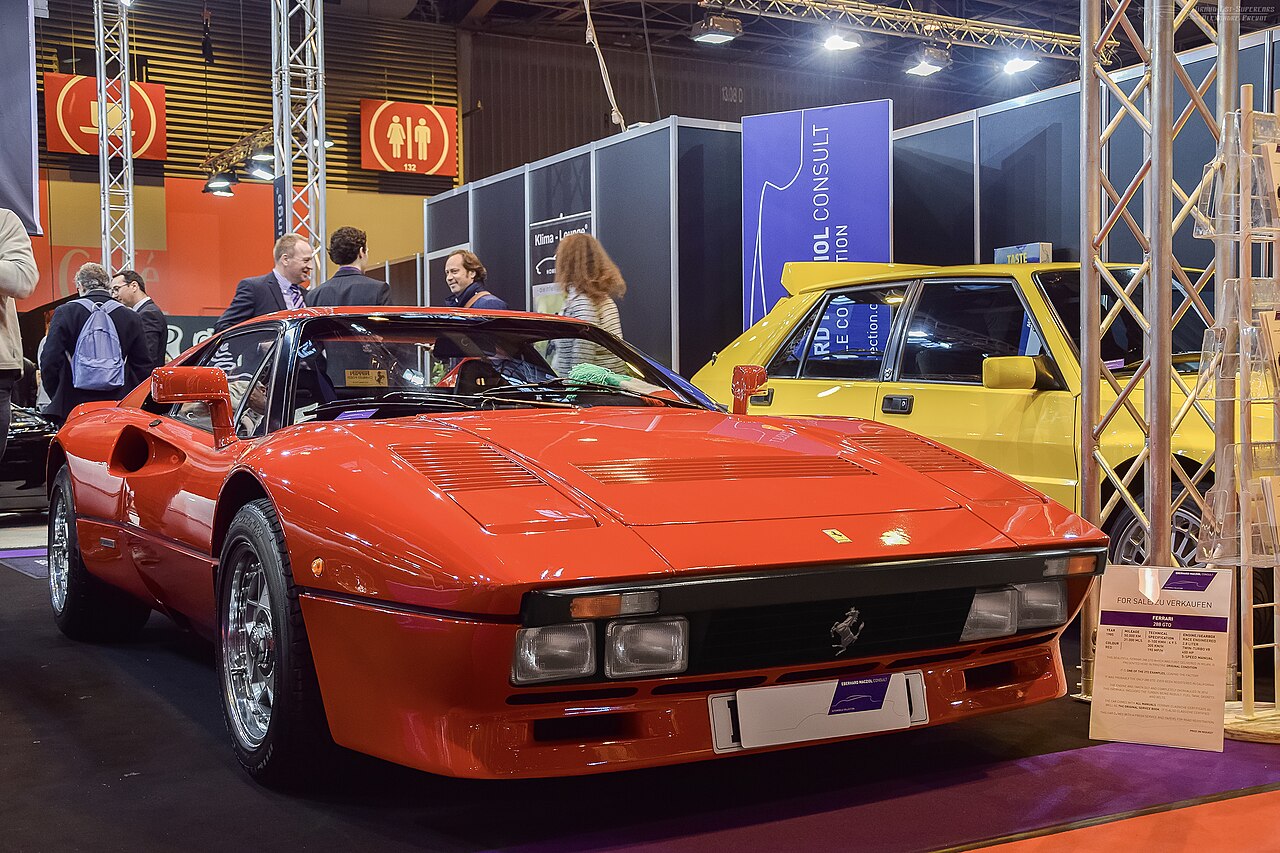
The Ferrari GTO introduced in 1984 became widely known as the 288 GTO, a name that helps separate it from the earlier 250 GTO. Ferrari’s archived model history describes the twin-turbo road car and its connection with the Group B programme. The manufacturer’s GTO Legacy Tour press material records 272 production cars. This profile uses that original road-production scope, excluding development prototypes and the later Evoluzione project. The supplied photograph identifies chassis 52475, also documented in RM Sotheby’s original auction research. That chassis connection gives the GTO image a provenance basis beyond a general resemblance to a modified 308.
Design and engineering
The GTO retains a recognisable relationship with the smaller 308 family, but its engineering arrangement is materially different. Ferrari records a longitudinal rear-mid-mounted twin-turbo V8. The source image shows the named original road car, with its widened body and purposeful ventilation. These exterior features are useful visual references, but the turbo installation and longitudinal layout are verified through the factory record rather than inferred from paint or badges. The photograph’s modern sale setting does not establish present ownership or condition. An individual GTO still needs its chassis, engine and restoration documentation to support claims about original components or current mechanical specification.
Identifying the original configuration
The 272-car tally is the road-production programme. A larger historical number that includes prototypes would answer a different question, and it should not quietly replace the road-series count. Similarly, an Evoluzione is not counted as another standard production GTO in this entry. The inventory name and original chassis reference are preserved together, helping prevent a duplicate page using only the shorter GTO title. A body kit on another Ferrari cannot supply the identity of one of the original cars. For this photograph, the source’s chassis number and the original auction history connect the image to an authentic road-series subject.
Collector context and preservation
The GTO’s importance is not limited to a production number. It shows how a familiar mid-engine Ferrari design language could be reworked around a different drivetrain architecture and a more specialised programme. A collector can compare that relationship with the fixed-roof 308 profile without assuming the two cars share identical chassis or mechanical arrangements. Preserve the original delivery record, engine and gearbox identities, and any later certification or restoration documents for a particular survivor. Past sale descriptions should remain dated historical sources. The article uses them to support chassis identity, leaving current condition to a current inspection. That division keeps the profile accurate as an archive record even when the car changes owner or presentation.
Reading the evidence for this profile
The original source links below identify the programme and the historical statements used in this article. The photograph has its own creator and licence record, separate from the manufacturer’s vehicle history. Keep both when transferring this profile into a collection catalogue. A manufacturing tally describes how many cars belong to a defined original programme; it does not measure how many survive, how many are publicly visible, or how many retain all their original components. Those individual questions require dated chassis and restoration evidence. The reference year likewise describes the programme’s introduction or named historic configuration, while the supplied caption states the photographed setting and any established individual identity. This lets future research expand the car’s history without blurring the scope of the record already assembled here.
Specifications and verified rarity
| Reference year | 1984 |
|---|---|
| Model / programme | 288 GTO |
| Body / role | Twin-turbo V8 limited-production road berlinetta |
| Engine architecture | Longitudinal rear-mid-mounted 2.9-litre twin-turbo V8 |
| Transmission | Five-speed manual |
| Exact manufacturing tally | 272 |
| Eligibility bound | 272 for the documented scope or parent programme |
| Rarity scope | Complete original 272-car GTO road-production series. Development prototypes and later GTO Evoluzione cars are excluded. Photo identifies original road chassis 52475. |
| Inventory reference | FER-116 — Verified |
Frequently asked questions
How many production GTO road cars are recorded?
Ferrari’s GTO Legacy Tour material gives 272.
Are prototypes included in that count?
No. This profile uses the original road-production series and excludes development and Evoluzione cars.
Which chassis is photographed?
The image source identifies 52475, supported by the cited original auction record.
Is its engine mounted like a standard 308 engine?
Ferrari records a longitudinal layout for the GTO, distinct from the transverse architecture of the 308.
What rarity or archive scope is verified?
Complete original 272-car GTO road-production series. Development prototypes and later GTO Evoluzione cars are excluded. Photo identifies original road chassis 52475.
Who took the supplied photograph?
Alexandre Prevot from Nancy, France via Wikimedia Commons, under CC BY-SA 2.0. The original file and licence links accompany the image. Retain that credit when the photograph is uploaded, exported or reused.
Related Ferrari profiles
Sources and photo credits
- Original manufacturer or custodial record
- Ferrari: 272-car GTO production statement
- Original auction provenance: chassis 52475
Photograph: Alexandre Prevot from Nancy, France via Wikimedia Commons original file, CC BY-SA 2.0. Source-provided photograph supplied without local cropping, retouching or text removal. A source thumbnail is used where available. Original Ferrari 288 GTO road car, source-identified as chassis 52475, with its identity supported by an original RM auction record.
Built in limited numbers
Complete original 272-car GTO road-production series. Development prototypes and later GTO Evoluzione cars are excluded. Photo identifies original road chassis 52475.
Gallery
Specifications
Factory specifications may vary by model year, market and configuration.
Identity & production
- Official model
- 288 GTO