1932 Cadillac V-16 Series 452B Dual-Cowl Phaeton
Explore the 1932 Cadillac V-16 Series 452B Dual-Cowl Phaeton: history, design, scoped rarity, collector details, specifications and an authentic photograph.
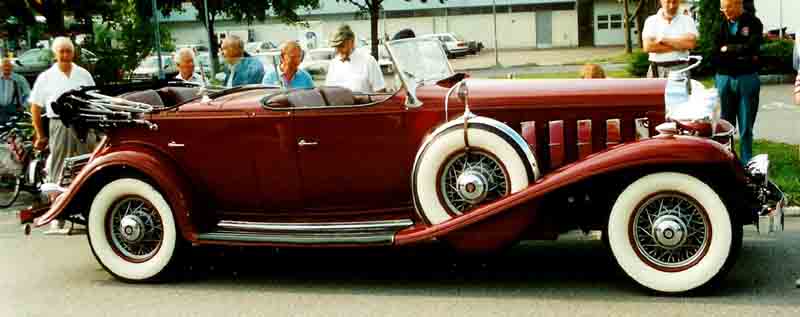
The 1932 Cadillac V-16 Series 452B dual-cowl phaeton gives the later early-Sixteen programme an open touring body with a second passenger cowl. The workbook calls this entry Special Phaeton; the licensed photograph identifies a dual-cowl phaeton. Both labels remain in the record, with the published title following the pictured form and avoiding an unproven exact factory style code.
History, identity and design
The side-oriented photograph makes the body’s arrangement easy to follow. The long bonnet sits ahead of an open passenger area, and a second cowl divides the rear seating space. A side-mounted spare wheel anchors the middle of the silhouette. Red bodywork contrasts with pale tyre sidewalls, bright wheel hardware and darker seats. The cabin remains low when the roof is open, giving the extended chassis a different visual rhythm from a formal limousine. This is a clear example of why body layout deserves as much attention as the engine designation.
The 1932 archival reference lists several phaeton forms and a wider range of V-16 coachwork. Special, Sport and All-Weather should therefore not be collapsed into one supposedly exact production category. The photographed car is labelled Series 452B dual-cowl phaeton, and the inventory’s Special Phaeton wording is retained as an identity alias and research note. The article does not assign the pictured vehicle to a particular Fisher or Fleetwood catalogue code without matching body evidence. That keeps the illustration useful while preserving a visible distinction between body description and catalogue certification.
The engine-number range for the Series 452B supplies a maximum of 300 numbered positions. It supports a small parent programme, but it is not the number of dual-cowl cars made. Unassigned engines, shipping dates and body records can affect a finer production analysis. The exact body tally is accordingly left unset. This is stronger than claiming a low surviving population as a manufacturing count, and it avoids borrowing a special-body total from a similarly named car.
As a design study, the second cowl is the most rewarding detail. It gives the rear occupants their own visual zone while maintaining the open-car connection between front and rear. A collector should preserve evidence for the cowl, screen, seating and roof construction together, especially where restoration has altered bodywork. The selected image remains a documentary view, with people and event surroundings visible. It records the actual body rather than reconstructing a cleaner but less trustworthy historical scene.
Specifications and production scope
| Reference year | 1932 |
|---|---|
| Subject | V-16 Series 452B Dual-Cowl Phaeton |
| Engineering context | V-16 gasoline engine |
| Design focus | The inventory’s Special Phaeton record, reconciled to the pictured body |
| Rarity scope | A conservative ceiling of 300 within the 1932 Series 452B engine-number range. Exact output for this body is not established. Shared parent ceilings are non-additive, and numbered positions are not certified completed body totals. |
| Exact scoped build tally | Unset; see scoped eligibility note |
| Inventory reference | CAD-024 — Verified |
Keeping the collector record useful
A useful V-16 file separates the model story from the life of an individual vehicle. Record the body or edition designation exactly as it appears in matching documents, then keep clear front, side, rear and cabin photographs with the dates attached. Changes made during restoration deserve their own entries, including the reason for the work and the evidence used. That approach lets future readers compare the physical car with this profile without confusing a present appearance, an original factory specification and an attractive historical association.
Documentary photograph
1932 Cadillac V-16 Series 452B Dual-Cowl Phaeton. Documentary model photograph; individual car provenance is certified only where separately stated in the article. The source image was checked for the pictured body or physical project and its file-specific reuse terms. The visible photograph caption links the photographer, original file and licence so the illustration can be traced independently of the article.
Frequently asked questions
Why does the published title say Dual-Cowl Phaeton?
That is the body identified by the individual licensed image. The workbook’s Special Phaeton name is retained as an alias. No precise factory Special Phaeton code is assigned without matching original body evidence.
Were 300 dual-cowl phaetons built?
No such claim is made. Three hundred is the ceiling derived from the complete Series 452B engine-number range. The exact manufacturing tally for the pictured body form remains unset.
What production scope applies to the 1932 V-16 Series 452B Dual-Cowl Phaeton?
A conservative ceiling of 300 within the 1932 Series 452B engine-number range. Exact output for this body is not established. Shared parent ceilings are non-additive, and numbered positions are not certified completed body totals.
What should a collector document on an individual example?
Keep the vehicle’s identification, body or edition evidence, dated photographs and restoration records together. This V-16 profile explains the model subject; ownership, original finish and present condition require records that match the individual car being considered.
Does this profile provide a complete original specification?
The specification table records the supported identity and engineering context for this year. An exterior photograph cannot establish every optional feature or later component change. Preserve any matching build record before adding more precise equipment claims to the V-16 Series 452B Dual-Cowl Phaeton file.
Who took the photograph and how may it be reused?
The bundled image is credited to Lars-Göran Lindgren Sweden, under CC BY-SA 3.0 on its individual Commons file page. Keep the visible named credit and licence link. The supplied source version has no local image edits; background signage and photographer marks remain where present.
Sources
Related Cadillac profiles
Compare the body forms and clearly scoped identities in 1930 Cadillac V-16 Series 452 Convertible Coupe and 1930 Cadillac V-16 Series 452 Imperial Limousine. Each profile keeps its own year, photograph and rarity scope.
Built in limited numbers
A conservative ceiling of 300 within the 1932 Series 452B engine-number range. Exact output for this body is not established. Shared parent ceilings are non-additive, and numbered positions are not certified completed body totals.
Gallery
Specifications
Factory specifications may vary by model year, market and configuration.
Identity & production
- Official model
- V-16 Series 452B Dual-Cowl Phaeton