1930 Cadillac V-16 Series 452 Imperial Limousine
Explore the 1930 Cadillac V-16 Series 452 Imperial Limousine: history, design, scoped rarity, collector details, specifications and an authentic photograph.
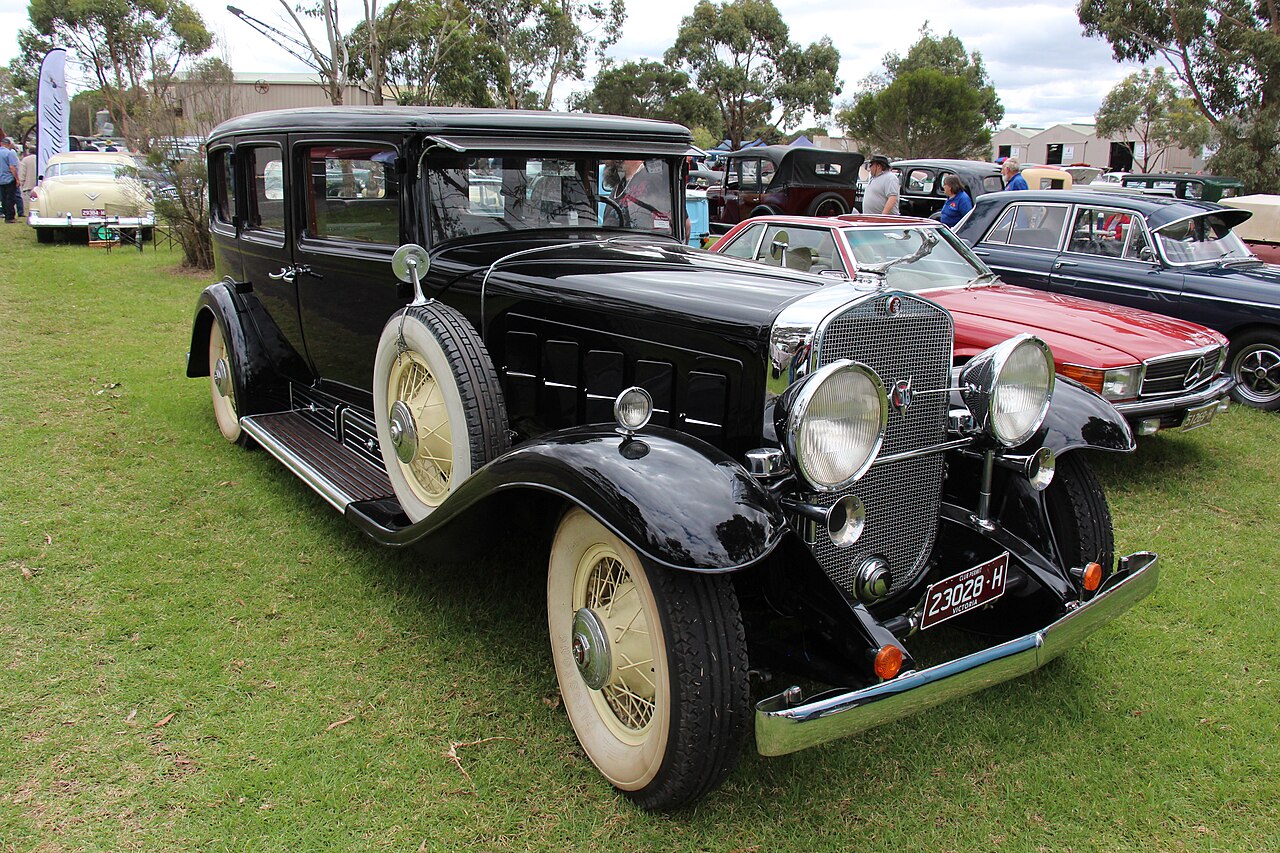
The 1930 Cadillac V-16 Series 452 Imperial limousine expresses the early sixteen-cylinder programme through a long closed passenger body. Its roof, upright windows and substantial rear compartment carry a formal character that open V-16s do not share. This profile treats Imperial limousine coachwork as the subject, with the illustrated Series 452 limousine kept distinct from roadsters, phaetons and the separate Madame X record.
History, identity and design
The supplied photograph shows the limousine’s massing clearly. A long bonnet leads to an upright windshield and a high, continuous roof. Behind the driver, the cabin extends into a substantial rear passenger volume. Bright window surrounds give that enclosed body a strong outline, while the dark panels visually join the doors and rear quarters. This is a useful example of how a luxury car can communicate formality without a performance pose. Its scale comes from the relationship between the engine compartment, the roof and the generous closed body.
Within the V-16 programme, the mechanical identity and the passenger arrangement should be read separately. The early Series 452 provides the sixteen-cylinder foundation, while Imperial and limousine vocabulary concerns the organization of the body and compartments. The archival body listings make clear that Cadillac offered numerous closed forms, including variations that can look similar from outside. A side photograph cannot certify a partition or every auxiliary seat. This record therefore avoids assigning an unproven precise Fleetwood style number to the photographed car simply because its overall limousine shape is recognizable.
Look closely at the spare-wheel placement and the way the fenders remain separate from the main body. The spare interrupts the long flank near the front door, while the curved wings emphasize the wheels as distinct objects. The roof remains comparatively calm above those busy lower details. As visual interpretation, that contrast helps the limousine appear composed despite the amount of ornament around its front end. The early V-16’s attraction is partly this balance: an imposing mechanical front, an orderly passenger enclosure and carefully bounded bright details between them.
A formal Cadillac’s collection history should preserve its actual interior layout. A partition, jump seats, upholstery arrangement or later conversion can change the meaning of its body designation. That is especially relevant when a restored car is advertised with a broad limousine label. This profile supplies a model photograph and the parent-series rarity bound, leaving the exact Imperial body total unresolved. It also leaves celebrity and presidential associations out unless they can be tied to a specific chassis. The formal coachwork already provides a strong story without transferring provenance from another famous V-16.
Specifications and production scope
| Reference year | 1930 |
|---|---|
| Subject | V-16 Series 452 Imperial Limousine |
| Engineering context | 452-cubic-inch overhead-valve V-16 |
| Design focus | The formal closed-body V-16 |
| Rarity scope | A conservative ceiling of 3,251 within the combined early Series 452/452A V-16 engine-number programme. Exact output for this body is not established. Shared parent ceilings are non-additive, and numbered positions are not certified completed body totals. |
| Exact scoped build tally | Unset; see scoped eligibility note |
| Inventory reference | CAD-016 — Verified |
Keeping the collector record useful
A useful V-16 file separates the model story from the life of an individual vehicle. Record the body or edition designation exactly as it appears in matching documents, then keep clear front, side, rear and cabin photographs with the dates attached. Changes made during restoration deserve their own entries, including the reason for the work and the evidence used. That approach lets future readers compare the physical car with this profile without confusing a present appearance, an original factory specification and an attractive historical association.
Documentary photograph
1930 Cadillac V-16 Series 452 Imperial Limousine. Documentary model photograph; individual car provenance is certified only where separately stated in the article. The source image was checked for the pictured body or physical project and its file-specific reuse terms. The visible photograph caption links the photographer, original file and licence so the illustration can be traced independently of the article.
Frequently asked questions
Does this photograph certify a particular Fleetwood style?
The source identifies a 1930 Series 452 V-16 limousine, and its closed body is visible. A precise body code, interior partition arrangement or original build-sheet specification is not certified by this exterior image alone.
Is every V-16 limousine a Madame X?
No. Madame X concerns a particular coachwork family and its identifying details. A long roof, bright window surrounds or a sixteen-cylinder engine does not by itself prove that designation. The separate inventory subject requires its own matching body evidence.
What production scope applies to the 1930 V-16 Series 452 Imperial Limousine?
A conservative ceiling of 3,251 within the combined early Series 452/452A V-16 engine-number programme. Exact output for this body is not established. Shared parent ceilings are non-additive, and numbered positions are not certified completed body totals.
What should a collector document on an individual example?
Keep the vehicle’s identification, body or edition evidence, dated photographs and restoration records together. This V-16 profile explains the model subject; ownership, original finish and present condition require records that match the individual car being considered.
Does this profile provide a complete original specification?
The specification table records the supported identity and engineering context for this year. An exterior photograph cannot establish every optional feature or later component change. Preserve any matching build record before adding more precise equipment claims to the V-16 Series 452 Imperial Limousine file.
Who took the photograph and how may it be reused?
The bundled image is credited to Sicnag, under CC BY 2.0 on its individual Commons file page. Keep the visible named credit and licence link. The supplied source version has no local image edits; background signage and photographer marks remain where present.
Sources
- Cadillac Database archival reference
- Cadillac Database archival reference
- Photograph: 1930 Cadillac Series 452 V16 Limousine (26573772266).jpg
Related Cadillac profiles
Compare the body forms and clearly scoped identities in 1930 Cadillac V-16 Series 452 Convertible Coupe and 1930 Cadillac V-16 Series 452 Roadster. Each profile keeps its own year, photograph and rarity scope.
Built in limited numbers
A conservative ceiling of 3,251 within the combined early Series 452/452A V-16 engine-number programme. Exact output for this body is not established. Shared parent ceilings are non-additive, and numbered positions are not certified completed body totals.
Gallery
Specifications
Factory specifications may vary by model year, market and configuration.
Identity & production
- Official model
- V-16 Series 452 Imperial Limousine