1931 Cadillac V-12 Series 370A Dual-Cowl Phaeton
Explore the 1931 Cadillac V-12 Series 370A Dual-Cowl Phaeton: history, design, scoped rarity, collector details, specifications and an authentic photograph.
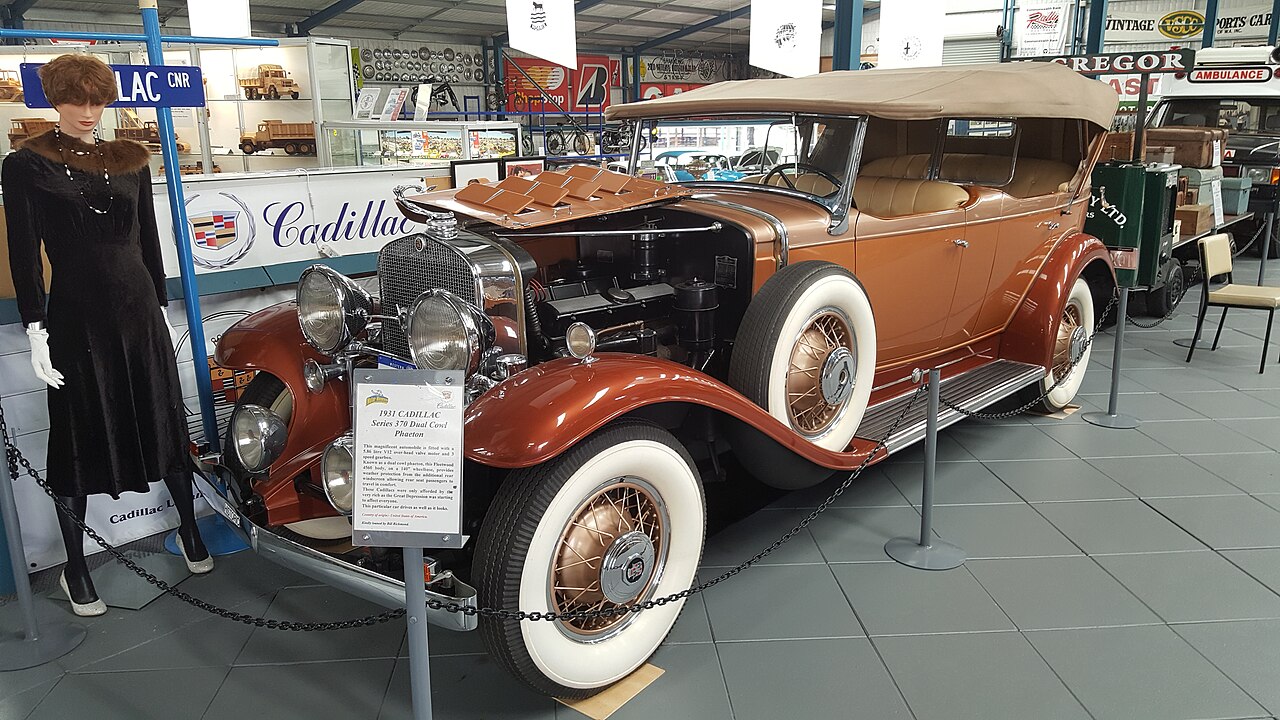
The 1931 Cadillac V-12 Series 370A dual-cowl phaeton makes passenger separation part of an open-car design. A second cowl gives the rear seating area its own visual boundary, while the long bonnet and upright radiator retain a formal Cadillac presence. The museum photograph identifies the Series 370 subject directly, rather than substituting a superficially similar V-16.
History, identity and design
The selected car is displayed with its roof raised, which makes the distinction between cabin shelter and the open-body structure worth studying. The bonnet projects ahead of a tall passenger body, and the spare wheel sits alongside it. Warm brown paint, pale roof fabric and bright wheel rims divide the silhouette into clear parts. The photograph’s museum setting retains a mannequin and display board, so the actual viewing circumstances remain visible. These elements are background evidence, not graphics that have been pasted over the vehicle.
The dual-cowl idea gives this phaeton a particular passenger narrative. Instead of one uninterrupted open seating space, the rear occupants are associated with another body division. That distinction helps explain why a general phaeton image is not automatically adequate for this entry. The cowl and seating structure need to match. Similarly, the V-12 identity must remain separate from the V-16 cars that share a broadly comparable period appearance. Cylinder count is not something to infer from bonnet length or concours status alone.
The archival engine-number range for the early Series 370 programme provides a ceiling below the collection’s rarity limit. This is a deliberately conservative scope: a bounded parent range, not a certified dual-cowl body tally. It also spans the programme’s stated 1930–31 range rather than claiming that all those engines belong to the specific photographed car’s year. That distinction permits a clear rarity statement while leaving finer manufacturing questions open to build-sheet research.
Seen as design, the phaeton offers a useful middle ground between the intimate roadster and the enclosed limousine. It has a substantial passenger presence without enclosing every occupant behind a long uninterrupted roof and fixed body sides. A collection file should preserve the second cowl’s construction, windshield details and body identification alongside engine evidence. Those details help explain the car’s real form. Present condition and restoration quality require individual inspection; the museum photograph records a model example rather than certifying every original material or later workshop decision.
Specifications and production scope
| Reference year | 1931 |
|---|---|
| Subject | V-12 Series 370A Dual-Cowl Phaeton |
| Engineering context | V-12 gasoline engine |
| Design focus | An open touring body with a second cowl |
| Rarity scope | A conservative ceiling of 5,733 within the 1930–31 Series 370 V-12 engine-number range. Exact output for this body is not established. Shared parent ceilings are non-additive, and numbered positions are not certified completed body totals. |
| Exact scoped build tally | Unset; see scoped eligibility note |
| Inventory reference | CAD-021 — Verified |
Keeping the collector record useful
A useful V-12 file separates the model story from the life of an individual vehicle. Record the body or edition designation exactly as it appears in matching documents, then keep clear front, side, rear and cabin photographs with the dates attached. Changes made during restoration deserve their own entries, including the reason for the work and the evidence used. That approach lets future readers compare the physical car with this profile without confusing a present appearance, an original factory specification and an attractive historical association.
Documentary photograph
1931 Cadillac V-12 Series 370A Dual-Cowl Phaeton. Documentary model photograph; individual car provenance is certified only where separately stated in the article. The source image was checked for the pictured body or physical project and its file-specific reuse terms. The visible photograph caption links the photographer, original file and licence so the illustration can be traced independently of the article.
Frequently asked questions
What does dual-cowl describe?
It describes the additional body division associated with the rear passenger area. Matching that arrangement is important when selecting an image. A generic open Cadillac photograph is not sufficient evidence for a dual-cowl body designation.
Is this a V-16 photograph?
The individual museum image record identifies a 1931 Series 370 dual-cowl phaeton. It is used for the V-12 subject. The related V-16 entries have separate photographs and their own engine-programme scope.
What production scope applies to the 1931 V-12 Series 370A Dual-Cowl Phaeton?
A conservative ceiling of 5,733 within the 1930–31 Series 370 V-12 engine-number range. Exact output for this body is not established. Shared parent ceilings are non-additive, and numbered positions are not certified completed body totals.
What should a collector document on an individual example?
Keep the vehicle’s identification, body or edition evidence, dated photographs and restoration records together. This V-12 profile explains the model subject; ownership, original finish and present condition require records that match the individual car being considered.
Does this profile provide a complete original specification?
The specification table records the supported identity and engineering context for this year. An exterior photograph cannot establish every optional feature or later component change. Preserve any matching build record before adding more precise equipment claims to the V-12 Series 370A Dual-Cowl Phaeton file.
Who took the photograph and how may it be reused?
The bundled image is credited to ZidaneHartono, under CC BY-SA 4.0 on its individual Commons file page. Keep the visible named credit and licence link. The supplied source version has no local image edits; background signage and photographer marks remain where present.
Sources
- Cadillac Database archival reference
- Photograph: 1931 Cadillac Series 370 Dual Cowl Phaeton @ Motor Museum of WA.jpg
Related Cadillac profiles
Compare the body forms and clearly scoped identities in 1931 Cadillac V-12 Series 370A Roadster and 1930 Cadillac V-16 Series 452 Sport Phaeton. Each profile keeps its own year, photograph and rarity scope.
Built in limited numbers
A conservative ceiling of 5,733 within the 1930–31 Series 370 V-12 engine-number range. Exact output for this body is not established. Shared parent ceilings are non-additive, and numbered positions are not certified completed body totals.
Gallery
Specifications
Factory specifications may vary by model year, market and configuration.
Identity & production
- Official model
- V-12 Series 370A Dual-Cowl Phaeton