1956 Buick Centurion Concept
Explore the 1956 Buick Centurion Concept: sourced history, rarity, specifications, six FAQs and authentic photographs with visible credits.
1956 Buick Centurion Concept brings a documented physical design experiment into Buick’s history. This profile explains its history, specification, production scope and collector significance with named sources and credited photographs.
Record: BUI-039 · Buick · 1956 · Archive.
1956 Buick Centurion Concept: history and background
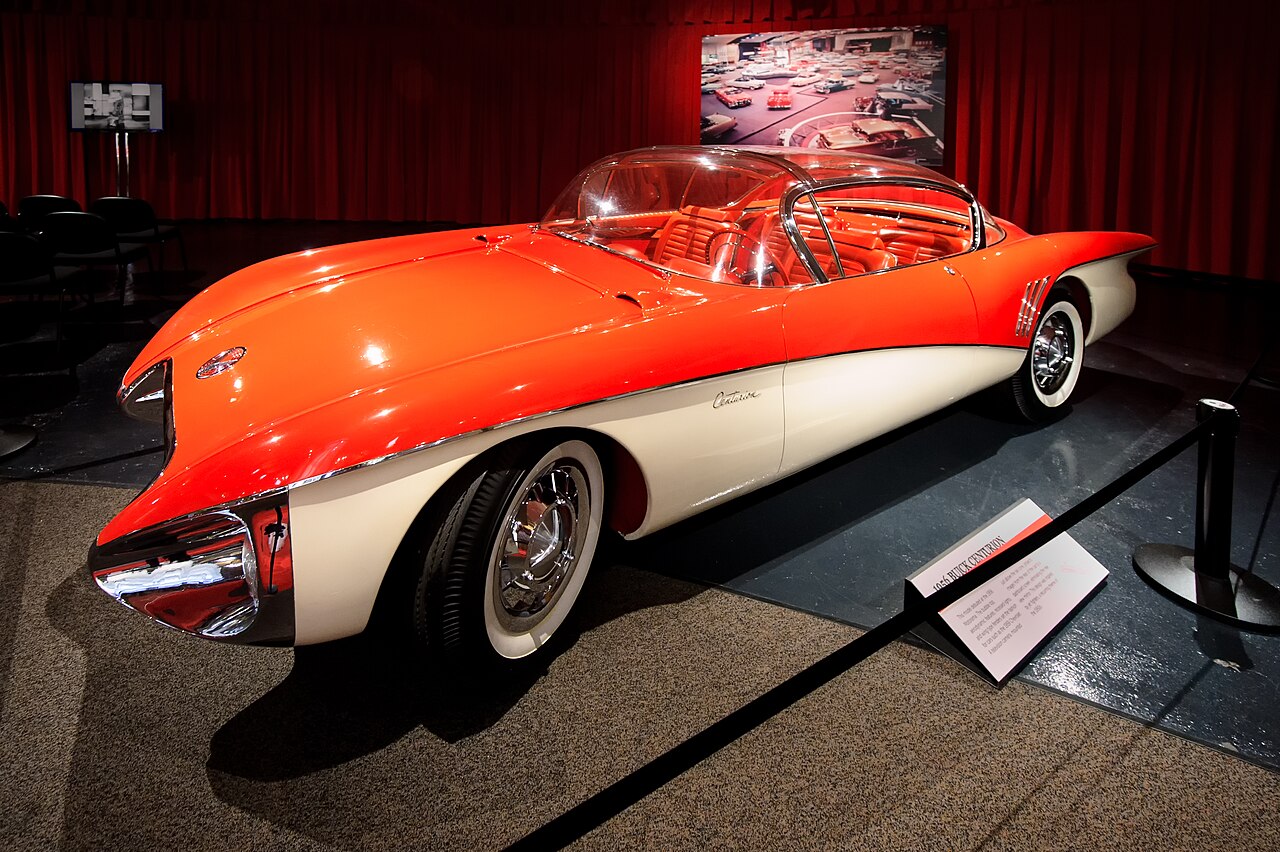
The 1956 Centurion is a Buick dream car whose futuristic cabin remains immediately recognisable. Sloan Museum’s curatorial discussion presents it as a physical collection vehicle and explains its design history. This profile concerns that original show car, not the full-size production Centurion introduced in the 1970s.
Specifications and production scope
| Item | Documented reference |
|---|---|
| Production scope | One original physical 1956 Centurion show car; the later production Centurion series is separate. |
| Reference year | 1956 |
| Factory/model identity | Centurion Concept |
| Body | Bubble-canopy experimental show car |
| Engine | Experimental Buick V8 installation; individual concept configuration |
| Manufacturer / origin | Buick / United States |
| Inventory reference | BUI-039 — Verified |
| Source basis | Manufacturer, museum, period literature or named historical reference; production qualifications retained below |
Design and engineering
The clear canopy and sharply contrasting body treatment were intended to attract attention while presenting a different view of passenger space. A rear-view television-camera arrangement is one of the study’s most frequently discussed innovations. It belongs in the history of the concept’s proposals, rather than being described as a standard safety feature offered to Buick customers in 1956.
Model identity and rarity
The one-original-car scope refers to the documented show vehicle. Images should show its distinctive canopy and body, not a later Centurion convertible selected solely because it shares the name. Historical demonstration, later preservation and present operating condition are also separate questions. A collection photograph cannot certify that every experimental system currently works as originally intended.
Collector significance
The Centurion is significant for the way Buick explored vision, cabin design and dramatic presentation in a single physical object. Read with the XP-300 and Wildcat II, it shows several different approaches to the dream car. The strongest account explains those distinctions and keeps the original concept’s provenance visible, without treating a later production nameplate as another example of the same automobile.
Compare related verified Buick profiles
Read this 1956 Centurion Concept beside the 1951 Buick XP-300 Concept and 1954 Buick Wildcat II Concept to place its bubble-canopy experimental show car in context. The related entries retain their own years, model identities and production scopes, so their figures are not added to this record.
Frequently asked questions
Is this the 1970s Buick Centurion?
No. This profile covers the original 1956 show car, separate from the later customer-model series.
What is distinctive about its cabin?
The clear bubble canopy gives the concept an unusually open visual relationship between cabin and body.
Did the concept explore a rear-view camera?
Yes. The curatorial history discusses the rear-view television-camera arrangement as an experimental feature of the study.
Why is the Centurion Concept included as a rare Buick?
One original physical 1956 Centurion show car; the later production Centurion series is separate. The scope is tied to this specific year, body or original project. It does not confer the same rarity on every car carrying the broader Buick Concepts name, and it does not describe how many survive today.
What records help identify an individual Centurion Concept?
Begin with the documented year and bubble-canopy experimental show car. Read the original model/body identification and surviving factory or collection records together. Record replacement components and restoration work separately. For a concept or racing car, its physical-car provenance is especially important; for an optioned production model, retain the equipment paperwork.
What photographs and credits accompany this profile?
The bundled photograph is retrieved from named Wikimedia Commons file records. Each image has a visible photographer or archive credit, its own licence link and an accurate subject caption. The pictures illustrate the documented model; they do not establish ownership, present condition or every component’s originality.
Sources and photo credits
Production figures retain the scope and qualifications of the named references. Manufacturer and museum records establish project identity; auction and historical model references supply additional body-specific context.
- Sloan Museum Discover Uncover — 1956 Centurion, curator Geoff Woodcox
- Sloan Museum — Centurion collection vehicle identification
Photo: Eric Kilby from Somerville, MA, USA / Wikimedia Commons · CC BY-SA 2.0. No local cropping, retouching or content removal. A source-supplied size variant is used where available.
Why this machine matters
The Centurion is significant for the way Buick explored vision, cabin design and dramatic presentation in a single physical object. Read with the XP-300 and Wildcat II, it shows several different approaches to the dream car. The strongest account explains those distinctions and keeps the original concept’s provenance visible, without treating a later production nameplate as another example of the same automobile.
Built in limited numbers
One original physical 1956 Centurion show car; the later production Centurion series is separate.
Gallery
Specifications
Factory specifications may vary by model year, market and configuration.
Identity & production
- Official model
- Centurion Concept
- Base model
- Buick Concepts
Powertrain & performance
- Engine
- Experimental Buick V8 installation; individual concept configuration