1951 Buick XP-300 Concept
Explore the 1951 Buick XP-300 Concept: sourced history, rarity, specifications, six FAQs and authentic photographs with visible credits.
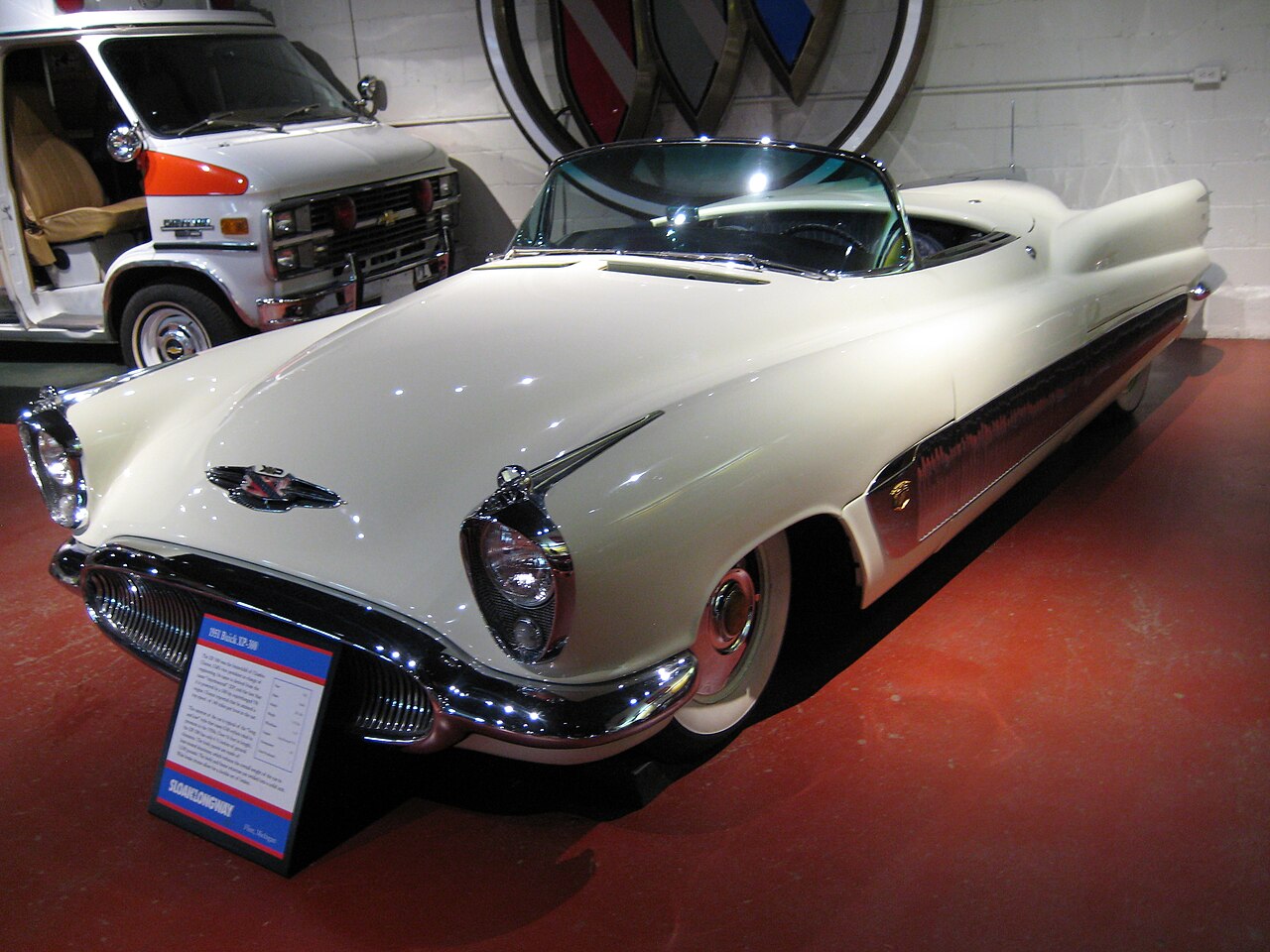
1951 Buick XP-300 Concept brings a documented physical design experiment into Buick’s history. This profile explains its history, specification, production scope and collector significance with named sources and credited photographs.
Record: BUI-031 · Buick · 1951 · Archive.
1951 Buick XP-300 Concept: history and background
The XP-300 was a complete experimental Buick developed around the ambitions of GM engineering executive Charles Chayne. The Sloan Museum’s curator account describes a single original car, with a supercharged V8 and a long, low body. Its name links “experimental” with the engine’s more-than-300-horsepower output, rather than a customer model-series number.
Specifications and production scope
| Item | Documented reference |
|---|---|
| Production scope | One original Buick XP-300 experimental car; GM Le Sabre is a separate project. |
| Reference year | 1951 |
| Factory/model identity | XP-300 Concept |
| Body | Two-seat experimental convertible |
| Engine | Experimental supercharged V8; museum reference rating 335 hp |
| Manufacturer / origin | Buick / United States |
| Inventory reference | BUI-031 — Verified |
| Source basis | Manufacturer, museum, period literature or named historical reference; production qualifications retained below |
Design and engineering
The body used heat-treated aluminium, and its low silhouette gave Buick’s engineering ideas a vivid public form. The museum account specifies a 116-inch wheelbase and approximately 3,125 pounds. It also describes wide brake drums and a structure in which body and frame were joined. These are prototype details, not specifications promised across an unseen production run.
Model identity and rarity
The XP-300 and the GM Le Sabre are often mixed together in online captions because they were contemporary experimental cars. They have different identities and appearances. This profile follows the Buick XP-300 and its museum provenance. A Le Sabre photograph must not be substituted for it, and a shared engineering relationship does not make the two names interchangeable.
Collector significance
The original car’s significance lies in making experimental engineering visible in an automobile that could be demonstrated. Chayne’s reported speed claim remains a historical claim, not a measured performance result for every later display condition. The credited museum photograph shows the physical XP-300, while the curator account explains its purpose and preserves the boundary between prototype development and customer production.
Compare related verified Buick profiles
Read this 1951 XP-300 Concept beside the 1938 Buick Y-Job and 1954 Buick Wildcat II Concept to place its two-seat experimental convertible in context. The related entries retain their own years, model identities and production scopes, so their figures are not added to this record.
Frequently asked questions
How many XP-300s were built?
The museum’s published reference details identify one original experimental Buick XP-300.
Is it the GM Le Sabre?
No. The two contemporary experimental projects are distinct, despite their engineering connections and frequent misidentification online.
What output does the museum give?
The curator-linked museum details give 335 horsepower for the experimental supercharged V8, a period prototype rating.
Why is the XP-300 Concept included as a rare Buick?
One original Buick XP-300 experimental car; GM Le Sabre is a separate project. The scope is tied to this specific year, body or original project. It does not confer the same rarity on every car carrying the broader Buick Concepts name, and it does not describe how many survive today.
What records help identify an individual XP-300 Concept?
Begin with the documented year and two-seat experimental convertible. Read the original model/body identification and surviving factory or collection records together. Record replacement components and restoration work separately. For a concept or racing car, its physical-car provenance is especially important; for an optioned production model, retain the equipment paperwork.
What photographs and credits accompany this profile?
The bundled photograph is retrieved from named Wikimedia Commons file records. Each image has a visible photographer or archive credit, its own licence link and an accurate subject caption. The pictures illustrate the documented model; they do not establish ownership, present condition or every component’s originality.
Sources and photo credits
Production figures retain the scope and qualifications of the named references. Manufacturer and museum records establish project identity; auction and historical model references supply additional body-specific context.
- Sloan Museum curator Jeremy Dimick — XP-300, recorded interview and museum specifications
- Buick Car Club of Australia — XP-300 and Le Sabre, factory project history
Photo: JOHN LLOYD from Concrete, Washington, United States / Wikimedia Commons · CC BY 2.0. No local cropping, retouching or content removal. A source-supplied size variant is used where available.
Why this machine matters
The original car’s significance lies in making experimental engineering visible in an automobile that could be demonstrated. Chayne’s reported speed claim remains a historical claim, not a measured performance result for every later display condition. The credited museum photograph shows the physical XP-300, while the curator account explains its purpose and preserves the boundary between prototype development and customer production.
Built in limited numbers
One original Buick XP-300 experimental car; GM Le Sabre is a separate project.
Gallery
Specifications
Factory specifications may vary by model year, market and configuration.
Identity & production
- Official model
- XP-300 Concept
- Base model
- Buick Concepts
Powertrain & performance
- Engine
- Experimental supercharged V8; museum reference rating 335 hp