Aston Martin Victor
The Victor is a unique Q by Aston Martin commission, combining a V12 with a manual gearbox in a distinctive individual car. Its 2020 concours appearance establishes a useful archive reference, while later manufacturer releases confirm its one-off identity. This profile prioritises the physical commission and its evidence over unsupported performance or ownership claims.
The Victor is a unique Q by Aston Martin commission, combining a V12 with a manual gearbox in a distinctive individual car. Its 2020 concours appearance establishes a useful archive reference, while later manufacturer releases confirm its one-off identity. This profile prioritises the physical commission and its evidence over unsupported performance or ownership claims.
Aston Martin Victor at a glance
| Manufacturer | Aston Martin |
|---|---|
| Model / family | Q Commission |
| Profile scope | Unique Q commission |
| Historical reference year | 2020 |
| Inventory reference | AST-154 |
| Original series total | 1 — One unique named Q commission, not a retail series |
| Historical engine reference | V12; detailed primary technical specification unresolved |
An individual commission rather than a numbered series
Aston Martin describes Victor as a one-of-a-kind Q creation. The subject is therefore a particular physical car, not a retail model series whose total can be extrapolated from an order book. That changes the editorial approach: establish the commission’s identity, record its appearances and distinguish historical statements from present condition. A unique object can carry an extensive story, but uniqueness should not be used as permission to fill gaps with assumptions about ownership, specification or events that have not been substantiated.
Rarity: the unique Victor commission
The manufacturer’s later releases explicitly identify the one-off Victor. The count recorded here is one unique commission, with that object scope kept visible. It is not an additional member of a separately counted limited edition and should not be added to unrelated Q programmes. A future reference to another bespoke car with similar styling would require its own identity review. The useful rarity statement concerns this named commission, without implying that every component or design idea exists only once.
What primary sources confirm mechanically
The factory Goodwood release confirms a V12 and manual gearbox. This guide keeps technical claims at that supported level instead of assigning widely repeated output figures that have not been reconciled with a retrieved primary specification. That restraint does not diminish the car’s significance. It makes the evidence boundary clear and gives a future editor a concrete place to add a source-backed technical record. Precise displacement, gearing and measured performance should be tied to the commission’s own authoritative documentation.
The photographed 2020 concours appearance
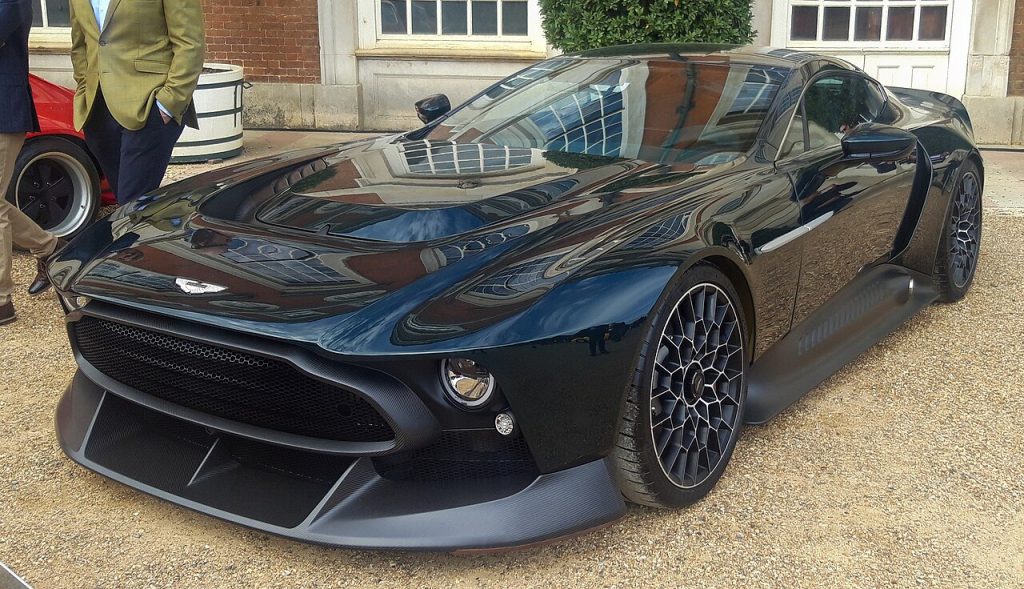
The licensed photograph records the source-identified Victor at the London Concours of Elegance in September 2020. Its capture date provides a dated visual record of the car’s appearance. It does not, by itself, establish when every stage of the commission was completed or identify the person who commissioned it. The profile uses 2020 as its historical reference year for that appearance. Separating a documented event from an inferred engineering timeline keeps the archive useful when more precise factory records become available.
Design character in a one-off vehicle
The Victor’s shape can be discussed as a visual reading of the photographed car: its broad stance, assertive front and individual proportions make a strong impression. That is different from attributing every line to a particular historical influence without a supporting design record. In a collector file, keep contemporary factory commentary beside dated images. A careful distinction between observed form and documented design intent allows an engaging account while avoiding a narrative assembled entirely from resemblance to other famous cars.
Q lineage and other bespoke programmes
The DBR22 announcement refers to Victor within the history of Q projects. That context helps readers understand the manufacturer’s ability to create bespoke vehicles, but each project has its own count, brief and identity. Linking the profile with the Speedster or V600 can make the broader archive easier to navigate. Do not transfer their engine outputs, production methods or road approval assumptions to Victor. The comparison should explain the variety of commissions, leaving the unique car’s specification attached to its own records.
A manual gearbox as part of the commission’s character
The confirmed manual configuration is central to the car’s identity. An editorial reading can discuss the way an individual commission makes room for a chosen driving format, without claiming a specific road-test sensation. The guide has not driven the car. A future technical account should separate factory design intentions, a reviewer’s experience and measured data. Those categories can complement one another, but they should not be presented as interchangeable evidence or transformed into an unsupported superlative about all manual cars.
Condition records for an irreplaceable specification
For a one-off, repair documentation deserves particular care because the original configuration may not be described by an ordinary retail parts catalogue. An inspection should connect each observation with the actual car and, where possible, the commission records. Retain repair invoices, explanations and photographs of work in progress. A statement that a replacement was authorised is more useful when the relevant evidence accompanies it. This is conservation-oriented editorial guidance rather than a finding that Victor has suffered any particular repair or defect.
Appearances do not establish present custody
A dated event photograph or a manufacturer display announcement establishes an appearance at a particular time. It should not be extended into a claim about current ownership or location. This is especially important for a unique car, where readers may assume every image describes its latest condition. Caption the event and keep present custody unassigned unless a new authoritative record supplies it. A time-ordered appearance file can be valuable without publishing private information or pretending to be a live ownership register.
Using the Victor image as historical evidence
The included photograph illustrates the actual source-identified Victor, with the 2020 concours context preserved. It supports discussion of its visible form at that event rather than certifying the condition of hidden structures or its present mechanical state. The photographer’s credit and licence remain linked to the original source record. A future photo update should add its date and context rather than erase this earlier record. Together, dated images can show continuity while preserving the difference between observation and technical authentication.
Building an example-specific collector file
A useful collector file for the Aston Martin Victor connects the physical vehicle with its original specification, subsequent care and present description. Keep original documents in sequence and distinguish copies, later summaries and unverified notes. Service invoices should identify the work performed rather than merely supply a stamped date. Add photographs of relevant details and explanations of later changes. That structure gives a future reader a way to follow the evidence and reduces reliance on a general claim of rarity, low mileage or originality.
Condition and originality are separate questions
An original component can require repair, while a replacement component can be in excellent condition. A careful description should explain both identity and state, with the inspection date clearly attached. Ask a suitably qualified specialist to assess the actual car and record what could and could not be inspected. Photographs of exterior finish do not establish hidden structure, mechanical health or serviceability. The archive should preserve findings at their supported level and avoid converting a dated observation into a permanent guarantee about the vehicle.
Reading sale descriptions without inventing value
A production number supplies context, but it does not determine the value of a particular example. This guide assigns no current price, investment return or guaranteed premium. A useful sale record identifies the date, venue, currency, fee treatment, configuration and evidence of the transaction. An asking price and a completed sale are different observations. Compare documentation, condition and accompanying objects before drawing a conclusion from rarity alone, and leave any unsupported market claim outside the verified vehicle history.
Maintaining the archive as evidence develops
Keep new information attached to its source and date. When a later record resolves a production count, delivery event or photograph identity, update that specific finding while preserving the earlier evidence and the reason for the change. A revised fact should not silently rewrite unrelated parts of the car’s history. This approach makes the profile a useful research record rather than a collection of repeated claims. Readers should be able to distinguish confirmed programme information, individual-vehicle evidence and clearly identified editorial guidance.
Frequently asked questions
How many Aston Martin Victors are recorded?
The manufacturer identifies Victor as one unique Q commission.
Does Victor have a manual gearbox?
Yes. The factory Goodwood release confirms a V12 engine and manual gearbox.
Why are exact power figures omitted?
A retrieved primary technical specification has not been reconciled, so repeated secondary figures are not assigned as verified facts.
Does the photograph establish the current owner?
No. It records a dated 2020 concours appearance and makes no present custody claim.
Explore related Aston Martin profiles
Sources
- Aston Martin: July 2024 Goodwood release confirms unique Q Victor, V12 and manual gearbox
- Aston Martin: DBR22 programme history identifies the one-off Victor
Historical claims follow the linked manufacturer, archive, specialist and catalogue records, with disputed findings retained. Inspection and collecting guidance is editorial analysis. Catalogue condition and custody statements remain dated to their sources.
Photography and credit
Source-identified unique Victor at London Concours of Elegance in September 2020. No present custody or condition inferred. Photo: Liam Walker / Wikimedia Commons · CC BY-SA 4.0. Wikimedia thumbnail resized from original; no cropping or colour changes.
Why this machine matters
The Victor is a unique Q by Aston Martin commission, combining a V12 with a manual gearbox in a distinctive individual car. Its 2020 concours appearance establishes a useful archive reference, while later manufacturer releases confirm its one-off identity. This profile prioritises the physical commission and its evidence over unsupported performance or ownership claims.
Built in limited numbers
The manufacturer’s later releases explicitly identify the one-off Victor. The count recorded here is one unique commission, with that object scope kept visible. It is not an additional member of a separately counted limited edition and should not be added to unrelated Q programmes. A future reference to another bespoke car with similar styling would require its own identity review. The useful rarity statement concerns this named commission, without implying that every component or design idea exists only once.
Gallery
Specifications
Factory specifications may vary by model year, market and configuration.
Identity & production
- Official model
- Aston Martin Victor
- Base model
- Q Commission
- Worldwide production
- 1
Powertrain & performance
- Engine
- V12; detailed primary technical specification unresolved